Voor de meeste kandidaten eindigt elk sollicitatieproces op dezelfde manier: zonder een aanbod. De manier waarop je dat nieuws brengt, bepaalt je werkgeversimago net zozeer als je aanbod zelf. carrièrepagina Dat klopt. Een slecht geschreven afwijzingsbrief kost je een toekomstige sollicitant, een klant of een doorverwijzing. Een goed geschreven brief kost je vijf minuten en beschermt ze alle drie.

Deze handleiding beschrijft wat een afwijzingsbrief is, wanneer je er een moet versturen, de exacte stappen voor het schrijven ervan en biedt kant-en-klare sjablonen voor elk sollicitatiescenario: na de sollicitatie, na het sollicitatiegesprek, interne kandidaten en stages.
Wat is een afwijzingsbrief?
Een afwijzingsbrief is een formele, schriftelijke mededeling waarin een sollicitant wordt geïnformeerd dat hij of zij niet is geselecteerd voor een functie. Deze brief kan fysiek worden verstuurd, per e-mail of via een sms-bericht. het volgsysteem van de sollicitant en bevat doorgaans een bedankje voor de sollicitatie, de beslissing en, indien van toepassing, een bericht over toekomstige mogelijkheden.
De termen 'afwijzingsbrief', 'afwijzingsmail' en 'afwijzingsbericht' worden vaak door elkaar gebruikt, maar ze verschillen in formaliteit. Een afwijzingsbrief wordt doorgaans gebruikt voor kandidaten in een later stadium van de sollicitatieprocedure of voor kandidaten met een hogere functie. Een afwijzingsmail is de standaard voor grootschalige werving. Een afwijzingsbericht verwijst vaak naar een kort, gestandaardiseerd bericht dat via een vacaturesite of ATS wordt verzonden.
Wanneer moet je een afwijzingsbrief versturen?
Niet elke fase van het wervingsproces vereist dezelfde reactie, en een verkeerde timing is een van de meest voorkomende klachten over de ervaring van kandidaten.
Na een cv-screening, vóór een eventueel sollicitatiegesprek.
Een korte, standaard e-mail is hier op zijn plaats. Kandidaten verwachten in dit stadium geen persoonlijke benadering, maar ze verwachten wel iets: stilte na een sollicitatie wordt steevast beschouwd als een van de vervelendste aspecten van het moderne sollicitatieproces.
Na een interview
Dit vereist meer aandacht. De kandidaat heeft tijd geïnvesteerd, mogelijk vrij genomen van zijn werk en verwachtingen gewekt. Een standaard, massaal verstuurde afwijzing komt hier neer op minachting voor die investering. Zelfs een korte, iets persoonlijkere toelichting maakt een merkbaar verschil in hoe de afwijzing wordt ontvangen.
Voor interne kandidaten
Dit is de meest risicovolle situatie. De persoon blijft in dienst na het lezen van deze brief. De toon is hier belangrijker dan in welke andere situatie ook, en het is de moeite waard om naast de schriftelijke opzegging ook een gesprek met de manager of HR-afdeling te voeren, niet in plaats daarvan.
Sommige bedrijven kiezen ervoor om helemaal niets te versturen, met name voor sollicitanten in een vroeg stadium die nooit door een menselijke beoordelaar zijn gezien, vaak omdat een applicant tracking system (ATS) ze automatisch filtert voordat iemand het cv te zien krijgt.
Dit is gebruikelijk, maar wordt steeds vaker als slechte praktijk beschouwd, omdat kandidaten online ervaringen uitwisselen over welke bedrijven de communicatie afhandelen en welke niet.
Hoe schrijf je een afwijzingsbrief (stap voor stap)?
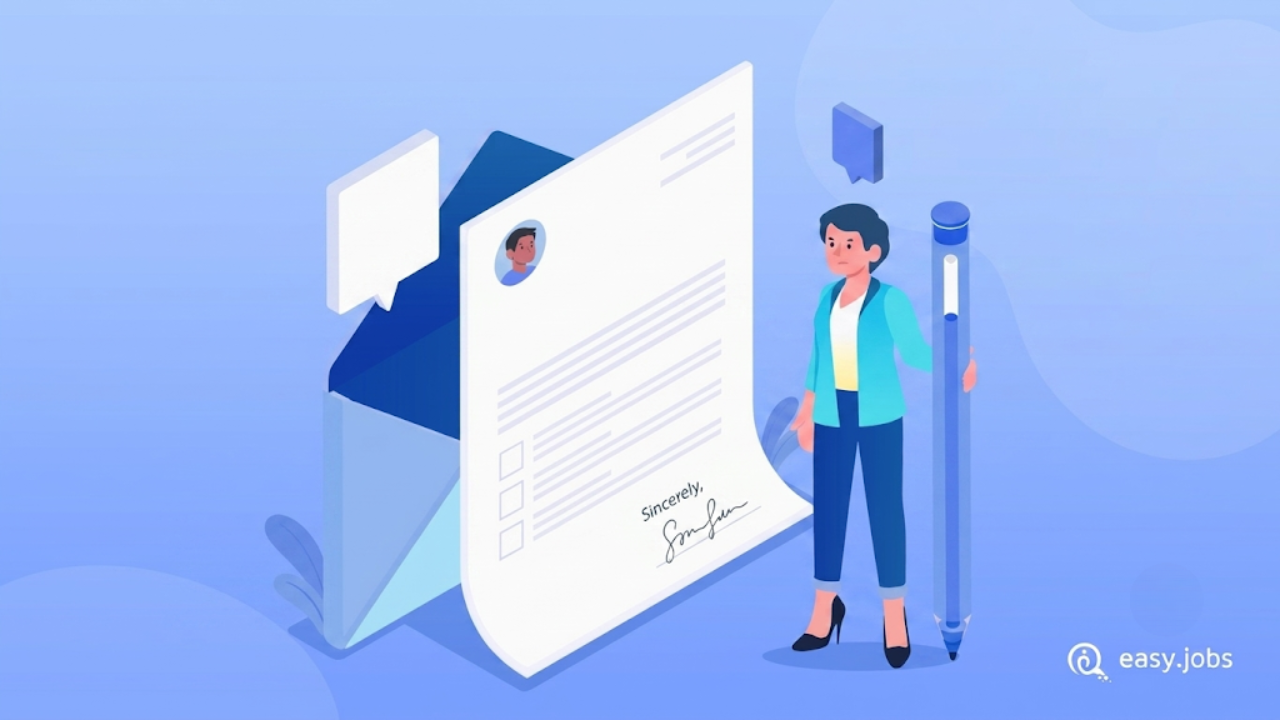
Een goede afwijzingsbrief volgt een voorspelbare structuur. De volgorde is net zo belangrijk als de inhoud: kandidaten lezen de eerste twee regels en bepalen al wat ze van de rest vinden voordat ze de hele alinea hebben uitgelezen.
Stap 1: Bedank de kandidaat specifiek.
Begin met hen te bedanken voor hun sollicitatie en, als ze op gesprek zijn geweest, voor hun tijd. Benoem de functie. "Bedankt voor uw sollicitatie" klinkt algemeen; "Bedankt dat u de tijd heeft genomen om te solliciteren naar de functie van Marketingcoördinator" klinkt weloverwogen. Dit is de gemakkelijkste manier om een standaardbrief minder als een standaardbrief te laten aanvoelen.
Stap 2: Breng de beslissing duidelijk en vroeg in de brief over.
Verberg het niet onder drie alinea's aan inleiding. Vermeld de beslissing in de tweede of derde zin. Kandidaten scannen eerst de uitslag; hen laten zoeken, of hen door een muur van beleefdheden heen laten lezen om vervolgens een "echter" te vinden, creëert onnodige spanning en komt eerder ontwijkend dan vriendelijk over.
Stap 3: Geef alleen een reden op als uw beleid dit toestaat.
Sommige bedrijven delen specifieke feedback; veel doen dat niet, om juridische en consistentieredenen. Als uw HR- of juridische afdeling geen toestemming heeft gegeven voor specifieke feedback, kunt u beter een algemene verklaring gebruiken zoals "we hebben besloten om verder te gaan met een kandidaat wiens ervaring beter aansluit bij onze huidige behoeften" in plaats van ter plekke een reden te verzinnen.
Wat uw beleid ook is, pas het consequent toe. Inconsistente feedback aan kandidaten is een veelvoorkomende bron van juridische problemen, dus het is verstandig dit te bevestigen met een juridisch adviseur of HR-medewerker voordat u uw standaardbrief definitief opstelt.
Stap 4: Houd de deur open, maar alleen waar het echt nodig is.
“"We bewaren uw cv in ons bestand" is een van de meest wantrouwde zinnen in de wervingswereld, vooral omdat er zelden iets mee gebeurt. Als u het meent, als er een reële talentenpool is, een functie beschikbaar is over zes maanden of als u oprecht geïnteresseerd bent in een nieuwe ontmoeting, zeg het dan specifiek ("we willen uw cv graag bewaren voor onze vacature in het derde kwartaal"). Als u het niet meent, laat de zin dan helemaal weg in plaats van hem als opvulling te gebruiken.
Stap 5: Sluit hartelijk af en wens ze het beste.
Een korte, oprechte afsluitende zin doet meer dan een uitgebreide. "We wensen je veel succes met je zoektocht naar een baan" of "we hopen je nog eens tegen te komen" werken allebei. Het doel is warmte te tonen zonder te veel te beloven.
Stap 6: Controleer of de naam en functie correct zijn.
Dit klinkt misschien vanzelfsprekend, maar het is de meest voorkomende en gênante fout in afwijzingsbrieven, vooral wanneer deze via mailmerge naar een groep kandidaten worden verzonden.
Het versturen van "Beste [Voornaam]" of het gebruiken van een verkeerde functietitel maakt alle zorg die in de rest van de brief is gestoken teniet. Kandidaten maken vaker dan bedrijven verwachten screenshots van deze fouten en delen ze openbaar. Stuur daarom altijd eerst een testversie naar uzelf wanneer u sollicitaties in bulk verstuurt.
Sjabloonen voor afwijzingsbrieven per scenario
Het juiste sjabloon hangt af van hoe ver de kandidaat in uw selectieprocedure is gevorderd. Een standaardbrief is de snelste manier om een kandidaat het gevoel te geven dat hij of zij slechts een nummer is. Hieronder vindt u kant-en-klare sjablonen voor veelvoorkomende situaties.
Kopieer de tekst, personaliseer de velden tussen haakjes en pas de toon aan zodat deze aansluit bij de huisstijl van uw bedrijf.
Algemene afwijzing van de sollicitatie (geen sollicitatiegesprek)
Gebruik dit voor kandidaten die al in de eerste selectiefase (op basis van het cv) zijn afgewezen, voordat er überhaupt een persoonlijk gesprek heeft plaatsgevonden. Houd het kort: deze kandidaat heeft geen verwachtingen van een persoonlijke relatie met uw team, dus beknoptheid komt respectvol over in plaats van afstandelijk.
Onderwerp: Update over uw sollicitatie voor [Functietitel]
Geachte [naam kandidaat],

Bedankt voor uw sollicitatie naar de functie [Functietitel] bij [Bedrijfsnaam]. We stellen het op prijs dat u de tijd heeft genomen om uw sollicitatie in te dienen.

Na zorgvuldige overweging hebben we besloten om verder te gaan met andere kandidaten wiens ervaring beter aansluit bij wat we op dit moment zoeken.

We moedigen je aan om te solliciteren naar toekomstige vacatures die aansluiten bij je achtergrond, en we wensen je veel succes met je zoektocht naar een baan.

Hartelijke groeten,
[Uw naam]
[Bedrijfsnaam]
Afwijzingsbrief na het sollicitatiegesprek
Gebruik dit nadat een kandidaat op gesprek is geweest. Zelfs een enkel screeninggesprek verandert de verwachtingen. De toon moet erkenning geven aan de tijd die ze erin hebben geïnvesteerd en, indien oprecht, iets concreters bieden dan de algemene sollicitatietekst.
Onderwerp: Update over uw sollicitatie voor [Functietitel]
Geachte [naam kandidaat],

Hartelijk dank dat u de tijd heeft genomen om te solliciteren naar de functie van [Functietitel] bij [Bedrijfsnaam]. We vonden het prettig om meer te weten te komen over uw achtergrond in [specifieke vaardigheid/ervaring besproken] en we waarderen de inzet die u in het proces heeft getoond.

Na zorgvuldige overweging hebben we besloten om verder te gaan met een kandidaat wiens ervaring beter aansluit bij onze huidige behoeften. Dit was een competitieve selectieprocedure en de beslissing is niet gebaseerd op uw kwalificaties.

We bewaren uw cv graag in ons bestand en nemen contact met u op als er in de toekomst een geschikte vacature voor u beschikbaar komt. [Voeg deze zin alleen toe als dit echt waar is.]

Nogmaals hartelijk bedankt voor uw interesse in [Bedrijfsnaam], en we wensen u veel succes met uw zoektocht.

Met vriendelijke groet,
[Uw naam]
[Bedrijfsnaam]
Let op: de verwijzing tussen haakjes naar een specifieke vaardigheid of gespreksonderwerp in het sjabloon voor het nagesprek is geen optionele opvulling. Het is juist dat ene detail dat een sjabloon onderscheidt van een standaardbrief in de ogen van de kandidaat.
Zelfs één zin die verwijst naar iets uit het daadwerkelijke gesprek, verandert de impact van de afwijzing.
Brief waarin een interne kandidaat wordt afgewezen
Dit is het sjabloon met de hoogste inzet in deze handleiding. In tegenstelling tot een externe kandidaat, blijft deze persoon na het lezen van dit sjabloon in dienst van uw bedrijf. Hij of zij zal de succesvolle kandidaat in vergaderingen tegenkomen en mogelijk aan hem of haar rapporteren.
En ze zullen zich de rest van hun loopbaan herinneren hoe dit moment is aangepakt. Deze brief mag nooit de enige communicatie zijn; hij moet volgen op, of een aanvulling zijn op, een direct gesprek met hun manager of HR, en mag dat gesprek niet vervangen.
Onderwerp: Update over de interne sollicitatie voor [Functie]
Geachte [Naam medewerker],

Hartelijk dank voor uw sollicitatie naar de functie [Functietitel] en voor de gesprekken die we tijdens het proces hebben gevoerd. We stellen uw interesse in doorgroeimogelijkheden binnen [Bedrijfsnaam] zeer op prijs.

Na zorgvuldige overweging hebben we besloten om voor deze functie een andere kandidaat te selecteren. Deze beslissing weerspiegelt de specifieke behoeften van deze functie op dit moment en zegt niets over uw waarde voor het team of uw groeipotentieel binnen dit bedrijf.

Ik wil graag een moment inplannen om deze beslissing persoonlijk met je te bespreken en te bekijken welke ontwikkelingsmogelijkheden of kansen in de toekomst goed bij je zouden passen. [Bevestig dat dit daadwerkelijk gebeurt; voeg deze zin alleen toe als er een vervolggesprek is ingepland.]

Nogmaals hartelijk bedankt voor je inzet, [Naam medewerker]. We waarderen je bijdragen aan [Bedrijfsnaam].

[Uw naam]
[Manager/HR-functie]
Let op: het hierboven genoemde vervolggesprek is niet optioneel. Een interne afwijzing die alleen schriftelijk wordt overgebracht, zonder een echt gesprek, wordt steevast genoemd als een van de snelste manieren om een anderszins gemotiveerde medewerker te verliezen.
Afwijzingsbrief voor stage
Stagiairs staan vaak aan het begin van hun carrière en beleven soms hun eerste stage. professionele afwijzing. Een iets warmere, aanmoedigende toon is hier op zijn plaats, zonder in holle frasen te vervallen.
Onderwerp: Update over uw stageaanvraag bij [Bedrijfsnaam]
Geachte [naam kandidaat],

Hartelijk dank voor uw interesse in de stageplaats [Titel stage] bij [Bedrijfsnaam] en voor de tijd die u in de sollicitatieprocedure heeft geïnvesteerd.

Na zorgvuldige overweging hebben we andere kandidaten geselecteerd wiens ervaring en beschikbaarheid beter aansluiten bij de vereisten van deze stage. Het was een competitieve selectieprocedure met veel sterke kandidaten.

We moedigen je aan om in de toekomst te solliciteren naar stage- of startersfuncties bij ons, en we wensen je veel succes met je studie en carrière.

Hartelijke groeten,
[Uw naam]
[Bedrijfsnaam]
Na het aanbod / Afwijzing door de werknemer (uitzonderlijk geval van intrekking van het aanbod)
Deze sjabloon behandelt een minder vaak voorkomend, maar gevoeliger scenario: een kandidaat wiens aanbod later werd ingetrokken (bijvoorbeeld vanwege een mislukte antecedentencontrole, een budgetwijziging of een probleem met referenties), of een huidige medewerker wiens aanbod voor een interne overplaatsing werd ingetrokken.
Omdat de verwachtingen al in de aanbiedingsfase zijn vastgelegd, is transparantie hier belangrijker dan in welk ander sjabloon ook. Vage formuleringen zullen aanleiding geven tot vervolgvragen die u direct moet kunnen beantwoorden.
Onderwerp: Belangrijke update betreffende uw aanbod voor [Functietitel]
Geachte [naam kandidaat],

Ik neem contact met u op naar aanleiding van uw aanbod voor de functie [Functietitel] bij [Bedrijfsnaam]. Vanwege [specifieke, eerlijke reden, bijv. een verandering in de bedrijfsbehoeften, budgetbeperkingen] kunnen we dit aanbod helaas niet langer doorzetten.

We begrijpen dat dit teleurstellend nieuws is, vooral in dit stadium van het proces, en we bieden onze oprechte excuses aan voor het ongemak dat dit veroorzaakt.

[Indien van toepassing: We willen graag de volgende stappen bespreken, inclusief eventuele relevante ondersteuning die we kunnen bieden.]

Neem gerust contact met ons op als u vragen hebt.

Eerlijk,
[Uw naam]
[Bedrijfsnaam]
Afwijzingsmail versus afwijzingsbrief: wanneer gebruik je welke?
De woorden 'brief' en 'e-mail' worden in informele gesprekken vaak door elkaar gebruikt, maar in de praktijk dienen de twee vormen net iets verschillende doelen.
| Afwijzingsmail | Afwijzingsbrief | |
| Formaliteit | Standaard, efficiënt | Iets formeler |
| Snelheid | Snel verzonden, vaak met behulp van sjablonen. | Soms bewuster opgesteld |
| Typisch gebruiksscenario | Werving op grote schaal, afwijzingen in een vroeg stadium, ATS-gestuurde workflows | Seniorfuncties, formele of traditionele sectoren, interne kandidaten |
In de praktijk gebruiken de meeste bedrijven tegenwoordig e-mail voor de overgrote meerderheid van de afwijzingen. Het is sneller, traceerbaar en gebruikelijk. Een fysieke of formeler geformuleerde brief wordt nu grotendeels gereserveerd voor het aannemen van senior managers, zeer formele sectoren (juridisch, overheid, academische wereld) of situaties waarin een bedrijf de extra zekerheid van een ondertekend document wil.
Een kort voorbeeld van een afwijzingsmail:
Onderwerp: Update over uw sollicitatie voor [Functietitel]
Hallo [naam kandidaat],

Bedankt voor uw sollicitatie op de functie [Functietitel] bij [Bedrijfsnaam]. Na het beoordelen van alle sollicitaties hebben we besloten om met andere kandidaten verder te gaan.

We stellen uw interesse in [Bedrijfsnaam] zeer op prijs en moedigen u aan om in de toekomst te solliciteren naar functies die aansluiten bij uw achtergrond.

Best,
[Uw naam]
De toon is hier bewust iets informeler dan in de bovenstaande briefsjablonen: kortere zinnen, een begroeting met de voornaam, geen formele briefhoofdopmaak. Dat is gepast voor e-mail; in een gedrukte brief zou het misplaatst aanvoelen.
Brieven waarin afwijzing, ontkenning en spijt worden geuit: zijn dat dezelfde dingen?
Voor het grootste deel wel, met enige regionale en branchespecifieke variatie in het gebruik van het woord.
“De term 'afwijzingsbrief' wordt vaak gebruikt wanneer een bedrijf een sollicitatie van een kandidaat, een offerte van een leverancier of een verzoek om een partnerschap afwijst. Het is de meest algemene van de drie termen en niet exclusief voor werving en selectie.
“De term 'afwijzingsbrief' komt in vergelijkbare contexten voor als 'afwijzing', soms met een iets formelere of bureaucratische connotatie (afwijzingen van leningen, uitkeringen en sollicitaties gebruiken allemaal vergelijkbare formuleringen).
“"Spijtbrief" komt vaker voor in het Verenigd Koninkrijk, in de academische wereld en in sommige internationale aanwervingscontexten. "Het spijt ons u te moeten mededelen" is de klassieke openingszin waar deze term van is afgeleid.
Functioneel gezien volgen alle drie dezelfde structuur als eerder beschreven: bedanken, een beslissing nemen, eventueel een toelichting geven en hartelijk afsluiten. Als u op zoek bent naar een sjabloon voor een afwijzingsbrief of een brief waarin u uw spijt betuigt, kunt u de sjablonen in deze handleiding direct gebruiken. Pas de terminologie aan de voorkeuren van uw bedrijf of branche aan.
Veelvoorkomende fouten die u moet vermijden
De meeste klachten over afwijzingsbrieven zijn terug te voeren op een klein aantal terugkerende fouten:
- Een algemene, massale toon. Het versturen van exact hetzelfde sjabloon naar een kandidaat die drie keer op gesprek is geweest, komt over als minachting voor de geleverde inspanning. Stem de toon en specificiteit af op de voortgang die de kandidaat heeft geboekt.
- Vertraagde kennisgeving. Kandidaten die weken moeten wachten op een reactie, vooral na een sollicitatiegesprek, zullen hun negatieve ervaring veel vaker openbaar delen. Stuur de afwijzing zodra de beslissing definitief is, niet pas nadat alle andere administratieve taken zijn afgerond.
- Onjuiste kandidaatnaam of -functie. De meest voorkomende fout bij bulk- of mailmerge-mails. Het maakt alle andere inspanningen in de mail ongedaan, en kandidaten maken vaker screenshots van deze fouten dan bedrijven verwachten.
- Te veel beloven over de opvolging. Uitspraken als "We bewaren uw cv" of "We nemen contact met u op voor toekomstige functies", zonder de intentie om die belofte na te komen, zijn een van de meest onbetrouwbare zinnen in de wervingswereld. Als het niet oprecht is, laat het dan achterwege.
- Het besluit verbergen onder een hoop zakelijke frasen. Drie alinea's vol beleefdheden vóór de daadwerkelijke uitslag dwingen kandidaten om naar het antwoord te zoeken en komen ontwijkend over. Geef het besluit duidelijk en direct aan.
- Geen gesprek met interne kandidaten of kandidaten in een laat stadium van de sollicitatieprocedure. Een schriftelijke brief zonder verder gesprek is een van de snelste manieren om het vertrouwen te schaden van iemand die veel tijd heeft geïnvesteerd, of die na afloop nog steeds bij u in dienst is.
Veelgestelde vragen over afwijzingsbrieven
Sturen bedrijven afwijzingsbrieven na een sollicitatiegesprek?
De meeste bedrijven doen dat wel, hoewel de timing en de vorm sterk variëren. Bedrijven met een sterke focus op de kandidaatervaring reageren doorgaans binnen een week na de definitieve beslissing; sommige kleinere bedrijven of bedrijven met een groot aantal sollicitaties doen dat niet, wat een veelvoorkomende bron van frustratie is voor kandidaten.
Wat moet de onderwerpregel van een afwijzingsmail zijn?
Houd het neutraal en duidelijk in de onderwerpregel in plaats van het nieuws al te onthullen. Iets als "Update over uw sollicitatie voor [Functie]" werkt goed. Vermijd onderwerpregels die de uitkomst al verklappen voordat de kandidaat de e-mail opent, omdat dit abrupt kan overkomen.
Hoe lang na een sollicitatiegesprek moet je een afwijzingsbrief versturen?
Een termijn van één tot twee weken na de definitieve aanstellingsbeslissing is redelijk. Het is over het algemeen beter om het eerder te versturen, zodra de beslissing echt vaststaat, dan te wachten. Stilte wordt doorgaans negatiever geïnterpreteerd dan een direct "nee".“
Is het onbeleefd om geen afwijzingsbrief te sturen?
Het wordt steeds vaker als slechte praktijk beschouwd, met name voor kandidaten die de interviewfase hebben bereikt. Sollicitanten in een vroeg stadium die automatisch worden gefilterd door een applicant tracking system voordat ze door een mens worden beoordeeld, vormen een gedeeltelijke uitzondering, hoewel zelfs in dit geval een automatische bevestiging tegenwoordig als een standaardvereiste wordt beschouwd.
Tot slot nog enkele gedachten over het schrijven van afwijzingsbrieven.
Een afwijzingsbrief is een klein stukje tekst met een enorme impact. Het is vaak de laatste indruk die een kandidaat van uw bedrijf krijgt, en de manier waarop u ermee omgaat, bepaalt of ze opnieuw solliciteren, anderen doorverwijzen of gewoon stilletjes verder gaan.
De stappen en sjablonen in deze handleiding zijn niet bedoeld om meer processen aan uw wervingsproces toe te voegen. Ze zijn bedoeld om ervoor te zorgen dat het proces dat u al hanteert, mensen met dezelfde zorg behandelt als u zou willen als de rollen omgekeerd waren.
Of je nu een snelle e-mail stuurt na een eerste selectie van een cv, of een meer doordachte brief aan een kandidaat die meerdere sollicitatiegesprekken heeft doorstaan, de basisprincipes blijven hetzelfde: wees duidelijk, wees tijdig en wees eerlijk.
Begin met de bovenstaande sjablonen, pas ze aan de huisstijl van uw bedrijf aan en werk ze bij naarmate uw wervingsproces zich ontwikkelt. Een doordachte afwijzingsbrief kost weinig tijd om te schrijven, maar kan een blijvende, positieve indruk achterlaten, lang nadat de functie is ingevuld.
Als u deze gids nuttig vond, abonneer je op onze blog Voor meer informatie over werving en HR, word lid van onze community. Facebook-gemeenschap Om in contact te komen met andere HR-professionals en je eigen ervaringen met werving en selectie te delen.