Talent Management Software

Best 5 AI-Powered Talent Management Software: Features, Benefits & Use Cases

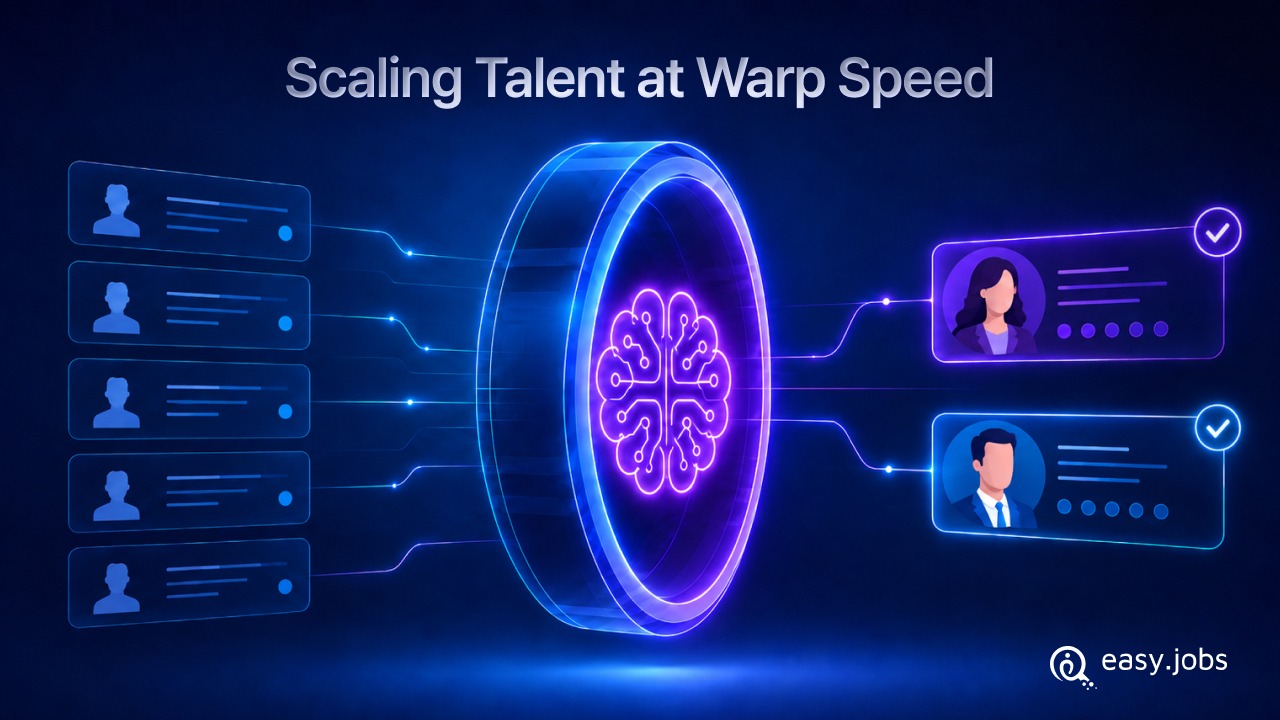
In 2026, talent management is no longer just an HR task. It is the engine driving business growth. Traditional tools can not keep up with how fast skills change, but AI-powered talent management software predicts skill gaps, personalizes career paths, and elevates the employee experience, helping organizations reduce their employee attrition rate while retaining top performers.

Continue reading “Best 5 AI-Powered Talent Management Software: Features, Benefits & Use Cases”
360 Recruitment

360 Recruitment Process: 6 Core Stages of Full-Cycle Hiring

Hiring in today’s competitive job market requires more than posting vacancies or screening resumes. Organizations in the United States are increasingly adopting 360 recruitment, also known as full-cycle or end-to-end hiring, to create a more structured, accountable, candidate-centric recruitment process.

The 360 recruitment process covers the entire hiring lifecycle, from workforce planning and talent sourcing to onboarding and post-placement follow-up. Unlike fragmented models, it assigns full-cycle ownership to a single recruiter or team, ensuring continuity, faster decisions, and stronger alignment with business goals. 

Continue reading “360 Recruitment Process: 6 Core Stages of Full-Cycle Hiring”
Hiring bias

Hiring Bias: A Complete Guide to Identifying And Eliminating Bias in Recruitment

Hiring bias silently shapes who gets hired and who gets overlooked often without anyone realizing it. These hidden patterns do not just hurt candidates. They weaken hiring outcomes, diversity and business growth. 

Are you curious how bias creeps into recruitment decisions and what you can actually do to stop it? This guide breaks down the causes, examples and proven ways to eliminate hiring bias for good. 

Continue reading “Hiring Bias: A Complete Guide to Identifying And Eliminating Bias in Recruitment”
Recruitment Process Outsourcing

Recruitment Process Outsourcing (RPO): Definition, Models, Benefits, Pricing And Best Companies for 2026

Recruitment Process Outsourcing (RPO) is a strategic business process where an employer transfers all or part of its recruitment functions to an external service provider. By integrating with a company’s internal HR team and technology, an RPO provider manages the end-to-end hiring lifecycle from sourcing and screening to onboarding. 

This model is designed to improve hiring quality, reduce time-to-fill and provide the scalability necessary for modern business growth. 

Continue reading “Recruitment Process Outsourcing (RPO): Definition, Models, Benefits, Pricing And Best Companies for 2026”
Halo Effect And Horn Effect

Halo Effect And Horn Effect in Recruitment: Real Hiring And Marketing Examples That Distort Decisions

In the high-stakes world of talent acquisition, a single hiring decision can cost a company upwards of 30% of the employee’s first-year earnings. Despite the financial risks, many hiring decisions are made in the first 90 seconds of an interview. 

We like to believe our processes are objective, but the reality is that recruiters and hiring managers often rely more on intuition than evidence. This “gut feeling” is frequently a byproduct of two powerful cognitive shortcuts: Halo Effect and Horn Effect.  

Continue reading “Halo Effect And Horn Effect in Recruitment: Real Hiring And Marketing Examples That Distort Decisions”
Train Hiring Managers

How to Train Hiring Managers for Better Interviews And Faster Hiring

Hiring managers play a decisive role in recruitment outcomes, yet many organisations invest heavily in recruiter enablement while leaving hiring managers underprepared. The result is inconsistent interviews, slower hiring decisions, poor candidate experiences and increased hiring risk.

Training hiring managers is no longer optional. It is a core capability that directly impacts hiring quality, speed, fairness, and business performance.

Continue reading “How to Train Hiring Managers for Better Interviews And Faster Hiring”
Move Candidates to Other Jobs

How to Move Candidates to Other Jobs in easy.jobs: Step-by-Step Workflow for Recruiters [Feature]

Handling candidates across multiple open roles is one of the most common challenges in modern recruitment. Applicants often apply for the wrong position, qualify better for a different role, or need to be reassigned after an interview. Without a structured process, recruiters end up duplicating profiles, losing context, or creating inconsistencies in their hiring data.

This is where the ability to Move Candidates to Other Jobs becomes critical. Instead of manually re-entering applicant information or restarting the evaluation cycle, recruiters can realign candidates within the hiring system while keeping the workflow intact. 

Continue reading “How to Move Candidates to Other Jobs in easy.jobs: Step-by-Step Workflow for Recruiters [Feature]”
Candidate Communication

Candidate Communication: Best Practices, Framework & Templates [2026]

Imagine you are trying to build a winning sports team. You can not just put up a sign that says “Players Wanted” and sit back. The best players have other teams asking for them, too. They want to know if they made the cut, and they want to know fast.

If you leave them waiting or do not answer their questions, they will get bored, join a different team, or think your team is not very nice to play for. The same applies to recruiters in talent hunt. 

This is why talking clearly is your secret weapon. “Candidate communication” is just a fancy way of describing how you talk to people who want a job. It is every message you send.

Continue reading “Candidate Communication: Best Practices, Framework & Templates [2026]”
Interview Scorecard

How to Build Interview Scorecards to Hire Better Candidates (Step-by-Step Guide)

Hiring the right candidate is rarely about intuition alone. As companies scale, relying on gut feeling or unstructured interview feedback often leads to inconsistent decisions, unconscious bias and costly mis-hires. This is where interview scorecards become critical.

An interview scorecard provides a structured, objective framework to evaluate candidates against predefined criteria. Instead of subjective opinions, hiring teams assess skills, competencies and behaviors using consistent scoring standards, making hiring decisions more accurate, fair and defensible. 

Continue reading “How to Build Interview Scorecards to Hire Better Candidates (Step-by-Step Guide)”
recruitment workflow

How to Build a Scalable Recruitment Workflow for End-to-End Hiring

Hiring becomes increasingly complex as teams grow. What starts as a few job posts and inbox reviews can quickly turn into missed candidates, delayed decisions and inconsistent hiring outcomes. Without a clear structure, even experienced hiring teams struggle to maintain speed, quality and fairness. 

A recruitment workflow provides that structure. It defines how candidates move through each stage of the hiring process, who is responsible at every step and how decisions are made. When designed correctly, it helps organizations hire faster, reduce drop-offs, and deliver a consistent candidate experience. 

Continue reading “How to Build a Scalable Recruitment Workflow for End-to-End Hiring”
  • 00Days
  • 00Hours
  • 00Mins
  • 00Secs

Wait!

Before you leave
Upgrade your hiring workflow