A qualified candidate lands on your careers page at 11 p.m., has two quick questions about the role, gets no answer and applies somewhere else by morning. That gap, between when candidates want to engage and when your team is actually online, is exactly what recruitment chatbots were built to close.
And they have moved from novelty to norm: according to SHRM’s 2025 Talent Trends report, 51% of organizations now use AI to support recruiting, up from 26% just a year earlier.
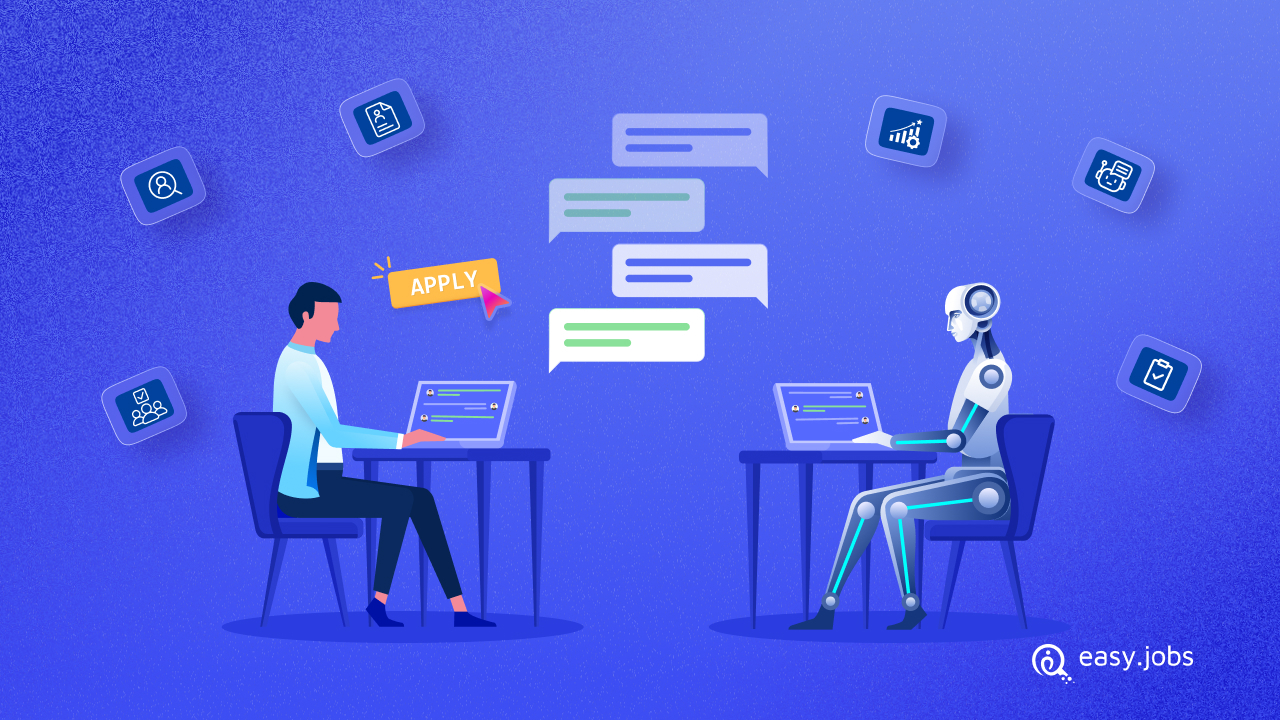
This guide covers what a recruitment chatbot actually is, how it works, where it helps (and where it does not), real companies using one today and how to choose the right one for your hiring process.
TL;DR: AI Recruitment Chatbots
- What they are: 24/7 AI-powered assistants that engage candidates, answer FAQs, pre-screen applicants and schedule interviews.
- How they work: Driven by Natural Language Processing (NLP) and Machine Learning, the most effective chatbots integrate directly with your Applicant Tracking System (ATS) to automatically sync candidate data into your workflow.
- Core Benefits: They save recruiters hours of administrative work, prevent applicant “ghosting” by providing instant answers outside of business hours, standardize early screening to reduce bias and ultimately lower cost-to-hire.
- The Catch: They require an upfront investment and careful setup. A poorly designed bot with clunky conversation flows can feel impersonal and damage your employer brand.
- The Bottom Line: Chatbots do not replace human recruiters. The winning strategy is a split model: let the AI handle high-volume, repetitive tasks so your human team can focus on relationship-building, assessing soft skills and making final hiring decisions.
What Is a Recruitment Chatbot?
A recruitment chatbot is an AI-powered assistant that uses Natural Language Processing (NLP) and Machine Learning to interact with candidates 24/7. When integrated directly into an Applicant Tracking System (ATS), it handles top-of-funnel tasks, like answering FAQs, screening applicants and scheduling interviews. So human recruiters can focus on relationship-building and final hiring decisions.
Unlike a rigid, menu-driven bot from a decade ago, modern recruiting chatbots use natural language processing to understand how people actually phrase things and respond conversationally. Some handle only inbound questions on your careers page; more advanced ones screen candidates against your criteria, book interviews on a recruiter’s calendar and hand the conversation to a human the moment it needs one.
The short version: chatbots in recruitment take the repetitive, time-sensitive work off your recruiters’ plates so the team can spend its hours on judgment calls a machine cannot make.
How Do Recruitment Chatbots Work?
Under the hood, an AI recruiting chatbot combines three things:
Natural language processing (NLP) lets the bot interpret free-text questions, like “Do you offer remote work?” or “What is the salary range?”, instead of forcing candidates through a fixed menu.
Machine learning helps the bot improve over time, learning from past conversations which answers resolve questions and which candidates tend to progress.
ATS integration is where the real value shows up. A chatbot that is wired into your applicant tracking system can pull job details, push candidate data straight into your pipeline and update application status automatically. A platform like easy.jobs connects the conversation to your candidate records, so everything a candidate tells the bot lands in one place instead of a disconnected inbox.
Without that integration, a chatbot is just a smarter FAQ widget. With it, it becomes a working part of your hiring workflow.
Benefits of Using a Recruitment Chatbot
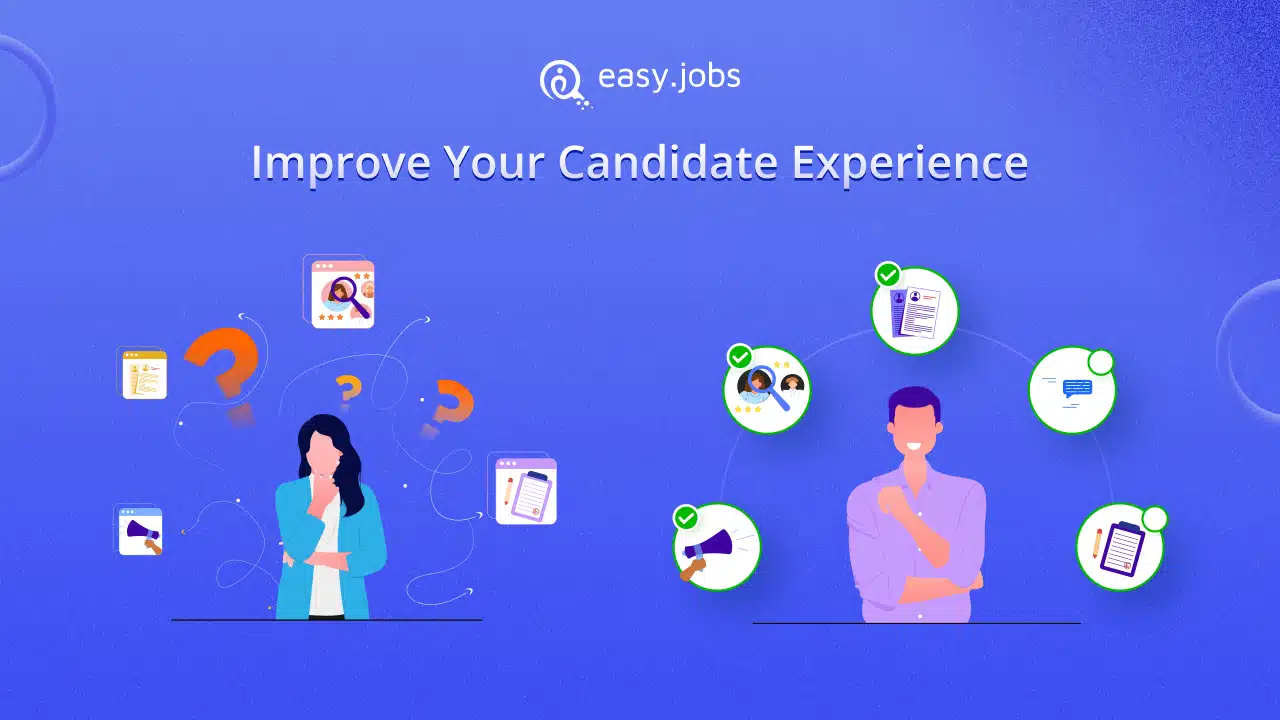
Recruiting involves a lot of repetitive, time-consuming tasks: reviewing resumes, answering the same questions, coordinating schedules. Here is where a chatbot earns its place.
Efficiency and Time-Saving
Chatbots handle the administrative load that eats a recruiter’s day: scheduling interviews, sending candidate information, running basic skill checks and answering routine questions instantly. That frees your team to focus on the parts of hiring that need a human: evaluating fit, preparing for interviews and building relationships.
Improved Candidate Experience
First impressions matter, and slow responses cost you good people. A chatbot gives candidates:
- 24/7 availability: answers outside business hours, when many employed job-seekers are actually looking.
- Personalized engagement: role-specific answers instead of generic auto-replies, which strengthens your candidate experience.
- A guided application: step-by-step help through the process so fewer people abandon it halfway.
This matters more than it sounds. SHRM’s 2025 research flags applicant “ghosting”, candidates going silent, as one of the top reasons roles stay vacant. Fast, consistent communication is one of the simplest ways to keep candidates engaged through to the offer.
Reduced Bias
Applied thoughtfully, chatbots can make early screening more consistent. They evaluate every candidate against the same predefined criteria and deliver the same information to everyone, which removes some of the unintentional variation that creeps into human-led first-touch screening.
Wider Talent Pool
Chatbots can live where candidates already are, on social platforms and messaging apps, engaging people who are not actively job-hunting. A broader reach means a better shot at finding the right fit.
Cost Savings
Less time on administrative tasks, faster time-to-hire and lower advertising spend from more efficient sourcing all add up. The savings are not instant, but they compound as the bot absorbs work your team used to do by hand.
Recruitment Chatbot Use Cases
Beyond the high-level benefits, here is what a recruiting chatbot actually does day to day:
- Candidate screening: asks qualifying questions and filters applicants against your must-haves before a recruiter ever gets involved.
- Interview scheduling: syncs with recruiter calendars and handles the back-and-forth of booking a time, including across time zones.
- FAQ automation: answers recurring questions about the role, pay, benefits, location and process, 24/7.
- Candidate sourcing and re-engagement: reaches passive candidates on messaging channels and revives past applicants for new roles.
- Onboarding hand-off: passes new hires basic information and next steps, bridging into your onboarding automation.
Recruitment Chatbot Examples: Real Companies and Tools
The clearest way to understand the value is to see who is using one.
McDonald’s deployed a recruiting assistant (built on Paradox’s “Olivia”) to handle high-volume hourly hiring, letting candidates apply and schedule interviews through a simple chat rather than a long form.
G4S, one of the world’s largest security employers, needed to fill tens of thousands of roles a year. After implementing an AI-driven recruiting chatbot, the company reported a roughly 10% increase in applicant flow and a 25% improvement in applicant conversions, according to HireVue.
IKEA has used a WhatsApp-based application flow so candidates can start applying from an app they already have open: no account, no password, no friction.
On the tools side, the recruiting-chatbot space includes dedicated platforms like Paradox (Olivia), Mya, XOR and HireVue, alongside applicant tracking systems like easy.jobs that build conversational screening and scheduling directly into the hiring workflow. The right choice depends less on brand and more on whether the bot solves your specific bottleneck: inbound question volume, scheduling or high-volume screening.
The common thread across every successful example: the chatbot was not bolted on the side. It was integrated with the ATS, the calendar or the talent database, and it handed off to a human at the right moment.
The Challenges of Using Recruitment Chatbots
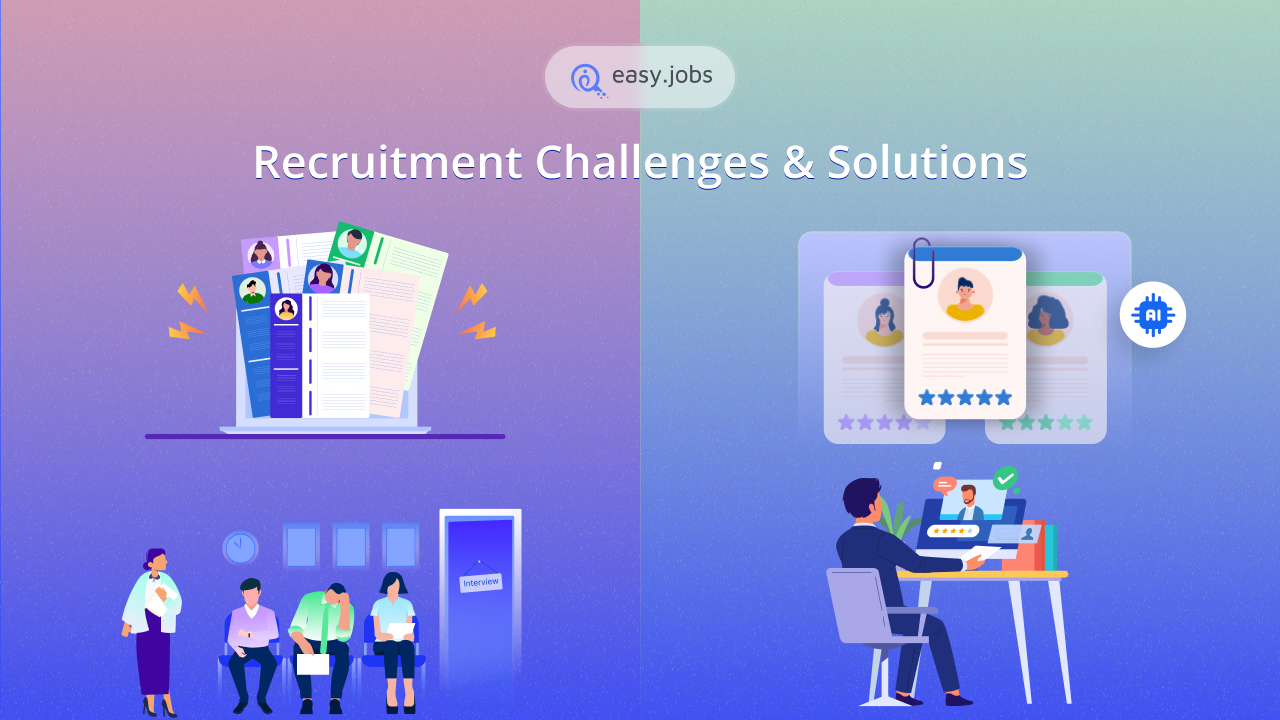
The benefits are real, but so are the trade-offs. Understanding these before you implement is what separates a chatbot that helps from one that quietly costs you candidates.
Limited Human Interaction
Chatbots are excellent at automating tasks, but they cannot replace the personal touch of a real conversation. Some candidates feel the absence of human connection, and a bot can miss the subtleties and soft skills that surface when people actually talk. For senior or specialized roles especially, over-automating the early experience can put strong candidates off.
Technology and Implementation Costs
There is an upfront investment in acquiring a chatbot platform and, sometimes, in developing custom features to fit your process. Beyond that initial cost, ongoing maintenance, tuning and updates add to your HR budget. The efficiency gains usually outweigh this over time, but the cost is real and needs to be planned for rather than assumed away.
Candidate Experience Risks
A poorly designed chatbot does more harm than no chatbot at all. Clunky conversation flows, repetitive prompts, dead ends or technical glitches frustrate applicants at the exact moment you are trying to win them over, and that friction reflects directly on your employer brand. A chatbot is only an asset if it is genuinely well built and tested.
Pros and Cons of Recruitment Chatbots at a Glance
If you are weighing the decision quickly, here is the summary of everything above:
| Pros | Cons |
| Automates repetitive screening, scheduling and FAQ work | Cannot replace human judgment or personal connection |
| Faster responses and better candidate experience | Upfront and ongoing platform costs |
| More consistent, standardized early screening | A poorly designed bot can frustrate candidates |
| Lower cost per hire over time | Requires tuning and maintenance to stay effective |
| Wider reach across channels and off-hours | Value depends heavily on ATS integration |
Do Chatbots Replace Human Recruiters?
No, and treating them as a replacement is the most common mistake. The right model is a split: let the chatbot handle initial tasks and boost efficiency, and keep humans in charge of building relationships, evaluating soft skills and making final decisions. The technology handles volume; people handle judgment.
How to Choose and Implement a Recruitment Chatbot
Getting value from a chatbot is less about the tool and more about how you roll it out. Four steps make the difference.
1. Set Clear Goals
Decide what you actually want the bot to fix before you shop. Faster response times? Fewer hours on scheduling? More consistent screening? Clear goals tell you which features matter and give you a way to measure success later.
2. Choose the Right Platform
Weigh your budget, the features you need and, most importantly, how well the bot integrates with your existing HR stack. A chatbot that does not connect to your ATS creates more work, not less. Platforms like easy.jobs offer native chatbot integration, so you can manage applicants and conversations from one place.
3. Train Your Team
Your recruiters need to know how to manage the bot, handle the inquiries it escalates and step in when a candidate needs a human. Give them the training to troubleshoot common issues and to blend the bot’s output into their existing process.
4. Improve Continuously
Chatbots learn. Monitor performance, review real conversations and refine the flows and answers over time. A bot you set and forget drifts; one you tune keeps getting better for both candidates and your team.
Frequently Asked Questions on Recruiting Chatbots
What is a recruitment chatbot?
A recruitment chatbot is an AI-powered tool that communicates with candidates to answer questions, pre-screen applicants, schedule interviews and collect information through chat, text or messaging apps.
How does a recruitment chatbot work?
It uses natural language processing to understand candidate questions, machine learning to improve over time and integration with your applicant tracking system to move candidate data and application updates into your hiring workflow automatically.
How can chatbots help in recruitment?
They automate repetitive, time-sensitive tasks (answering FAQs, screening candidates and booking interviews) while giving candidates instant, 24/7 responses that keep them engaged.
Do AI recruiting chatbots replace human screening?
No. They handle high-volume, top-of-funnel tasks, but human recruiters are still essential for evaluating soft skills, building relationships and making final hiring decisions.
How do you create a recruitment chatbot?
Most companies do not build one from scratch: they use an ATS or recruiting platform with a built-in chatbot, configure it around their hiring criteria and FAQs, connect it to their calendar and pipeline, then refine it based on real conversations.
Boost Your Hiring Process Through Recruiting Chatbots
Recruitment chatbots are not a passing trend: they are becoming standard infrastructure for teams that want to move faster without dropping the ball on candidate experience. Used well, they take the repetitive work off your recruiters, keep candidates engaged around the clock and bring more consistency to early screening. Used carelessly (no integration, no human hand-off, no tuning), they frustrate the exact people you are trying to hire.
The winning approach is the balanced one: let the bot handle volume, keep humans on judgment and choose a platform that plugs into your existing hiring process instead of sitting beside it.
Want to stay ahead of the curve in recruitment technology? Subscribe to our blog and join our Facebook Community for regular insights, tips and the latest trends.