Job interview questions are tough to answer, but perhaps the hardest question to answer is when you are asked what your weaknesses are. As human beings, we all have many flaws, but you can easily present yourself smartly in front of the interviewers by responding with positive weaknesses. In this blog, we will be sharing a list of good weaknesses for interviews that you can say to make a better impression in front of recruiters. So, without further ado, let’s get started.

TL;DR: A Quick Look at Positive Weaknesses
A positive weakness is a real flaw that signals a hidden strength once you explain it with self-awareness and a clear plan to improve. This guide gives you a practical list of good weaknesses for interviews, such as being too detail-oriented, self-critical, a perfectionist, reluctant to delegate, or an introvert.
Furthermore, it shows how each of these traits reads as thoroughness, accountability, high standards, or focus. The best weaknesses for an interview are honest, role-relevant and paired with the action you take to manage them, never disguised brags such as “I work too hard”.
🔑 Key Takeaways
- The best weaknesses for an interview are real, role-relevant and paired with active improvement not disguised brags like “I work too hard”.
- Recruiters use the weakness question to measure self-awareness, accountability and growth mindset, which often matter more than the flaw itself.
- Hiring statistic: 69% of U.S. executives plan to prioritize candidates with much-needed soft skills, according to LinkedIn’s 2025 Future of Recruiting report and a thoughtful weakness answer is one of the clearest ways to show them.
- Strong, safe options include being too detail-oriented, self-critical, a perfectionist or uncomfortable delegating tasks.
- Apply the Weakness → Strength formula: name the trait, explain why it is a limitation, then describe the concrete action you take to manage it.
💡 Why Should You Talk About Your Weaknesses In An Interview?
The recruiters want to find out as much as they can about you during a job interview so they can decide whether or not you are a good fit for the position. Thus, you need to showcase your power skills, and expertise to impress your interviewers. However, we all know that nobody is perfect and we all have flaws.
When you are talking about your weakness to interviewers, it demonstrates your honesty and self-awareness. You can also say how you overcame your weaknesses to prove that you are trying to improve as a person which any interviewer would love in a candidate.
“Every weakness contains within itself a strength.”
― Shusaku Endo
In addition, in a workspace, some weaknesses can actually benefit the team in many ways. Suppose, you are very detail oriented which is why you need more time to finish a task.
However, for some tasks like competitor research, being detail-oriented is essential to create an in-depth analysis. So, even if your interviewer skips directly asking about your weaknesses, you can still bring them to the table while talking about yourself.
📋 Positive Weaknesses That You Can Say In Interviews
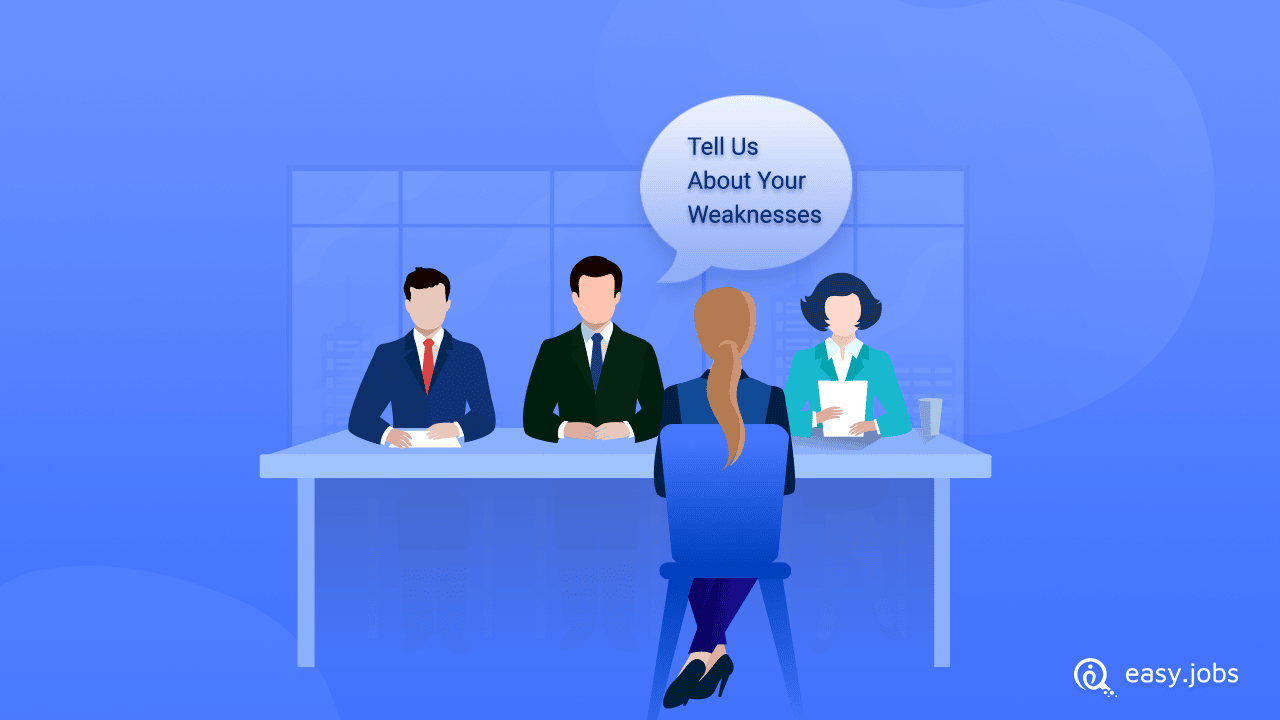
Let’s have a look at the list of positive weaknesses for interviews that you can say will help you to become a worthy candidate to recruiters. However, you should keep in mind that you need to be honest and authentic. When looking at this list, try to find a weakness that you have genuinely identified within yourself, and then see how you can turn them into a strength.
🔹 Too Detail-Oriented
Being very much detail-oriented on a task can mean that you are taking too much time to complete it. Even though most managers want to focus on getting the job done before the deadline, sometimes being detail-oriented can actually help to complete the job more efficiently. So, this is one character trait that comes to the top of the list of good weaknesses for interviews.
🔹 Self-critic
Being a self-critic makes you doubtful about your own skills and abilities which can make you less confident. However, once you know how to find your own faults, you can easily improve your skills and become even better. It also means that you have a lot of self-awareness, which is always an important trait. So, any recruiter would love to hear you are a self-critic in an interview.
🔹 Perfectionist
Sometimes being a perfectionist could be a huge downside for an employee as every manager wants to get the job done before the deadline, However, if you are skilled enough, being a perfectionist can be a strength as you are going to deliver the best work.
🔹 Taking On Too Much Responsibility
You may love taking responsibility on your shoulder, however, taking too much responsibility may hamper your work quality as well. Sharing this weakness with your recruiter will portray that you are willing to work as much as you can.
🔹 Uncomfortable With Delegating Tasks
Good leaders can delegate tasks to others and get them done before the deadline. However, some people are not comfortable delegating tasks as they want to put their own hands on it. This weakness might slow down your project, however, it also shows you don’t want to skip anything and want to stay involved with every task, no matter how big or small.
🔹 Risk-Taking
The ability to take risks is a very advanced skill. No manager would want to offer you the freedom to take major risks when you are just starting out in your career. However, once you have the confidence to call big shots, you can instantly win over the interviewer’s favor by admitting this positive weakness.
🔹 Multitasking
Doing multiple tasks at a time can easily hamper the quality of your work as you can get distracted very easily. However, a recruiter would love to take a candidate who is comfortable doing multiple tasks at the same time.
🔹 Attempting To Please Everyone
Being a people pleaser may be a weakness for you, however, in work life, any hiring manager would consider you an asset as you will be a very collaborative employee. So, you can present this positive weakness to the interviewers to make a better impression.
🔹 Introvert
Many people think that being introverted is a major weakness for career growth, however, this is not entirely true. Research has shown time and time again that introverted individuals are often great candidates for leadership positions. So, being introverted is also listed as a good weakness for interviews.
💡 Tips For Turning Weakness Into Strength (With Examples)
If you already know your weaknesses you are one step ahead of converting them into your strengths in a job interview. Because, what you initially think is a weakness, could also be a strength for you. Now, let’s look at the example below where you can understand how you can easily turn your weaknesses into strengths in an interview.
Suppose a recruiter asks, tell us what your weakness is in the next interview. Now, you can name your different weaknesses and be completely honest with your recruiter. While telling about your weakness you can elaborate on it by saying why you think it is a weakness for you and how you want to overcome it. Let’s the example now:
Example: “Being a perfectionist is my greatest weakness. I can not let go of any small details while working on a project. However, to overcome this weakness, I am using a time tracker and organizing my work schedule to stop giving too much time where it is not necessary and look into the bigger picture.”
Positive Weaknesses for a Job Interview: Frequently Asked Questions
What is a good weakness to say in an interview?
A good weakness to say in an interview is a true limitation that does not undermine the core duties of the role and that you are actively working to improve, such as being self-critical or uncomfortable delegating tasks.
Recruiters are not searching for a flawless candidate. They use this answer to test honesty and self-awareness, so name a real trait, give one short workplace example, then explain how you manage it.
What are some examples of weaknesses for an interview?
Examples of weaknesses for an interview that work well include being too detail-oriented, taking on too much responsibility, multitasking, attempting to please everyone or being risk-averse early in a role.
Each example carries a positive underlying quality once you frame it with context. Detail orientation supports accurate work, like competitor research, while taking on responsibility shows commitment. Pick an example you have genuinely identified in yourself rather than one that sounds rehearsed.
What is a good answer for your greatest weakness?
A good answer for your greatest weakness names one significant trait and shows the progress you have already made against it, rather than dodging the question. The strength of the answer lies in the improvement story: an interviewer wants to see that you recognized the limitation, understood its impact and then built a practical habit to address it. Avoid claiming you have no real weakness, because that reads as a lack of self-awareness.
What are the common weaknesses for a job interview?
Common weaknesses for a job interview include difficulty saying no, impatience with missed deadlines, discomfort with public speaking, trouble asking for help and being overly critical of your own work.
These come up often because they are relatable and easy to pair with a clear improvement plan. To stand out, add a specific example and the concrete step you take, so a familiar answer still demonstrates genuine reflection.
What should you say for weaknesses in a job interview?
For weaknesses in a job interview, you should give one honest, role-appropriate trait, a brief example of how it shows up at work and the measure you use to improve it. Keep the tone neutral and avoid both deal-breaking skill gaps for the exact role and obvious humble-brags such as “I just care too much”. The aim is to sound self-aware and proactive, not perfect.
How many weaknesses should you mention in a job interview?
You should mention one weakness or at most two in a job interview unless the interviewer specifically asks for more. One well-chosen weakness with a clear improvement story carries more weight than a long list of shallow flaws.
If you are asked for several, keep each in the same name-impact-action structure, so every example reinforces your self-awareness.
What are good strengths and weaknesses for a job interview?
Good strengths and weaknesses for a job interview are complementary traits that together tell a balanced, credible story. Pair a genuine strength, such as collaboration, problem-solving or adaptability with a positive weakness, such as being detail-oriented or self-critical and make sure the two do not contradict each other.
Because soft skills now top many hiring priorities, the way you discuss both sides with specifics and a growth mindset. Often matters more than the individual traits you name.
💪 There Is Always Strength In Every Weakness
If you are aware of all the weaknesses that you have you can easily improve yourself and become a better person. In a job interview, if you want to demonstrate your honesty to the recruiters, telling them about your positive weaknesses can help win their hearts. We hope today’s blog will help you to become more confident in a job interview while being asked to talk about your positive weaknesses.
So, have you found our blog useful? If you do then please, subscribe to our blog to get more updates, tutorials, and more. Also, don’t forget to join our Facebook community to share your thoughts there.
🎁 Bonus: Blogs You Can Read To Prepare Yourself For Interviews
A lot of people have a fear of facing an interview board. However, if you are fully prepared before entering the interview room, you can easily get the job by presenting yourself in a better way. Here are some of our blogs that you can read before entering the interview room and gaining the confidence you need to rock on any job interview: 👇