Hiring becomes increasingly complex as teams grow. What starts as a few job posts and inbox reviews can quickly turn into missed candidates, delayed decisions and inconsistent hiring outcomes. Without a clear structure, even experienced hiring teams struggle to maintain speed, quality and fairness.
A recruitment workflow provides that structure. It defines how candidates move through each stage of the hiring process, who is responsible at every step and how decisions are made. When designed correctly, it helps organizations hire faster, reduce drop-offs, and deliver a consistent candidate experience.
This guide explains how to build a scalable recruitment workflow that supports end-to-end hiring from role planning to the final hiring handoff. You will learn how recruitment workflows work, the stages involved, how to visualize them and how automation enables teams to scale without losing control.
What Is a Recruitment Workflow?
A recruitment workflow is a structured sequence of steps that organizations follow to attract, screen, evaluate and hire candidates efficiently. It defines how applicants move through each stage of hiring while ensuring consistency, visibility and accountability across the entire recruitment process.
Unlike ad hoc hiring, a recruitment workflow establishes clear ownership at every stage. It helps teams avoid bottlenecks, reduce manual effort and maintain alignment between recruiters, hiring managers and decision-makers. As hiring volume increases, a defined workflow becomes essential for maintaining quality and speed.
Recruitment Workflow vs Hiring Process
The terms recruitment workflow and hiring process are often used interchangeably, but they are not the same. A hiring process describes the steps, while a recruitment workflow defines how those steps operate together.
A hiring process lists activities such as sourcing, interviews and offers. A recruitment workflow connects those activities into a system, showing transitions, responsibilities, approvals and decision points. This distinction is critical for organizations aiming to scale or automate hiring effectively.
Why End-to-End Hiring Needs a Defined Workflow?
End-to-end hiring refers to managing the entire recruitment lifecycle from initial role planning through candidate selection, offer management and the handoff to onboarding. When this lifecycle is fragmented, hiring slows down, candidates drop off and teams lose visibility into progress and performance.
A defined recruitment workflow ensures that every stage of hiring is connected. Instead of isolated actions: posting jobs, scheduling interviews, or sending offers. The workflow creates a continuous system where information, ownership and decisions flow seamlessly from one stage to the next.
For growing teams, this continuity is essential. Without a structured workflow, hiring efforts become reactive and inconsistent. Different roles follow different paths, approvals vary and candidate experience suffers. A well-defined workflow standardizes how hiring happens while still allowing flexibility when needed.
Problems Caused by Fragmented Hiring Workflows
When hiring lacks a clear workflow, several issues commonly emerge. Candidates experience delays between stages, recruiters lose track of applications and hiring managers lack timely visibility into decisions. These gaps lead to longer time-to-hire and lower acceptance rates.
Fragmented workflows also make scaling challenging. As hiring volume increases, manual coordination breaks down, errors multiply and performance metrics become unreliable. A defined end-to-end in recruitment workflow addresses these issues by establishing structure, accountability and continuity across every stage of the hiring process.
Recruitment Workflow Stages (Step-by-Step)
Recruitment workflow stages define how candidates move through the hiring lifecycle in a structured, repeatable way. While the exact steps may vary by organization, a scalable recruitment workflow follows a consistent progression that supports clarity, speed, and decision-making across teams.
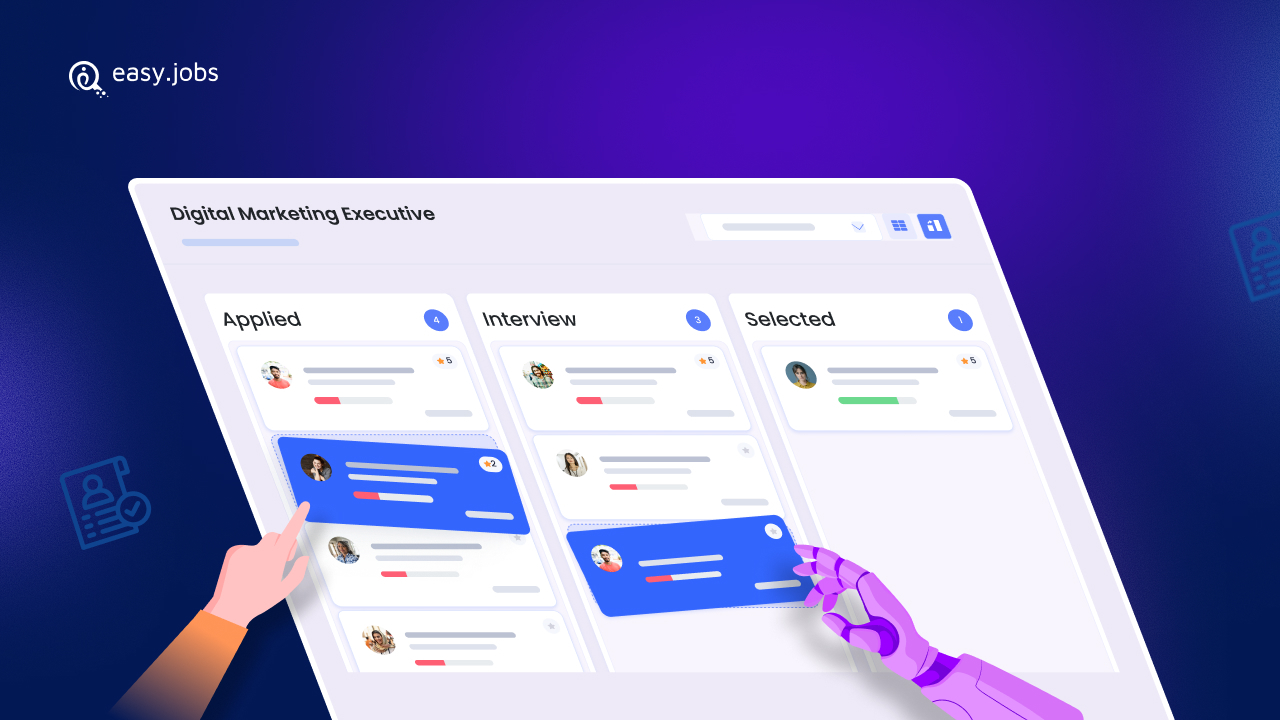
Below is a practical, end-to-end breakdown of the recruitment workflow stages, suitable for both small teams and growing organizations.
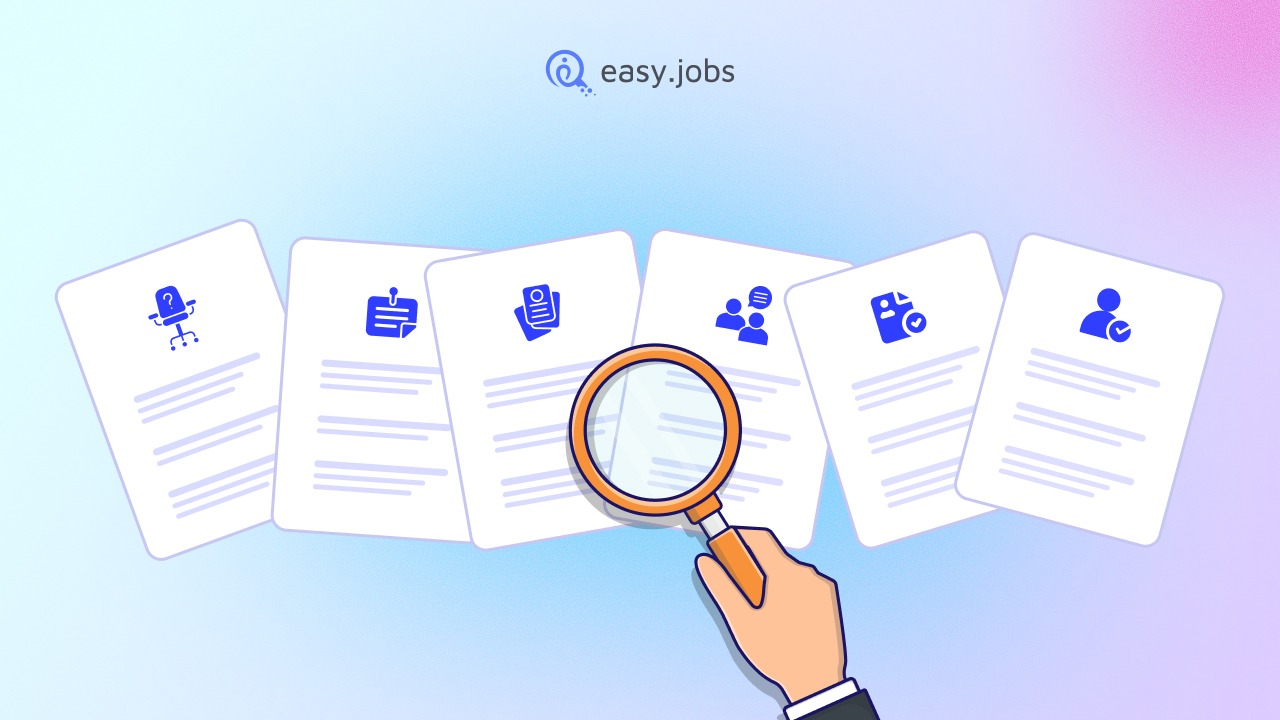
Recruitment Workflow Stages (Overview)
- Job planning and role definition
- Job posting and candidate sourcing
- Application screening and shortlisting
- Interviews and assessments
- Evaluation and hiring decision
- Offer management and approvals
- Hiring and onboarding handoff
Each stage plays a specific role in maintaining momentum and reducing drop-offs throughout the hiring process.
Job Planning & Role Definition
Every effective recruitment workflow begins with precise role planning. This stage defines the job requirements, responsibilities, success criteria and hiring goals before any sourcing begins. When expectations are unclear at this point, misalignment and rework appear later in the process.
Well-defined roles help recruiters attract the right candidates and enable hiring managers to evaluate applications consistently. This stage also sets the foundation for fair screening and structured interviews.
Job Posting & Candidate Sourcing
Once the role is defined, the workflow moves into sourcing. This includes publishing job listings, promoting roles across channels and proactively sourcing candidates from talent pools or referrals.
A structured workflow ensures that sourcing efforts are consistent and trackable. Instead of relying on scattered job posts or inboxes, candidates enter the same pipeline, making it easier to manage volume and compare applicants fairly.
Application Screening & Shortlisting
Screening is where many hiring workflows slow down. Without structure, applications pile up and strong candidates are overlooked. A defined screening stage applies consistent criteria to evaluate resumes, applications and initial responses.
Shortlisting helps recruiters focus on qualified candidates while maintaining transparency about why others are filtered out. This stage is critical for reducing time-to-hire without compromising quality.
Interview & Assessment Process
The interview stage evaluates candidates beyond their resumes. This may include structured interviews, skill assessments, or collaborative evaluations involving multiple stakeholders.
A scalable recruitment workflow defines how interviews are scheduled, conducted and documented. Clear structure ensures candidates move forward without unnecessary delays and interview feedback is captured consistently.
Evaluation & Hiring Decision
After interviews, candidates are reviewed and compared. This stage brings together feedback, scores, and assessments to support informed decision-making.
Without a defined workflow, decisions can stall or become subjective. A structured evaluation stage ensures alignment among recruiters and hiring managers and provides a clear path to final approval.
Offer Management & Approval
Once a candidate is selected, the workflow moves into offer management. This includes approvals, compensation alignment and offer communication.
Delays at this stage often result in lost candidates. A straightforward workflow defines who approves offers, how changes are handled and when communication occurs, helping teams move quickly and professionally.
Hiring & Onboarding Handoff
The final stage completes the recruitment workflow by transitioning the hired candidate to onboarding. This handoff ensures that candidate information, documents and expectations are passed to the appropriate team.
Including onboarding in the workflow reinforces the end-to-end hiring approach. It closes the loop and ensures hiring efforts translate into successful employee starts.
Recruitment Workflow Chart (Visual Overview)
A recruitment workflow chart, or hiring pipeline, provides a visual representation of how candidates move through each stage of the hiring process. While written steps explain what happens at each point, a chart shows how those steps connect. Making it easier for teams to understand flow, ownership, and transitions at a glance.
In practice, a recruitment workflow chart maps the whole journey from job planning to hiring handoff. Each stage is represented as a node, with directional paths showing progression, decision points, and approvals. This visual clarity is especially valuable for growing teams, where multiple stakeholders are involved and handoffs can introduce delays.
Using a workflow chart also helps identify bottlenecks. When candidates stall at a particular stage, such as screening or approvals. The chart makes it easier to see where improvements or automation may be needed.
How to Read And Use This Recruitment Workflow Chart
To use a recruitment workflow chart effectively, start by identifying the entry point. Typically, job planning or sourcing and following the candidate path through each stage. Pay attention to decision points, such as screening outcomes or interview evaluations, where candidates either move forward or exit the process.
Teams should use the chart as a shared reference. Recruiters, hiring managers and approvers can align on responsibilities, timelines and expectations. Over time, the chart can be updated to reflect changes in hiring volume, role complexity, or automation, keeping the workflow scalable and relevant.
Tools to Automate Hiring at Each Workflow Stage
As hiring volume grows, manual coordination becomes a significant constraint on recruitment performance. Tools to automate hiring help teams reduce repetitive work, maintain consistency, and scale their recruitment workflow without sacrificing quality or visibility.
Automation works best when it supports clearly defined workflow stages. Rather than replacing human decision-making, it streamlines transitions, data capture, and communication across the hiring lifecycle.
Automation for Sourcing & Job Distribution
Automation at the sourcing stage focuses on expanding reach while reducing manual posting effort. Hiring tools can distribute job listings across multiple channels from a single workflow and track where candidates are coming from.
This ensures all applicants enter the same pipeline, making sourcing performance measurable and comparable across roles and channels.
Automation for Screening & Shortlisting
Screening automation helps teams manage high application volume efficiently. Tools can filter candidates based on predefined criteria, surface qualified applicants, and flag incomplete or mismatched applications.
By standardizing screening logic, automation reduces bias, improves response times, and ensures recruiters focus their attention where it adds the most value.
Automation for Interview Scheduling
Interview coordination is one of the most time-consuming parts of hiring. Automation tools handle scheduling, availability matching, and reminders, reducing back-and-forth communication.
This keeps candidates moving through the workflow smoothly and minimizes delays caused by scheduling conflicts.
Automation for Evaluation & Collaboration
During evaluation, automation supports structured feedback collection and collaboration. Tools centralize interview notes, scorecards, and comments, enabling hiring teams to objectively compare candidates.
This visibility improves alignment and accelerates decision-making, especially when multiple stakeholders are involved.
Automation for Offer & Hiring Management
At the final stages, automation helps manage approvals, documentation, and communication. Offer workflows can trigger approval steps, track status, and ensure timely follow-ups with candidates.
Automating this stage reduces errors, shortens offer timelines, and improves acceptance rates, which are critical in competitive hiring markets.
How to Make Your Recruitment Workflow Scalable
A recruitment workflow becomes scalable when it can handle increased hiring volume without adding complexity or slowing decision-making. Scalability is not about adding more steps. It is about designing a system that adapts as teams, roles and hiring demands evolve.
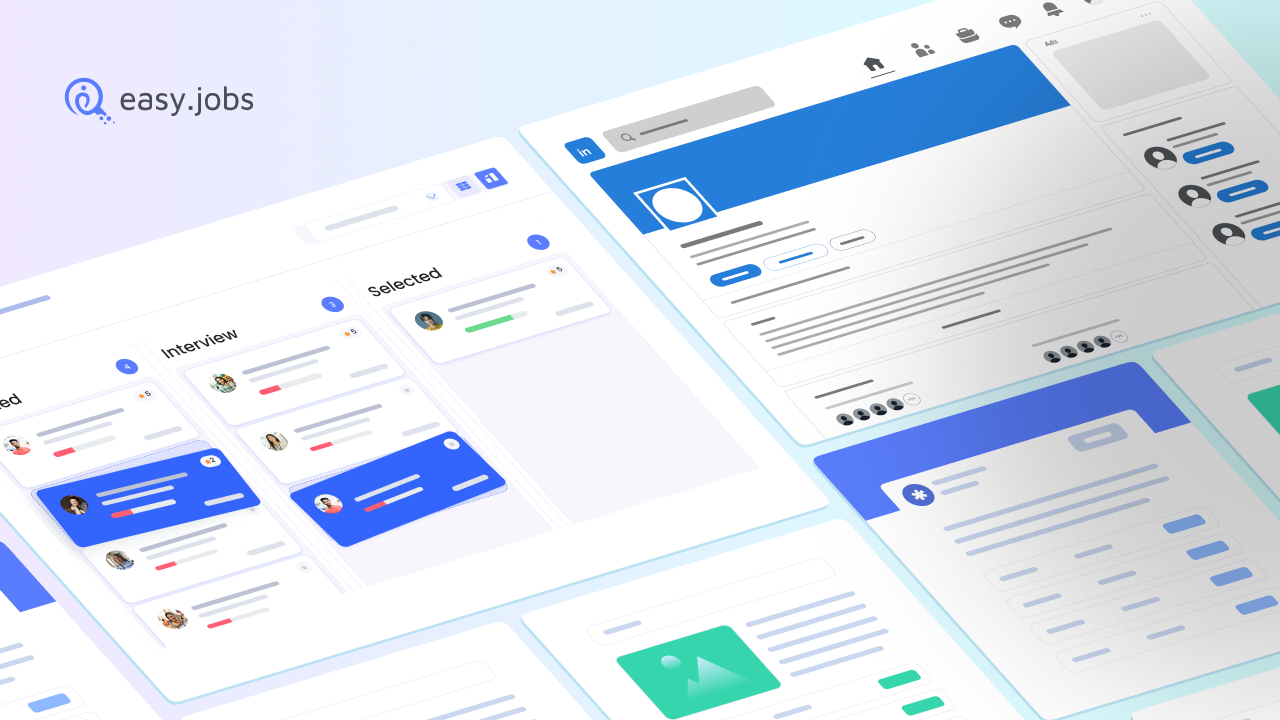
Scalable workflows rely on consistency, visibility and flexibility. Standardized stages create predictability, while configurable rules allow teams to adjust for different roles or departments. When supported by automation and clear ownership, the workflow continues to perform even as hiring accelerates.
Customizing Recruitment Workflows as Your Team Grows
As organizations grow, hiring needs become more diverse. Different roles may require additional screening steps, assessments, or approvals. A scalable recruitment workflow allows these variations without breaking the overall structure.
Customization should occur within a consistent framework. Teams can add or adjust stages for specific roles while maintaining shared definitions, metrics and reporting. This balance ensures flexibility without sacrificing control, enabling recruitment workflows to support growth over time.
Building a Recruitment Workflow That Scales with Your Hiring Needs
A well-designed recruitment workflow provides more than structure. It creates a system that supports consistent, efficient and measurable hiring. By clearly defining stages, visualizing the process and connecting each step from planning to onboarding, organizations can manage hiring as a cohesive end-to-end operation rather than a series of disconnected tasks.
Scalability comes from clarity and adaptability. When recruitment workflows are documented, standardized and supported by automation, teams can handle higher hiring volumes without increasing complexity or losing visibility. This approach not only reduces delays and drop-offs but also improves collaboration and candidate experience.
By building a recruitment workflow around clear stages, visual flow, and scalable practices, organizations position themselves to hire confidently: today and as their hiring needs continue to grow.
Frequently Asked Questions (FAQs)
What is a recruitment workflow?
A recruitment workflow is a structured sequence of steps that organizations follow to efficiently attract, screen, evaluate and hire candidates. It defines how applicants move through each hiring stage while ensuring consistency, visibility and accountability across the entire recruitment process.
What are the stages of a recruitment workflow?
Recruitment workflow stages typically include job planning, candidate sourcing, application screening, interviews and assessments, evaluation and decision-making, offer management, and the final hiring or onboarding handoff. These stages ensure candidates move through hiring in a precise and repeatable way.
What does end-to-end hiring mean?
End-to-end hiring refers to managing the full recruitment lifecycle from role definition and job posting through candidate evaluation, offer management, and the transition to onboarding. It ensures there are no gaps between stages and that hiring operates as a single, connected system.
How do you automate a recruitment workflow?
A recruitment workflow can be automated by using hiring tools to manage job distribution, resume screening, interview scheduling, candidate evaluation, and offer approvals. Automation reduces manual work, shortens hiring timelines, and improves consistency across workflow stages.
What is a recruitment workflow chart?
A recruitment workflow chart is a visual diagram that shows each stage of the hiring process and how candidates move from application to hiring. It helps teams understand workflow progression, responsibilities, and decision points at a glance.
Want to See How a Recruitment Workflow Works in Practice?
If you are exploring ways to structure or automate your recruitment workflow, you can see how an end-to-end hiring workflow looks in action.
Try easy.jobs for free to explore customizable recruitment workflows, stage-based automation and hiring visibility without commitment.
If you found this article helpful, subscribe to our blog to receive more practical insights for recruiters. Join our Facebook Community to connect with other hiring professionals and share experiences around modern recruitment.