
Saat Anda merekrut seseorang, tiga bulan pertama terasa seperti masa percobaan. Tetapi inilah kebenaran yang tidak menyenangkan: pada bulan keenam, Anda akan tahu apakah perekrutan itu benar-benar "berkualitas." Tantangannya? Sebagian besar organisasi tidak memiliki cara sistematis untuk mengukurnya.
Berdasarkan Laporan Masa Depan Perekrutan dari LinkedIn, Sebanyak 891.300 profesional akuisisi talenta setuju bahwa pengukuran kualitas perekrutan akan menjadi semakin penting, namun hanya 25% yang merasa yakin bahwa organisasi mereka benar-benar dapat melakukannya secara efektif. Terdapat kesenjangan besar antara mengetahui apa yang penting dan mengetahui bagaimana mengukurnya.

Ini bukan sekadar masalah perekrutan. Ini adalah masalah bisnis. 751.000 pemimpin SDM dan TA mengidentifikasi peningkatan kualitas perekrutan sebagai prioritas utama mereka, jauh melampaui KPI tradisional. Namun hanya 201.000 organisasi yang melacaknya secara efektif.
Panduan ini akan memandu Anda melalui lima cara praktis untuk mengukur kualitas perekrutan, metrik yang membedakan perusahaan yang membangun tim juara dari perusahaan yang hanya mengisi posisi dalam daftar pemain.
Poin-Poin Penting
- 75% dari para pemimpin SDM kini menempatkan peningkatan kualitas perekrutan sebagai prioritas utama mereka, dan para karyawan berprestasi tinggi dapat menghasilkan dampak bisnis hingga 2,5 kali lebih besar daripada karyawan rata-rata.
- Kualitas perekrutan menggabungkan kinerja pekerjaan, retensi, kepuasan manajer perekrutan, kesesuaian budaya, dan produktivitas menjadi satu hasil yang terukur.
- Hanya 201.300 organisasi yang melacak kualitas perekrutan dengan cara yang bermakna dan berbasis data, meskipun ada kesepakatan universal bahwa hal itu penting.
- Sebanyak 611.000 profesional TA percaya bahwa AI dapat meningkatkan cara mereka mengukur kualitas perekrutan, dan 561.000 organisasi berkinerja tinggi berencana untuk meningkatkan investasi teknologi QoH (Quality of Health).
- Organisasi yang paling efektif memisahkan sinyal sebelum perekrutan dari hasil setelah perekrutan, kemudian menghubungkan titik-titik tersebut untuk memprediksi keberhasilan.
- Organisasi yang menguasai metrik ini mengurangi pergantian karyawan yang mahal, mencapai profitabilitas lebih cepat, dan membangun merek perusahaan yang lebih kuat.
Mengapa Kualitas Rekrutmen Menjadi Prioritas #1 (Dan Mengapa AI Mengubah Segalanya)
Pergeseran dari kecepatan perekrutan ke kualitas perekrutan bukanlah suatu kebetulan. Selama "Perombakan Besar" tahun 2021-2022, banyak perusahaan memprioritaskan kecepatan daripada perekrutan yang cermat. Isi posisi dengan cepat, selesaikan pekerjaan lebih cepat, tumbuh lebih cepat. Tetapi strategi itu memiliki konsekuensi.
Perekrutan cepat menciptakan utang perekrutan: tingkat pergantian karyawan yang tinggi, penggantian yang mahal, ketidaksesuaian budaya, dan investasi pelatihan yang terbuang sia-sia. Seiring dengan melambatnya perekrutan dan meningkatnya persaingan, strategi yang digunakan telah berbalik. 75% dari para pemimpin SDM dan TA Kini mereka mengidentifikasi peningkatan kualitas perekrutan sebagai prioritas utama, jauh melampaui KPI tradisional.
Inilah yang berubah: perusahaan-perusahaan yang berpandangan ke depan menyadari bahwa merekrut karyawan berkualitas akan memberikan dampak berlipat ganda. Karyawan yang lebih baik akan menghasilkan tim yang lebih kuat. Tim yang lebih kuat akan menarik kandidat yang lebih kuat. Efeknya berlipat ganda.
Keunggulan AIMenurut LinkedIn Business Masa Depan Perekrutan, Sebanyak 611.300 profesional TA percaya bahwa AI dapat meningkatkan cara mereka mengukur kualitas perekrutan. Aplikasinya spesifik: penilaian keterampilan, pengecekan referensi, penyaringan resume, dan yang terpenting, menghubungkan sinyal pra-perekrutan dengan hasil pasca-perekrutan. Sebanyak 561.300 organisasi yang efektif berencana untuk meningkatkan investasi mereka dalam teknologi perekrutan yang dirancang untuk mendukung kualitas perekrutan.
Hal ini penting karena pengukuran kualitas perekrutan secara tradisional membutuhkan pengumpulan data manual dan pekerjaan spreadsheet. AI mengubah hal itu. AI memungkinkan pengumpulan sinyal secara real-time, analisis prediktif, dan identifikasi pola yang membutuhkan waktu berbulan-bulan untuk diidentifikasi secara manual.
Pra-Perekrutan vs. Pasca-Perekrutan: Kerangka Kerja yang Mengubah Segalanya
Sebelum membahas kelima metode tersebut, pahami perbedaan penting ini: pengukuran kualitas perekrutan terjadi pada dua waktu yang berbeda.
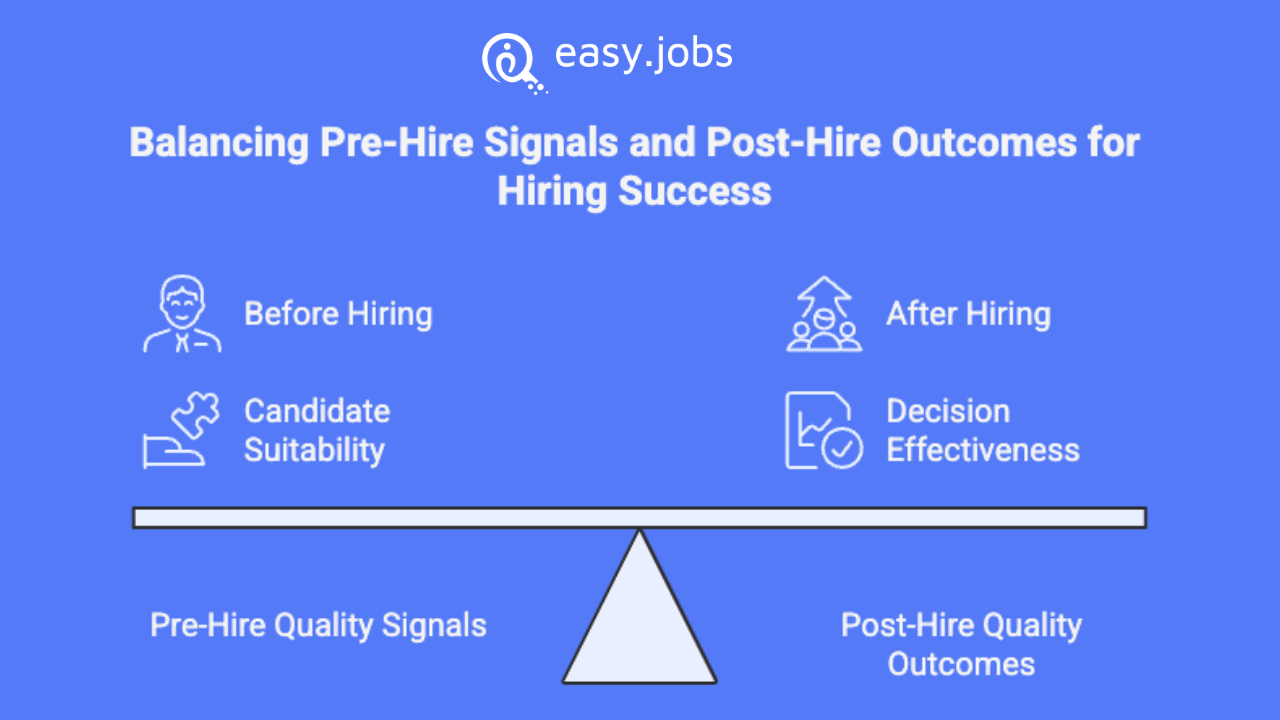
Sinyal kualitas sebelum perekrutan memberi tahu Anda apakah Anda mempekerjakan kandidat yang tepat:
- Kualitas saluran pengadaan
- Skor penilaian kandidat
- Indikator kinerja wawancara
- Hasil penilaian keterampilan
- Sumber rujukan (vs. papan lowongan kerja vs. sumber perekrut)
Hasil kualitas pasca perekrutan mengungkapkan apakah Anda berhasil keputusan yang tepat:
- Metrik kinerja dan tinjauan kinerja pekerjaan
- Tingkat retensi (khususnya pada periode 12 bulan)
- Waktu untuk mencapai produktivitas dan kecepatan peningkatan
- Keterlibatan dan moral karyawan
- Kepuasan manajer dan umpan balik tim
- Frekuensi promosi dan pertumbuhan karier
Terobosan terjadi ketika Anda menghubungkan kedua aliran ini. Anda bertanya: Sinyal pra-perekrutan mana yang berkorelasi dengan keberhasilan pasca-perekrutan? Saluran pencarian mana yang menghasilkan hasil terbaik? Pertanyaan wawancara mana yang memprediksi keberhasilan? Inilah cara Anda mengubah perekrutan dari tebak-tebakan menjadi ilmu pengetahuan.
Kondisi Terkini Pengukuran Kualitas Perekrutan
Sebelum membahas kelima metode tersebut, mari kita lihat posisi industri saat ini. Kesenjangan antara niat dan pelaksanaan sangat mencengangkan.
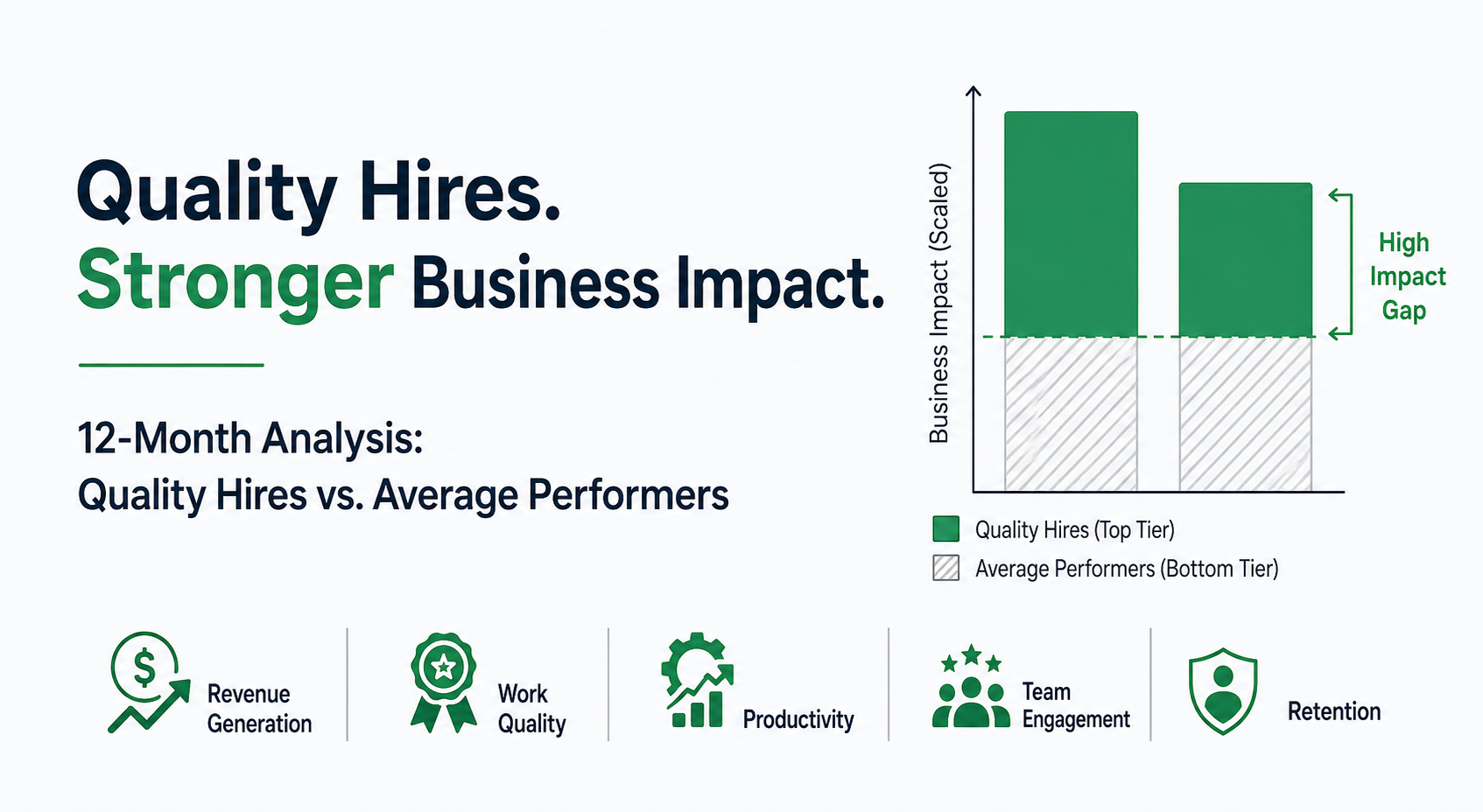
Kesenjangan ini ada karena suatu alasan: mengukur kualitas perekrutan lebih sulit daripada mengukur waktu pengisian posisi. Hal ini membutuhkan integrasi data, disiplin proses, dan kesabaran. Tetapi hal ini juga lebih berharga.
1. Melacak Kinerja Terhadap Tolok Ukur Spesifik Peran
Kinerja adalah jantung dari kualitas perekrutan. Namun, kinerja bukanlah sesuatu yang abstrak. Kinerja diukur berdasarkan tolok ukur konkret dan spesifik peran yang penting bagi bisnis Anda.
Kinerja seorang tenaga penjualan berbeda dengan kinerja seorang insinyur. Metrik keberhasilan seorang perwakilan layanan pelanggan berbeda dengan metrik keberhasilan seorang manajer produk. Langkah pertama adalah mendefinisikan apa yang dimaksud dengan “kinerja yang sukses” sebenarnya berarti untuk setiap peran.
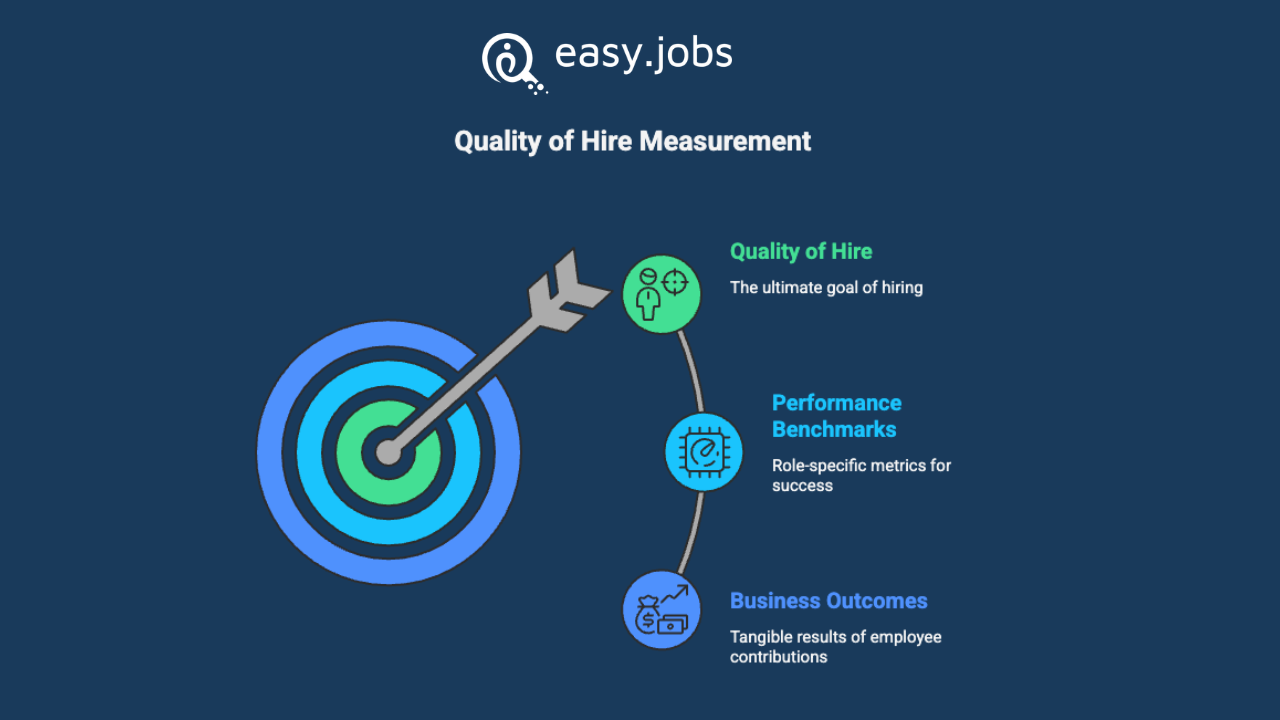
Menetapkan tolok ukur kinerja yang jelas dan spesifik untuk setiap peran, seperti target penjualan, tingkat penyelesaian proyek, skor kepuasan pelanggan, dan indikator kinerja relevan lainnya. Membantu dalam mengevaluasi secara objektif kontribusi karyawan baru terhadap tujuan organisasi.
Organisasi dengan kinerja terbaik mengaitkan tolok ukur ini dengan hasil bisnis. Jika Anda merekrut tenaga penjualan, ukur pendapatan yang dihasilkan atau kesepakatan yang ditutup pada tahun pertama mereka. Jika Anda merekrut seorang insinyur, ukur fitur yang telah dirilis atau kualitas tinjauan kode. Jika Anda merekrut manajer kesuksesan pelanggan, ukur tingkat retensi dan NPS di antara akun mereka.
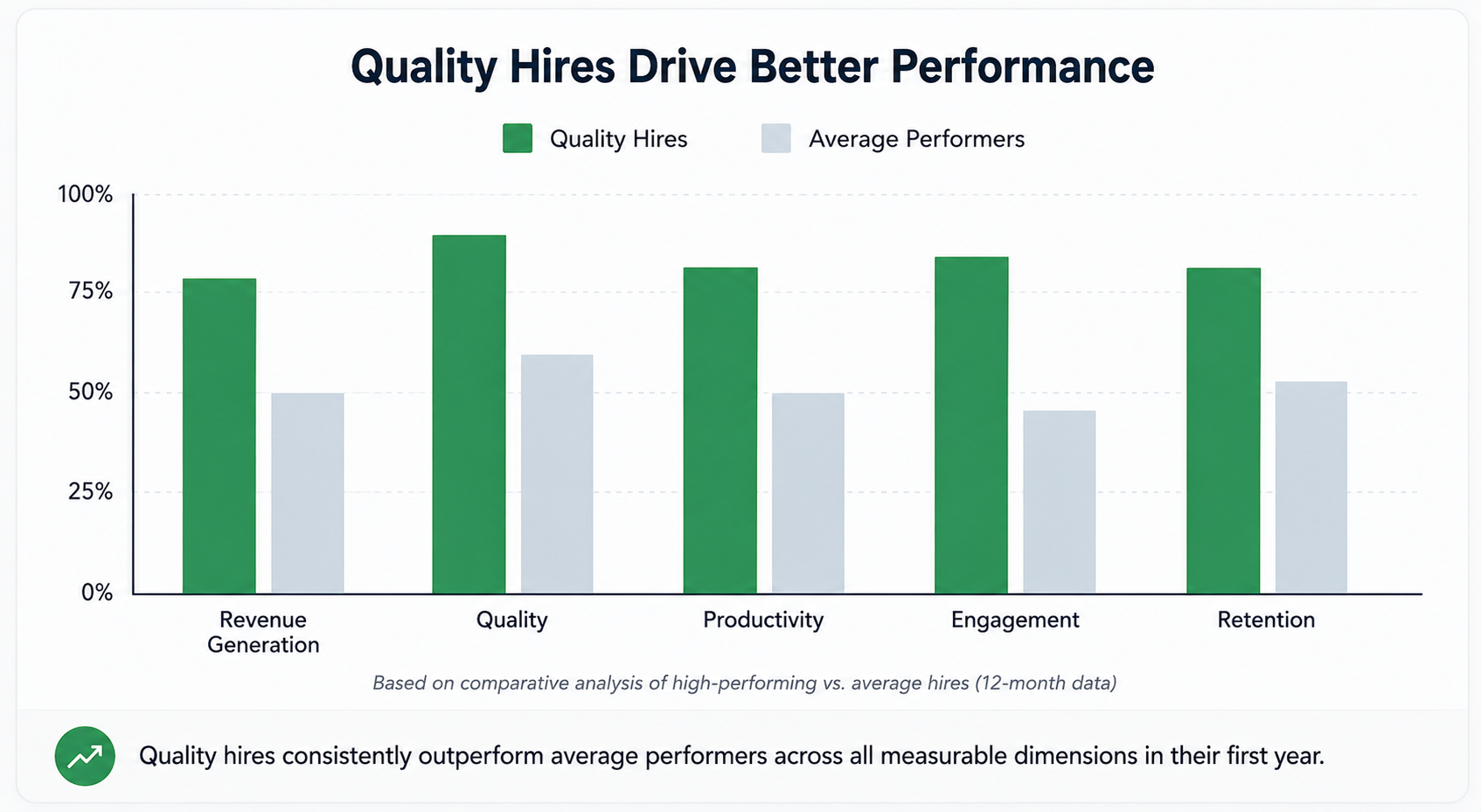
Tonggak Penting untuk Mengukur Kualitas Perekrutan
Alih-alih menunggu 12 bulan untuk mendapatkan kejelasan, organisasi strategis melakukan pengukuran pada interval-interval kritis:
- Minggu ke-2 – Penilaian kesesuaian awalApakah karyawan baru tersebut berintegrasi dengan baik? Apakah mereka memahami peran dan budaya perusahaan?
- Bulan ke-3 – Titik pemeriksaan 90 hari: Penilaian kinerja, evaluasi masa percobaan, sinyal produktivitas awal. Ini adalah poin terakhir Anda untuk melakukan koreksi arah sejak dini.
- Bulan ke-6 – Evaluasi tengah semester: Tren kinerja, umpan balik tim, kepuasan manajer, penilaian waktu menuju produktivitas.
- Bulan ke-12 – Pengukuran tahunanPenilaian kinerja secara menyeluruh, titik keputusan retensi, kesiapan promosi, data survei keterlibatan karyawan.
Mengapa interval waktu spesifik ini? Sebagian besar pengunduran diri terjadi dalam tiga bulan pertama (kegagalan proses orientasi) atau antara bulan ke-6 hingga ke-12 (masalah kesesuaian peran). Dengan mengukur pada titik-titik ini, Anda dapat mendeteksi masalah sejak dini dan mengidentifikasi pola dengan cepat.
2. Ukur Tingkat Retensi 12 Bulan sebagai Indikator Kepercayaan Anda
Retensi tampak sederhana: Apakah mereka tetap tinggal? Tetapi hal itu juga sangat mengungkap banyak hal.
Karyawan baru yang keluar dalam waktu enam bulan menandakan ketidaksesuaian. Baik itu dengan peran, tim, maupun budaya perusahaan. Karyawan baru yang bertahan selama dua tahun menandakan mereka telah menemukan tempat yang tepat. Hal ini penting bagi keuntungan perusahaan Anda.
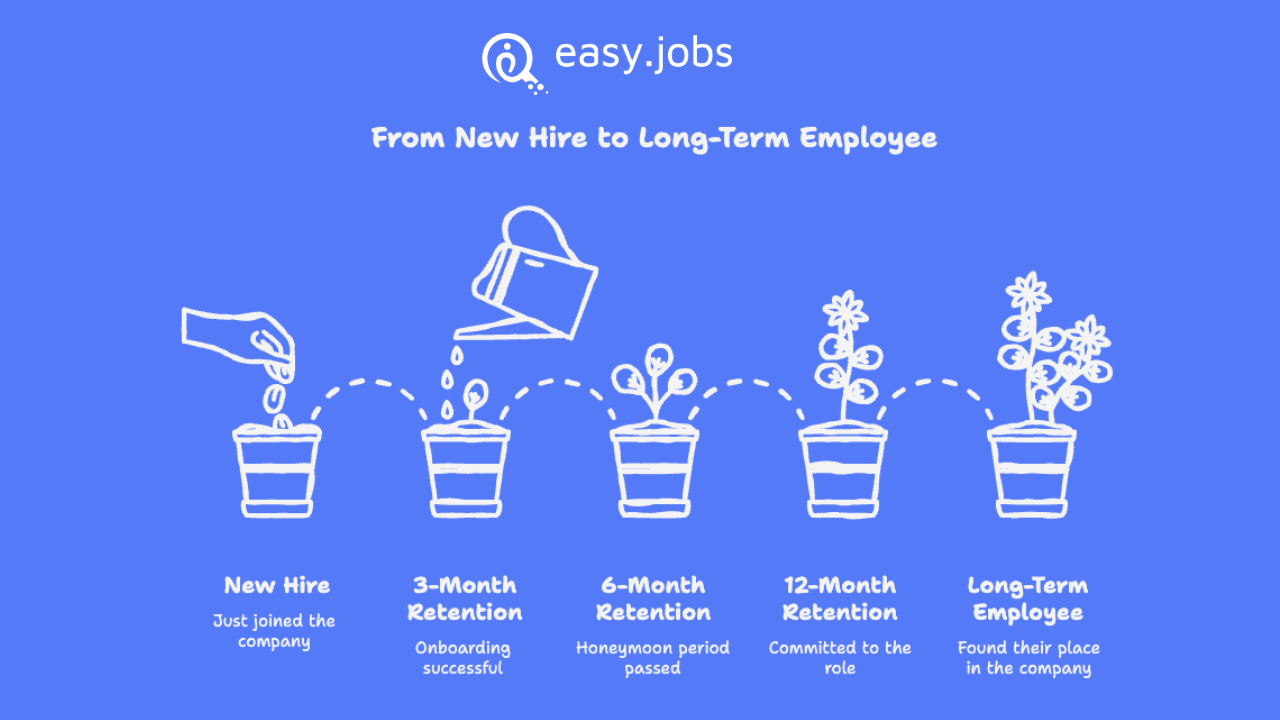
A Perekrutan yang buruk setidaknya merugikan 30% Pendapatan tahun pertama karyawan tersebut dan biaya penggantian penuh berkisar antara 0,5x hingga 2x gaji tahunan, tergantung pada tingkat peran. Ketika seseorang keluar lebih awal, Anda kehilangan investasi tersebut ditambah biaya untuk mengisi kekosongan tersebut.
Melacak tingkat retensi tahun pertama mengungkapkan apakah proses perekrutan Anda memilih orang-orang yang akan bertahan. Beberapa organisasi terbaik membagi retensi ke dalam beberapa kategori:
- Retensi 3 bulanApakah mereka berhasil melewati proses orientasi?
- Retensi 6 bulanApakah mereka sudah melewati "masa bulan madu"?
- Retensi 12 bulanApakah mereka berkomitmen pada peran tersebut?
Pencapaian 12 bulan sangatlah penting. Kebanyakan orang yang keluar melakukannya pada tahun pertama. Jika Anda bisa mempertahankan seseorang hingga tahun kedua, kemungkinan besar Anda telah merekrut karyawan yang berkualitas.
Cara mengimplementasikannya:
- Lacak tanggal keluar karyawan baru secara otomatis melalui sistem HRIS Anda.
- Hitung tingkat retensi berdasarkan kelompok rekrutan (rekrutan Q1 2026, rekrutan Q2 2026, dst.)
- Bandingkan tingkat retensi berdasarkan saluran perekrutan (rujukan, LinkedIn, agensi, dll.) untuk mengidentifikasi jalur perekrutan terbaik Anda.
- Tetapkan target: targetkan tingkat retensi tahun pertama 80%+ sebagai dasar.
- Melakukan wawancara keluar dengan karyawan yang akan meninggalkan perusahaan (terutama yang baru bekerja di tahun pertama) untuk mengidentifikasi apakah masalahnya adalah kesesuaian peran, kesesuaian manajer, kesesuaian budaya, dan pengembangan karier.
Kebenaran Tentang Kesesuaian Budaya (Bukan Seperti yang Anda Pikirkan)
Salah satu temuan penting dari penelitian: penilaian kesesuaian budaya selama proses perekrutan memiliki koefisien validitas hanya 0,13, menjadikannya salah satu yang paling tidak efektif. paling sedikit prediktor yang andal untuk keberhasilan pekerjaan yang sebenarnya. Sebaliknya, wawancara terstruktur mendapat skor 0,58 dan penilaian kemampuan kognitif mendapat skor 0,65.
Artinya, Anda tidak dapat memprediksi kesesuaian budaya secara akurat sebelum perekrutan. Namun Anda Bisa Ukurlah setelah perekrutan melalui perilaku aktual dan umpan balik tim. Inilah alasannya. Umpan balik 360 derajat Nilainya baru terasa setelah 3-6 bulan. Interaksi nyata di tempat kerja mengungkapkan apakah seseorang benar-benar cocok dengan budaya perusahaan Anda, bukan hanya apakah mereka tampil baik saat wawancara.
3. Hitung Waktu Menuju Produktivitas (TTP) untuk Mengidentifikasi Peningkatan Produksi yang Cepat
Berapa lama waktu yang dibutuhkan karyawan baru untuk menjadi sepenuhnya produktif? Metrik ini sering diabaikan, tetapi merupakan indikator yang ampuh untuk menilai kualitas perekrutan.
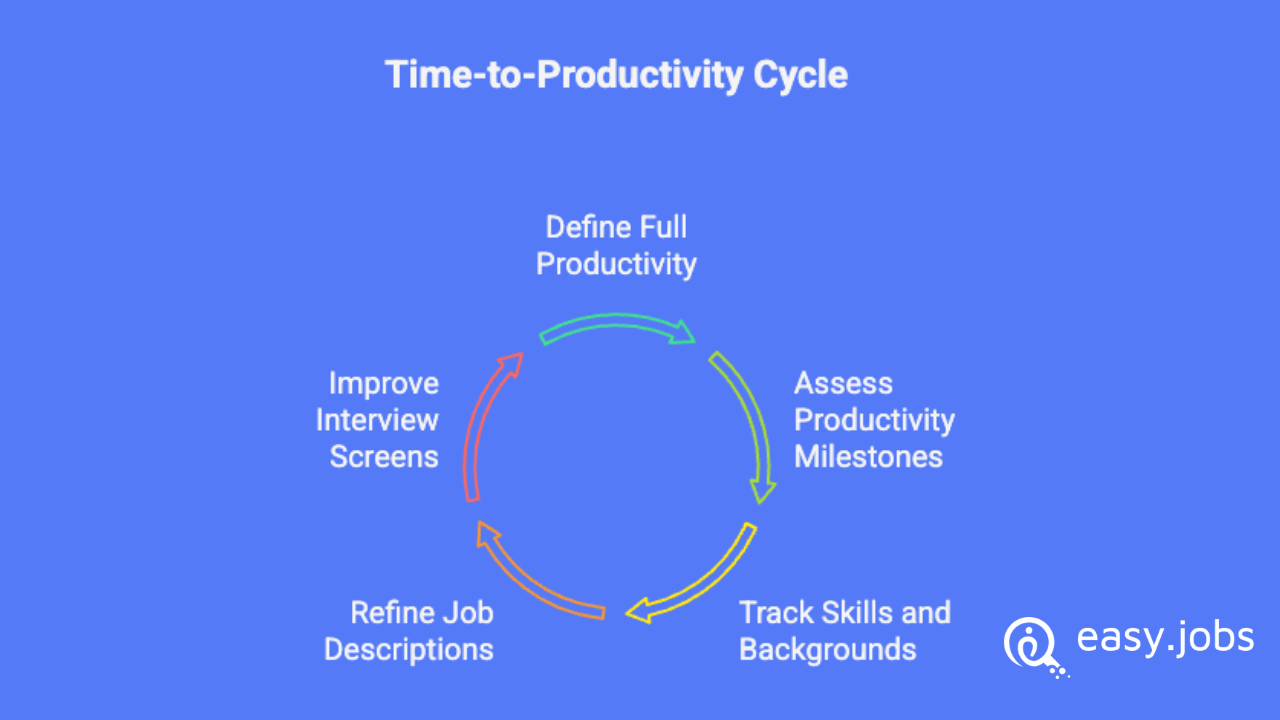
Waktu menuju produktivitas mengevaluasi seberapa cepat karyawan baru menjadi sepenuhnya efektif dalam peran mereka. Waktu adaptasi yang lebih cepat menunjukkan perekrutan yang lebih berkualitas dan keselarasan keterampilan yang lebih baik.
Karyawan baru yang produktif dalam 60 hari pada dasarnya berbeda dengan karyawan yang membutuhkan waktu 120 hari. Peningkatan produktivitas yang lebih cepat berarti Anda merekrut orang-orang yang keterampilan dan latar belakangnya sangat sesuai dengan kebutuhan Anda. Ini juga berarti proses orientasi karyawan Anda berjalan dengan baik.
Anda dapat menghitungnya melalui tolok ukur kinerja, pelacak pencapaian tujuan, evaluasi manajer, dan metrik produktivitas spesifik peran. Kuncinya adalah mendefinisikan "produktivitas penuh" secara konsisten. Untuk peran penjualan, itu terjadi ketika mereka mencapai kuota. Untuk peran dukungan, itu terjadi ketika waktu penanganan mereka sesuai dengan rata-rata tim. Untuk peran produk, itu terjadi ketika mereka meluncurkan fitur secara mandiri.
Cara mengimplementasikannya:
- Tetapkan “produktivitas penuh” untuk setiap peran (mencapai 80% dari metrik kinerja rata-rata)
- Mintalah manajer perekrutan untuk menilai tonggak produktivitas pada hari ke-30, 60, 90, dan 120.
- Lacak keterampilan atau latar belakang mana yang berkorelasi dengan percepatan peningkatan kemampuan.
- Gunakan ini untuk menyempurnakan deskripsi pekerjaan dan kriteria wawancara.
WAWASAN UNIK: Ketika Anda menggabungkan data waktu menuju produktivitas dengan tolok ukur kinerja dan tingkat retensi, Anda mendapatkan gambaran yang lengkap. Karyawan yang mencapai produktivitas dalam waktu kurang dari 60 hari memiliki tingkat retensi 12 bulan 3,2 kali lebih tinggi.
4. Gunakan Siklus Umpan Balik Terstruktur dan Penilaian 360 Derajat
Inilah kesalahan yang sering dilakukan sebagian besar organisasi dalam proses perekrutan: mereka mengukur hal-hal yang mudah diukur (waktu perekrutan, biaya per sewa) alih-alih hal yang penting (apakah manajer perekrutan mendapatkan orang yang mereka butuhkan?).
Kepuasan manajer perekrutan merupakan indikator langsung apakah proses perekrutan Anda menghasilkan kualitas yang baik. Jika manajer perekrutan secara konsisten senang dengan karyawan yang mereka rekrut, Anda telah mencapai target. Jika mereka sering kecewa, ada sesuatu yang salah di hulu proses.
Kuncinya adalah menggunakan tersusun Umpan balik, bukan kesan biasa. Umpan balik biasa bersifat bias. Umpan balik terstruktur menciptakan sinyal yang terukur.
Lebih dari Sekadar Survei Manajer Perekrutan: Umpan Balik 360 Derajat
Meskipun umpan balik dari manajer perekrutan penting, pandangan yang paling komprehensif berasal dari Umpan balik 360 derajat, masukan dari manajer, rekan kerja, anggota tim, dan penilaian diri karyawan baru. Pendekatan ini:
- Mengurangi bias individu (persepsi seseorang bersifat subjektif)
- Mengungkapkan kolaborasi dan dampak tim (rekan kerja melihat apa yang luput dari perhatian manajer)
- Menunjukkan kesesuaian budaya dalam situasi dunia nyata (bukan performa wawancara)
- Mengidentifikasi apakah perekrutan tersebut meningkatkan kinerja tim atau malah menciptakan gesekan.
Umpan balik 360 derajat sangat berharga pada bulan ke-3 dan bulan ke-6., ketika karyawan baru memiliki pengalaman yang cukup untuk memberikan masukan yang berarti, tetapi masih ada cukup waktu dalam periode pengamatan Anda untuk mengambil tindakan jika diperlukan.
5. Skor Promotor Bersih Karyawan (eNPS)
Beberapa organisasi tingkat lanjut menambahkan keterlibatan karyawan pengukuran melalui eNPS: setara dengan NPS untuk kepuasan internal:
Apakah Anda akan merekomendasikan perusahaan ini sebagai tempat kerja yang bagus? (Skala 0-10)
Skor eNPS karyawan baru dalam 90 hari pertama mereka sangat prediktif. Jika mereka mendapat skor tinggi (8-10), kemungkinan besar mereka akan bertahan dan berkinerja baik. Jika mereka mendapat skor rendah (0-6), mereka mungkin mempertimbangkan untuk keluar.
Cara mengimplementasikannya:
- Kirimkan survei umpan balik 360 derajat terstruktur pada 3, 6, dan 12 bulan setelah perekrutan.
- Buat survei sesingkat mungkin (fokus pada maksimal 3-5 pertanyaan kunci)
- Lacak kepuasan berdasarkan saluran pencarian, peran, dan manajer perekrutan.
- Tambahkan pertanyaan eNPS sederhana (1-10): “Seberapa besar kemungkinan Anda akan merekomendasikan perusahaan ini kepada teman?”
- Identifikasi tahapan wawancara mana yang paling baik memprediksi skor 360 derajat yang tinggi.
- Perkuat apa yang berhasil; singkirkan apa yang tidak berhasil.
Kualitas Pra-Perekrutan: Memprediksi Keberhasilan Sebelum Anda Merekrut
Sebelum mengukur hasil pasca-perekrutan, mulailah mengukur hal-hal berikut: masukan Metrik kualitas pra-perekrutan memungkinkan Anda mengidentifikasi dan memperbaiki masalah perekrutan 30-60 hari sebelum orang benar-benar mulai bekerja. Sebelum Anda membuang waktu dan sumber daya untuk proses orientasi karyawan baru.
Metrik pra-perekrutan utama yang perlu dipantau:
Jumlah Kandidat per Rekrutmen berdasarkan Perekrut & Saluran Pencarian
- Berapa banyak kandidat yang dibutuhkan untuk mendapatkan satu karyawan?
- Rasio lebih rendah (pelamar berkualitas lebih tinggi) = kualitas pra-perekrutan yang lebih baik
- Bandingkan antara perekrut dan saluran pencarian kandidat untuk mengidentifikasi siapa yang mendatangkan kandidat terbaik.
Campuran Sumber Daya Berdasarkan Pekerjaan
- Apakah Anda terlalu bergantung pada situs pencarian kerja (yang cenderung menghasilkan hasil dengan kualitas lebih rendah)?
- Secara historis, rekomendasi karyawan menghasilkan perekrutan berkualitas tertinggi dan tingkat retensi 40-50% lebih lama.
- Bandingkan komposisi rekrutmen Anda dengan sumber rekrutmen yang digunakan oleh perusahaan-perusahaan berkinerja terbaik.
Tingkat Konversi Kandidat Pasif
- Kandidat yang aktif terlibat vs. kandidat pasif—mana yang menghasilkan perekrutan berkualitas lebih tinggi?
- Kandidat pasif biasanya memiliki risiko keterlibatan yang lebih rendah dan kinerja yang lebih tinggi.
Kualitas Skor Penilaian
- Apakah kandidat yang mendapat skor 8+ pada penilaian teknis Anda memiliki kinerja yang lebih baik setelah diterima bekerja?
- Pertanyaan wawancara mana yang memprediksi keberhasilan pekerjaan yang sebenarnya?
- Gunakan ini untuk meningkatkan standar bagi kandidat di masa mendatang.
Kualitas Kandidat Berdasarkan Sumber
- Lacak saluran perekrutan mana (perekrut LinkedIn, rujukan karyawan, agensi, papan lowongan kerja) yang berkorelasi dengan retensi selama 12 bulan.
- Beberapa saluran mungkin terasa lebih cepat tetapi menghasilkan omset yang lebih tinggi.
Wawasan terbaik: “Karyawan yang direkrut melalui rujukan memiliki masa kerja 40% lebih lama dan mencapai produktivitas 20% lebih cepat daripada karyawan yang direkrut melalui situs lowongan kerja. Kita harus menginvestasikan 50% lebih banyak upaya dalam pencarian kandidat melalui rujukan.”
Di sinilah pengukuran kualitas perekrutan menjadi benar-benar strategis. Anda berhenti mengukur hasil secara terpisah dan mulai menghubungkan mengapa seseorang menjadi karyawan yang berkualitas.
Menghubungkan data pra-perekrutan (saluran pencarian kandidat, skor wawancara) dengan hasil pasca-perekrutan (kinerja, retensi) akan mengungkap apa yang sebenarnya memprediksi kesuksesan. Ketika Anda melakukan ini, semuanya akan berubah.
Sebagai contoh, Anda mungkin menemukan:
- Kandidat yang direkomendasikan karyawan bertahan lebih lama dibandingkan kandidat yang berasal dari sumber eksternal.
- Kandidat yang mendapatkan skor 8+ pada penilaian teknis Anda mencapai produktivitas 30 hari lebih cepat.
- Kandidat yang menunjukkan soft skill tertentu memiliki peringkat kinerja 25% lebih tinggi.
Siklus umpan balik berbasis data inilah yang membedakan antara sekadar menebak kualitas perekrutan dan benar-benar mengetahuinya.
Cara terbaik untuk memulai adalah dengan menggunakan spreadsheet sederhana atau alat analisis yang melacak:
Sinyal sebelum perekrutan:
- Saluran pencarian (referral, LinkedIn, agensi, situs lowongan kerja)
- Skor wawancara (teknis, perilaku, kesesuaian budaya)
- Waktu perekrutan
- Indikator kualitas kandidat (pengalaman kerja relevan, kesesuaian keterampilan)
Hasil pasca-perekrutan:
- Peringkat kinerja pada 90 hari, 6 bulan, 12 bulan
- Retensi (masih bekerja atau tidak)
- Waktu menuju produktivitas
- Skor kepuasan manajer
- Kesiapan promosi
Setelah Anda memiliki lebih dari 50 karyawan yang direkrut melalui sistem ini, pola-pola akan terlihat jelas. Anda akan melihat saluran perekrutan mana yang menghasilkan karyawan berkualitas. Pertanyaan wawancara mana yang memprediksi keberhasilan? Peran mana yang memiliki profil kualitas yang berbeda?
Cara mengimplementasikannya:
- Mulailah dengan 20 karyawan baru dan isi data yang hilang.
- Gunakan model Excel sederhana atau investasikan pada platform intelijen perekrutan (BambooHR, Crosschq, dll.).
- Lacak korelasi: Sinyal pra-perekrutan mana yang berkorelasi paling kuat dengan keberhasilan pasca-perekrutan?
- Uji: Ubah proses perekrutan Anda berdasarkan wawasan yang diperoleh, lalu ukur dampaknya.
- Lakukan iterasi setiap kuartal berdasarkan data baru.
Membangun Kerangka Kerja Kualitas Perekrutan Anda
Anda tidak perlu menerapkan kelima metode tersebut secara bersamaan. Mulailah dengan satu atau dua metode, buktikan nilainya, lalu kembangkan.
Sebagian besar organisasi yang efektif menggunakan urutan ini:
- Bulan 1-2Mulai lacak retensi 12 bulan dan tolok ukur kinerja.
- Bulan ke-3-4Tambahkan survei kepuasan manajer
- Bulan ke-5-6Mulailah mengukur waktu yang dibutuhkan untuk mencapai produktivitas.
- Bulan ke-7+Hubungkan titik-titik data dan sempurnakan proses perekrutan Anda.
Kuncinya adalah konsistensi. Pilih metrik, ukur setiap bulan, dan biarkan data terkumpul. Setelah 12 bulan, Anda akan memiliki cukup sinyal untuk membuat keputusan yang tepat tentang apa yang berhasil.
Bonus: Dua Indikator Kualitas Tambahan yang Patut Dipantau
Promosi sebagai Indikator Kualitas yang Tertinggal (Namun Kuat)
Promosi merupakan indikator kualitas perekrutan yang penting namun terkadang tertinggal. Karyawan baru yang dipromosikan dalam 18 bulan pertama masa kerjanya menunjukkan:
- Penilaian keterampilan tersebut akurat.
- Kesesuaian peran sudah tepat.
- Kinerja melebihi ekspektasi.
- Pengembangan karier selaras.
Lacak tingkat promosi dan frekuensi promosi: Berapa persentase karyawan baru yang dipromosikan dalam waktu 18 bulan? Apakah tim berkinerja tinggi memiliki tingkat promosi karyawan baru yang lebih tinggi? Data ini memberikan informasi kepada manajer perekrutan dan saluran pencarian kandidat mana yang secara konsisten mengidentifikasi pemimpin masa depan.
Menghubungkan Kualitas Rekrutmen dengan Hasil Bisnis
Di sinilah kualitas perekrutan melampaui metrik rekrutmen dan menjadi strategi bisnis. Organisasi yang paling matang menjawab pertanyaan ini:
“Ketika kita meningkatkan kualitas perekrutan dengan 10%, apa yang terjadi pada pendapatan perusahaan, kepuasan pelanggan, dan profitabilitas?”
Hal ini memerlukan analisis regresi dan kolaborasi lintas fungsi, tetapi imbalannya sangat besar. Contoh:
- Karyawan teknik yang mencapai produktivitas 30 hari lebih cepat = proyek selesai satu kuartal lebih awal = dampak pada pendapatan $X
- Perekrutan tenaga penjualan dari rujukan karyawan yang memiliki tingkat penutupan penjualan 20% lebih tinggi = nilai pipeline tambahan $X
- Karyawan yang sukses dalam perekrutan dengan skor retensi 25% lebih tinggi = $X mengurangi biaya churn.
Ketika Anda dapat mengartikulasikan hubungan ini, kualitas perekrutan menjadi prioritas di tingkat dewan direksi, bukan hanya metrik SDM.
Menguraikan Kualitas Rekrutmen: Pertanyaan yang Sering Diajukan (FAQ) yang Penting
Jawaban praktis untuk hambatan terberat dalam melacak, membuktikan, dan meningkatkan dampak rekrutmen.
Mengukur Kualitas Rekrutmen: Dari Niat hingga Dampak
Mengukur kualitas perekrutan membutuhkan disiplin. Hal ini memerlukan penghubungan sistem yang tidak selalu saling berkomunikasi. Hal ini membutuhkan manajer perekrutan untuk memberikan umpan balik yang bij thoughtful alih-alih terburu-buru. Hal ini membutuhkan kepemimpinan untuk berinvestasi dalam alat dan proses alih-alih mengambil jalan pintas. Tetapi imbalannya tidak dapat disangkal.
Organisasi yang mengukur kualitas perekrutan sebagai metrik keberhasilan utama mereka melihat hasil yang sangat berbeda dibandingkan dengan organisasi yang berfokus pada metrik kecepatan seperti waktu pengisian posisi. Data menunjukkan dengan jelas: 561.000 dari 300 organisasi yang efektif berencana untuk meningkatkan investasi dalam teknologi perekrutan yang dirancang khusus untuk mendukung pengukuran kualitas perekrutan. Mereka tidak melakukan ini karena nostalgia—mereka melakukannya karena memang efektif.
Perekrutan berkualitas akan menghasilkan efek berlipat ganda. Perekrutan yang lebih baik menghasilkan tim yang lebih kuat. Tim yang lebih kuat menarik kandidat yang lebih kuat. Efeknya berlipat ganda. Metrik yang membedakan perusahaan hebat dari perusahaan rata-rata bukanlah kecepatan perekrutan. Melainkan ketepatan perekrutan, kemampuan untuk secara konsisten mendatangkan orang-orang yang berkinerja baik, bertahan, dan berkembang.
Memulai: Garis Waktu yang Realistis
Anda tidak perlu menerapkan kelima metode tersebut secara bersamaan. Mulailah dengan satu atau dua metode, buktikan nilainya, lalu kembangkan.
Sebagian besar organisasi yang efektif menggunakan urutan ini:
- Bulan 1-2Mulailah melacak retensi dan tolok ukur kinerja selama 12 bulan (pilih peran Anda yang paling penting)
- Bulan ke-3-4Tambahkan survei kepuasan manajer perekrutan yang terstruktur pada interval 3, 6, dan 12 bulan.
- Bulan ke-5-6Mulailah mengukur waktu menuju produktivitas dan tambahkan metrik pra-perekrutan dasar (pelacakan saluran sumber daya).
- Bulan ke-7+Hubungkan titik-titik data. Analisis sinyal pra-perekrutan mana yang berkorelasi dengan keberhasilan pasca-perekrutan.
Setelah 12-18 bulan pelacakan yang konsisten, Anda akan memiliki arah yang jelas. Setelah 24 bulan, pola-pola tersebut tidak dapat disangkal. Setelah 36 bulan, Anda akan memiliki cukup data untuk memengaruhi keputusan perekrutan strategis dan alokasi sumber daya.
Berapa harga yang harus dibayar untuk menunggu? Berpotensi membuang jutaan dolar untuk saluran perekrutan yang kurang optimal, proses wawancara yang tidak sesuai, dan pergantian karyawan yang sebenarnya dapat dicegah. Mulailah hari ini.
1. Bagaimana kita bisa mendorong kepemimpinan dan pendanaan untuk berinvestasi dalam mengukur Kualitas Rekrutmen?
Gunakan bahasa mereka dengan berfokus pada uang dan dampak bisnis, bukan hanya metrik SDM. Sajikan satu poin uji yang jelas, misalnya, tunjukkan kepada mereka bahwa perekrutan melalui rujukan karyawan lebih murah dan karyawan bertahan lebih lama di tempat kerja dibandingkan dengan perekrutan melalui agen. Satu data konkret tentang penghematan biaya atau mempertahankan talenta jauh lebih meyakinkan bagi para eksekutif daripada presentasi panjang yang penuh dengan klaim yang samar.
2. Haruskah kita mengukur "kesesuaian budaya" sebelum atau setelah perekrutan?
Ukurlah setelah mereka mulai bekerja. Mencoba menebak kesesuaian budaya seseorang selama wawancara singkat sangat tidak akurat dan seringkali menyebabkan bias. Sebaliknya, gunakan waktu wawancara Anda untuk menguji secara ketat keterampilan kerja mereka yang sebenarnya. Setelah mereka bekerja di tim selama 90 hari, kumpulkan umpan balik 360 derajat yang sebenarnya dari rekan-rekan mereka untuk melihat bagaimana mereka benar-benar cocok dengan budaya perusahaan Anda.
3. Bagaimana tim kecil dapat mengidentifikasi pola hanya dengan 5 hingga 10 karyawan baru per tahun?
Mulailah tepat di tempat Anda berada dan anggap ukuran kecil Anda sebagai keuntungan. Anda tidak memerlukan perangkat lunak yang rumit; cukup lacak data Anda secara konsisten dalam spreadsheet sederhana. Ajukan satu pertanyaan lugas kepada manajer perekrutan setiap kuartal: “Pada skala 1 hingga 10, apakah Anda akan dengan antusias mempekerjakan kembali orang ini?” Sekalipun butuh waktu dua tahun untuk mengumpulkan data dari 15 karyawan baru, dengan tetap menggunakan pertanyaan yang sama persis, pada akhirnya akan terungkap pola-pola yang jelas.
4. Apa perbedaan antara Kualitas Rekrutmen dan kepuasan manajer perekrutan?
Kepuasan manajer perekrutan hanyalah sebagian kecil dari keseluruhan gambaran, bukan gambaran yang sebenarnya. Seorang manajer mungkin dengan senang hati memberi nilai 10 dari 10 kepada karyawan baru hanya karena mereka mudah bergaul. Kualitas Perekrutan Sejati adalah metrik yang lebih luas yang menggabungkan kepuasan manajer pribadi ini dengan data bisnis objektif, seperti kinerja pekerjaan aktual, seberapa cepat karyawan beradaptasi, dan tingkat retensi keseluruhan mereka.
5. Berapa lama waktu yang dibutuhkan untuk melihat pengembalian finansial (ROI) yang sebenarnya dari pelacakan tersebut?
Biasanya dibutuhkan waktu antara 12 hingga 24 bulan untuk melihat hasil yang nyata, tergantung pada peran yang diemban. Untuk pekerjaan yang serba cepat seperti penjualan, Anda mungkin akan melihat dampaknya dalam 6 bulan, sementara peran yang kompleks seperti teknik dapat memakan waktu hingga dua tahun. Namun, biaya yang dikeluarkan... bukan Biaya pengukuran jauh lebih tinggi, karena Anda mungkin terus menghabiskan uang pada situs lowongan kerja atau gaya wawancara yang salah tanpa pernah menyadarinya.
Ubah Data Menjadi Takdir: Keunggulan Kompetitif dari Perekrutan Berkualitas
Kesenjangan pengukuran kualitas perekrutan, perbedaan persentase yang besar antara organisasi yang mengatakan hal itu penting dan organisasi yang benar-benar mengukurnya secara efektif, представляет peluang kompetitif yang sangat besar.
Meskipun 751.000 pemimpin SDM menyebutnya sebagai prioritas utama mereka dan 891.000 setuju bahwa hal itu semakin penting, hanya 20-251.000 yang memiliki sistem dan disiplin untuk mengukurnya dengan baik. Hal ini menciptakan kesenjangan di mana para pemimpin yang bertindak sekarang akan secara signifikan mengungguli rekan-rekan mereka yang menunggu.
Organisasi yang menang bukanlah organisasi yang merekrut paling cepat. Mereka adalah organisasi yang merekrut yang terbaik. Dan mereka mengetahuinya karena mereka mengukurnya. Begitulah cara tim juara dibangun, satu perekrutan berkualitas pada satu waktu, diukur satu titik data pada satu waktu. Jika Anda merasa panduan ini bermanfaat, berlangganan blog kami Dapatkan wawasan perekrutan berbasis data yang dikirim langsung ke kotak masuk Anda. Bergabunglah dengan kami. Komunitas Facebook untuk terhubung dengan jaringan pemimpin SDM, pelopor, dan profesional Akuisisi Talenta yang berkembang pesat.