Hiring the right talent is one of the most critical responsibilities for any organization. While many companies focus heavily on sourcing candidates from outside the organization, a large portion of valuable talent already exists within their current workforce. This is where internal recruiting becomes a powerful strategy.
Internal recruiting refers to the practice of filling open positions by considering existing employees before searching for external candidates. Instead of starting the hiring process from scratch, organizations evaluate their current talent pool and provide opportunities for promotions, transfers or role changes.
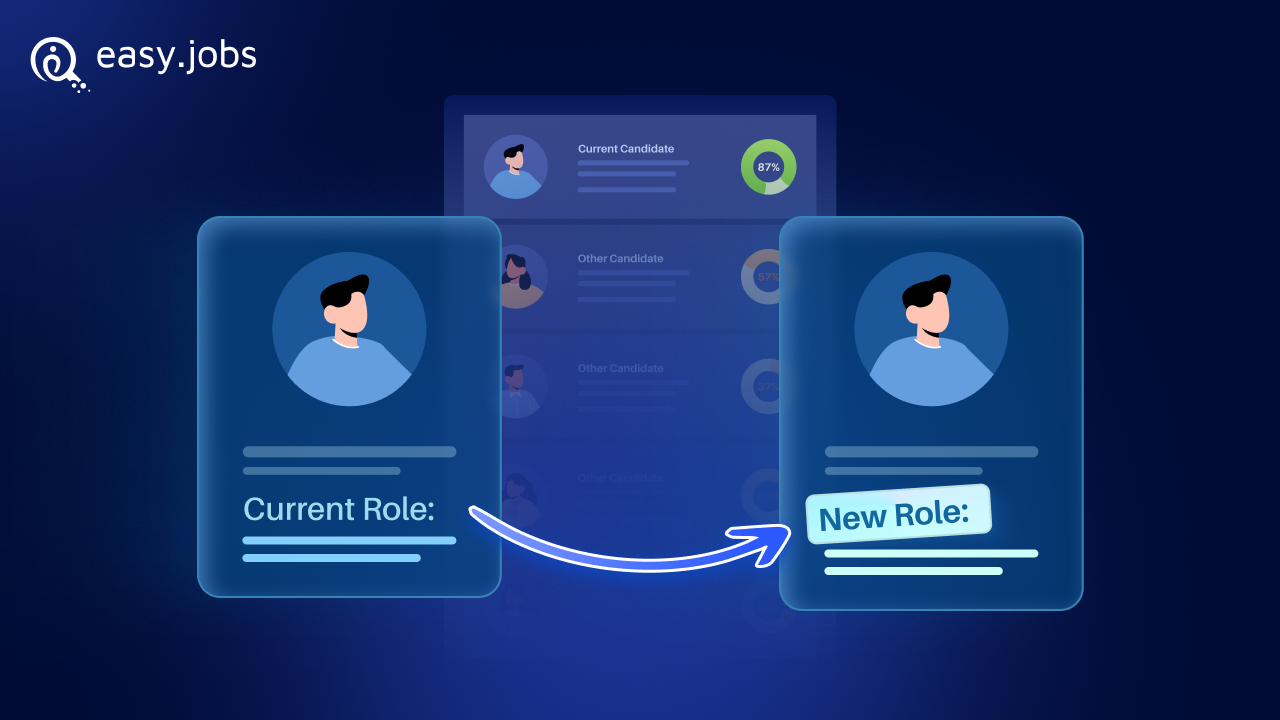
For growing companies, this approach offers several advantages. Employees already understand the company culture, workflows and expectations, which often leads to faster onboarding and improved performance in new roles. At the same time, offering internal career opportunities strengthens employee engagement and retention by showing that the organization values professional growth.
With the help of modern recruitment platforms and applicant tracking systems, businesses can now manage internal hiring more efficiently. Posting internal job openings, notifying employees and tracking internal applications in a structured way.
Understanding how internal recruiting works, its benefits and the best ways to implement it can help organizations build stronger teams while reducing hiring time and costs.
TL;DR: Internal Recruiting Explained
- Internal recruiting is the process of filling job vacancies by hiring or promoting existing employees instead of external candidates.
- It includes methods like promotions, internal transfers, internal job postings, and employee referrals.
- Internal recruiting helps companies hire faster, reduce recruitment costs, and retain experienced employees.
- A structured internal recruiting process typically includes identifying hiring needs, posting internal openings, evaluating candidates, and managing role transitions.
- Companies often use Applicant Tracking Systems (ATS) and internal career portals to manage internal hiring workflows.
- Tools like easy.jobs allow HR teams to control job visibility, enabling companies to share roles internally before publishing them publicly.
- While internal recruiting improves employee engagement and retention, organizations often combine it with external recruiting to access new skills and ideas.
What Is Internal Recruiting?
Internal recruiting is the process of filling open positions within an organization by hiring existing employees instead of sourcing candidates from outside the company. Rather than beginning a completely new recruitment cycle, employers evaluate their current workforce to identify individuals who have the skills, experience and potential to take on new roles.
This approach allows organizations to leverage their existing talent pool. Employees who are already familiar with the company’s culture, workflows and expectations can transition into new positions more quickly than external hires. As a result, internal recruiting often leads to faster hiring decisions, shorter onboarding periods and smoother role transitions.
Internal recruiting usually happens through several methods such as promotions, lateral transfers, internal job postings or employee referrals. Many companies create internal career portals or internal job boards where employees can view and apply for open roles within the organization.
It is also closely connected with the concept of internal mobility, which focuses on helping employees grow and move across roles, teams or departments during their careers. Organizations that support internal mobility tend to build stronger employee loyalty while maximizing the potential of their workforce.
Compared to external recruiting, which expands the talent pool by bringing in new candidates, internal recruiting focuses on developing and advancing existing employees. Many successful organizations use a balanced strategy that combines both approaches to maintain workforce stability while still introducing fresh skills and perspectives when needed.
Types of Internal Recruiting
Organizations can fill internal positions in several ways depending on their workforce plan, structure and hiring goals. These internal recruiting methods allow companies to utilize existing talent while providing employees with opportunities for career growth and development.
Promotions
Promotions are one of the most common forms of internal recruiting. In this method, an employee moves to a higher-level position with increased responsibilities, authority and often a higher salary.
Companies usually promote employees based on performance, leadership potential and experience within the organization. Promotions help businesses reward top performers while maintaining continuity in leadership and operations.
For employees, promotions provide clear career progression, which improves motivation and long-term retention.
Internal Transfers
Internal transfers occur when employees move to a different department or team within the same organization while maintaining a similar level of responsibility.
For example, a marketing specialist may transfer to the product marketing team or a software engineer might move from backend development to product development.
Transfers help companies fill skill gaps internally while allowing employees to explore new career paths without leaving the organization.
Internal Job Postings
Many organizations use internal job boards or internal career portals to advertise open positions to current employees before opening them to external candidates.
Employees can apply for these opportunities through the internal system, just like external applicants. This ensures transparency in the hiring process and allows employees across departments to compete fairly for new roles.
Modern recruitment platforms often automate this process by notifying employees about available positions. For example, recruitment tools like easy.jobs allow companies to control the visibility of job posts on their career page. HR teams can choose to show or hide specific job posts from the public career page, allowing them to share certain opportunities internally before opening them to external candidates.
Employee Referrals (Internal Talent Recommendations)
Employees can sometimes recommend colleagues within the organization who may be suitable for a specific role. Managers may also nominate high-performing employees for certain positions.
Since colleagues already understand each other’s work capabilities, these recommendations can help hiring managers identify strong candidates quickly.
By combining these internal recruiting methods, organizations can effectively build a flexible workforce while encouraging career growth within the company.
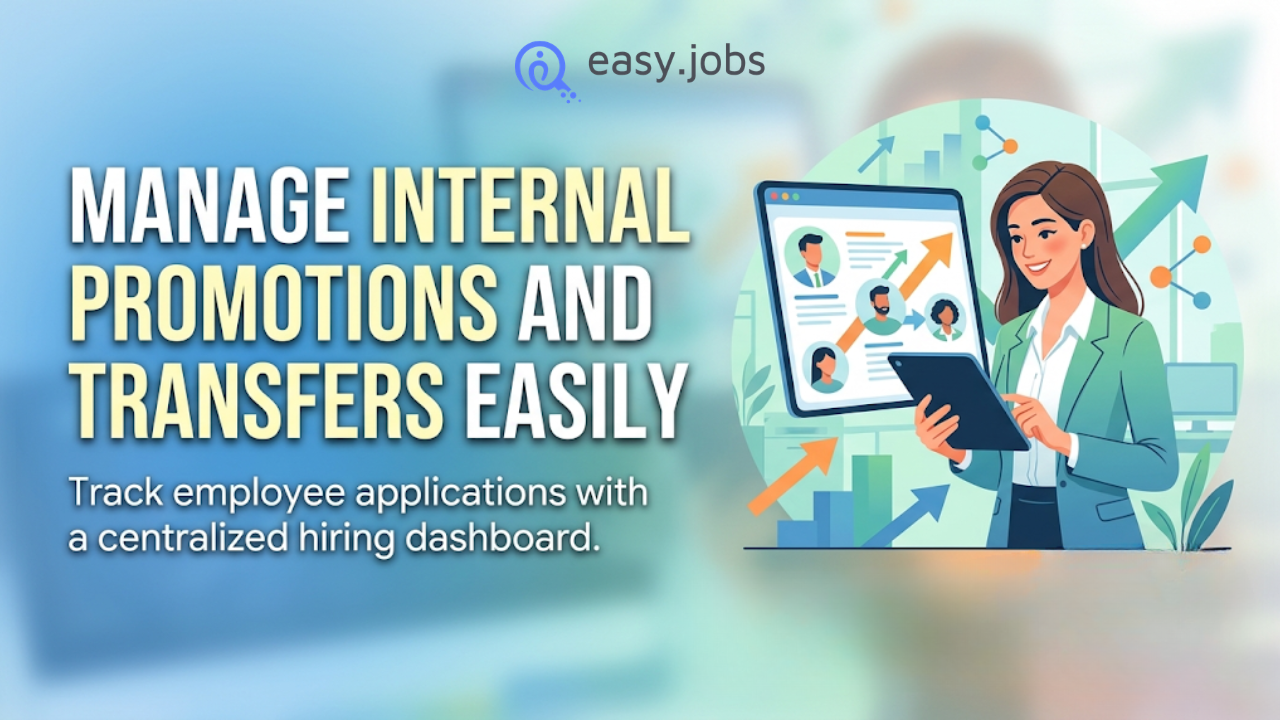
Internal Recruiting Process (Step-by-Step)
A structured internal recruiting process helps organizations identify the right employees for open roles while ensuring transparency and fairness across teams. When done correctly, it allows companies to promote internal mobility without disrupting existing operations.
Step 1: Identify Hiring Needs
The process begins when a department identifies a vacancy or a new role requirement. HR teams and hiring managers first evaluate whether the position can be filled internally before searching externally.
This involves reviewing workforce planning data, current team capacity and the skills required for the role. If suitable talent exists within the organization, the company can proceed with internal recruiting.
Step 2: Post Internal Job Openings
Once the role is approved, the company announces the opportunity through internal channels. Many organizations publish these openings on an internal career portal or internal job board where employees can view available positions.
Companies may also notify employees through email announcements, HR platforms or company communication tools to ensure everyone has equal access to the opportunity.
Recruitment software can simplify this process. For instance, platforms like easy.jobs allow HR teams to manage job visibility by choosing whether a job post should appear on the public company career page or remain hidden. This makes it easier to share job opportunities internally first, ensuring that current employees get priority access before external hiring begins.
Step 3: Encourage Employee Applications
Employees interested in the position can submit applications just like external candidates. This typically includes submitting their resume, updating their internal profile, or completing an application form.
Some organizations also allow managers to nominate high-performing employees who may be suitable for the role.
Step 4: Evaluate Internal Candidates
The hiring team then reviews applications and evaluates candidates based on their experience, performance records, and relevant skills. This stage may include:
- Interviews with the hiring manager
- Skills assessments
- Reviewing employee performance data
- Feedback from current supervisors
Since the candidates are already part of the organization, hiring managers often have additional insights into their work history and collaboration skills.
Step 5: Select the Candidate & Plan the Transition
After selecting the best candidate, HR coordinates the transition process. This may involve:
- Setting a transition timeline with the current manager
- Planning knowledge transfer from the employee’s previous role
- Providing training for the new position
A well-managed transition ensures that both teams continue to operate smoothly while the employee adapts to the new responsibilities.
When companies follow a clear internal recruiting process, they can promote talent effectively while maintaining transparency, fairness, and organizational stability.
Benefits of Internal Recruiting
Internal recruiting offers several advantages for organizations looking to strengthen their workforce while maintaining efficiency in the hiring process. By promoting or transferring existing employees, companies can reduce hiring risks and build stronger employee engagement.
Faster Hiring Process
One of the biggest advantages of internal recruiting is speed. Since internal candidates are already part of the organization, the recruitment process typically moves much faster compared to external hiring.
Hiring managers already have access to employee performance records, past projects, and skill assessments. This reduces the time required for screening, background checks, and onboarding.
Lower Recruitment Costs
External hiring often involves job advertisements, agency fees, sourcing tools and long recruitment cycles. Internal recruiting eliminates many of these costs because companies are selecting candidates from their existing workforce.
By filling roles internally, organizations can significantly reduce their overall recruitment expenses.
Stronger Cultural Fit
Internal employees already understand the company’s culture, values and working environment. This familiarity allows them to adapt quickly to new roles without the cultural adjustment period that external hires usually experience.
As a result, teams can maintain productivity and collaboration more easily.
Higher Employee Retention
Providing opportunities for internal career growth motivates employees to stay longer with the organization. When employees see clear paths for promotions and role changes, they are less likely to seek opportunities elsewhere.
Internal recruiting therefore, plays an important role in long-term employee retention and talent development.
Improved Employee Engagement
Employees feel valued when organizations recognize their potential and offer advancement opportunities. Internal hiring signals that the company invests in its workforce and supports career progression.
This often leads to higher employee satisfaction, stronger morale and a more committed workforce.
By leveraging internal recruiting effectively, companies can develop their existing talent while creating a more stable and motivated organization.
Challenges of Internal Recruiting
Although internal recruiting offers many advantages, it also comes with certain limitations that organizations need to manage carefully. Relying only on internal hiring can sometimes create gaps in skills, workplace dynamics or team balance.
Limited Talent Pool
The most common challenge of internal recruiting is the restricted talent pool. Organizations can only select candidates from their existing workforce, which may limit the range of skills, experiences or perspectives available for the role.
Some specialized positions may require expertise that does not exist within the company, making external hiring necessary.
Internal Competition & Workplace Tension
When multiple employees apply for the same internal position, competition can arise between colleagues. If the hiring process lacks transparency, it may lead to disappointment, frustration or workplace tension among team members.
Organizations must ensure fair evaluation criteria and clear communication to maintain a positive work environment.
Skill Gaps in Internal Candidates
While internal employees may understand the organization well, they may not always possess the exact technical or leadership skills required for a new role.
In such cases, companies may need to provide training, mentoring or development programs to help employees transition successfully into their new responsibilities.
Disruption in Current Teams
When an employee moves to another department through internal recruiting, their previous team may temporarily face productivity gaps. Managers must plan for this transition to ensure that the team losing the employee can continue operating smoothly.
Risk of Reduced Innovation
Hiring only from within may limit the introduction of new ideas and perspectives. External candidates often bring fresh experiences and industry insights that can help organizations innovate and adapt to market changes.
For this reason, many organizations maintain a balanced hiring strategy that combines both internal recruiting and external recruitment to build a diverse and dynamic workforce.
Internal Recruiting vs External Recruiting
Organizations typically use a combination of internal recruiting and external recruiting to build a balanced workforce. While internal recruiting focuses on promoting or transferring existing employees, external recruiting involves hiring candidates from outside the organization.
Each approach has its own advantages depending on the hiring goals, required skills, and company growth stage.
| Factor | Internal Recruiting | External Recruiting |
| Talent Source | Existing employees | Candidates outside the company |
| Hiring Speed | Faster due to known candidates | Slower due to sourcing and screening |
| Hiring Cost | Lower recruitment cost | Higher cost (ads, agencies, tools) |
| Cultural Fit | Strong cultural alignment | Requires cultural onboarding |
| Talent Pool | Limited to current workforce | Access to wider talent pool |
| Innovation | May be limited | Brings new ideas and perspectives |
Internal recruiting is often the best choice when organizations want to retain employees, reward high performers and reduce hiring time. Since employees already understand the company’s systems and culture, they can become productive in new roles more quickly.
On the other hand, external recruiting is essential when companies need new skills, fresh perspectives or specialized expertise that may not exist internally. It also allows organizations to expand their talent pool and introduce innovation into the workplace.
For this reason, most successful organizations adopt a hybrid hiring strategy, where internal recruiting is prioritized for career growth and leadership development, while external recruiting is used to bring in new capabilities when needed.
Best Practices for Internal Recruiting
To make internal recruiting effective, organizations need a structured approach that ensures fairness, transparency and long-term workforce development. Without clear policies and processes, internal hiring can create confusion or dissatisfaction among employees. The following best practices help companies manage internal recruiting successfully.
Maintain Transparent Internal Job Boards
Transparency is essential for internal hiring. Companies should publish all available roles on an internal job board or career portal where employees can easily view and apply for opportunities.
This prevents favoritism and ensures every employee has equal access to internal positions. Clear job descriptions, required skills and application deadlines should also be included.
Encourage Internal Mobility Programs
Organizations that actively promote internal mobility allow employees to move across departments, teams, or roles throughout their careers.
Encouraging mobility helps employees gain new skills while enabling the company to retain valuable talent instead of losing them to external opportunities.
Use an Applicant Tracking System
Managing internal candidates manually can become difficult as companies grow. Using an Applicant Tracking System (ATS) helps HR teams manage internal job postings, track applications and streamline the hiring workflow.
These systems also allow recruiters to compare candidates, schedule interviews and maintain structured hiring records.
Provide Career Development Opportunities
Internal recruiting works best when employees are prepared for advancement. Companies should invest in training programs, mentorship initiatives and leadership development plans to help employees build the skills required for higher-level roles.
This creates a strong internal talent pipeline for future hiring needs.
Train Managers for Internal Hiring
Managers play a key role in identifying and developing internal talent. Training managers to recognize employee potential, provide career guidance and support internal transfers helps create a healthy internal hiring culture.
Organizations that implement these best practices can build a strong internal recruiting system that supports employee growth while maintaining operational efficiency.
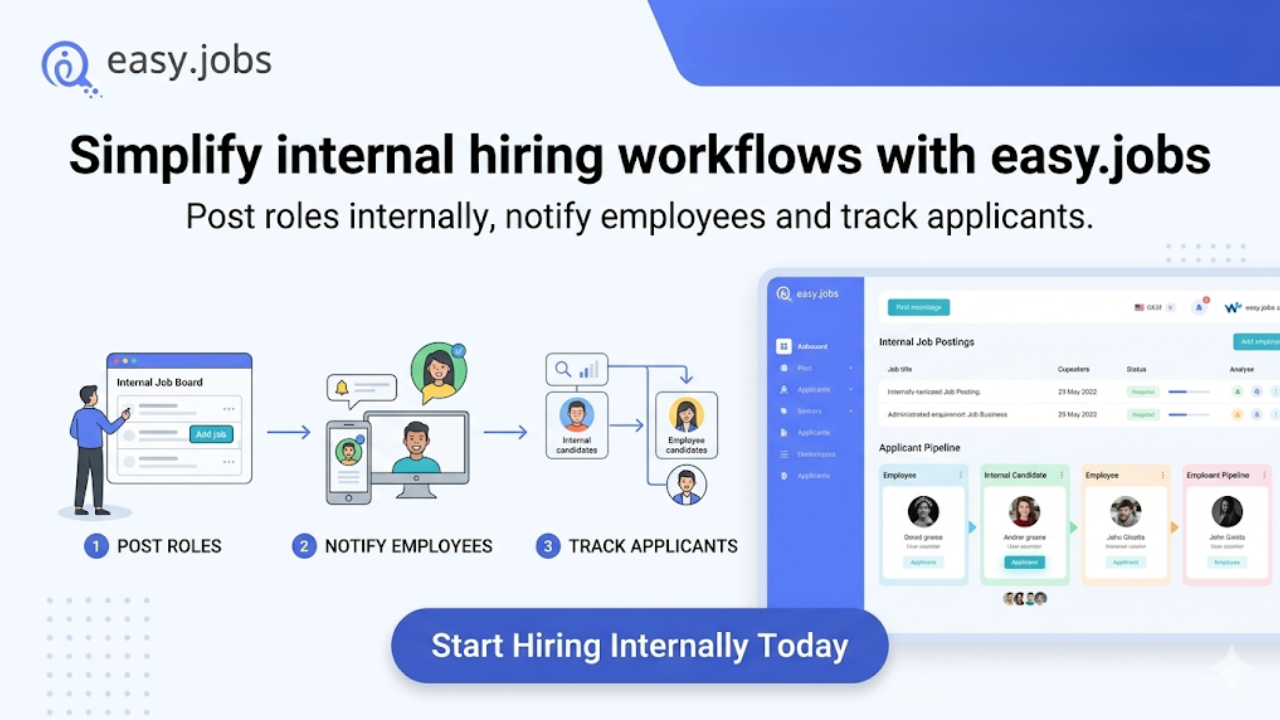
Tools That Help Manage Internal Recruiting
Managing internal recruiting manually can become challenging as organizations grow and the number of employees increases. Modern HR and recruitment tools help streamline the process by organizing job postings, applications, and candidate evaluations in one place.
Applicant Tracking Systems (ATS)
An Applicant Tracking System (ATS) is one of the most widely used tools for managing both internal and external recruitment. These systems allow HR teams to post job openings, track employee applications, schedule interviews and maintain hiring records.
Many ATS platforms also support internal job postings, enabling employees to view and apply for open roles through a centralized dashboard.
Internal Career Portals
Internal career portals give employees visibility into available job opportunities within the organization. These portals act as internal job boards where employees can explore new roles, check required qualifications and submit applications.
Providing a dedicated internal career page encourages employees to consider career growth within the organization rather than seeking opportunities elsewhere.
Talent Management Platforms
Talent management platforms help companies track employee skills, performance and career development plans. These insights make it easier for HR teams to identify employees who are ready for promotions or internal transfers.
By maintaining a clear overview of employee capabilities, organizations can fill open roles more efficiently using internal talent.
HR Analytics Tools
HR analytics tools provide data-driven insights into workforce performance, skill gaps and hiring trends. With these insights, companies can identify potential internal candidates and plan future hiring strategies more effectively.
When organizations combine these tools with structured recruitment processes, internal recruiting becomes more efficient, transparent, and scalable.
Example of Internal Recruiting
To understand how internal recruiting works in practice, consider a simple example within a growing organization.
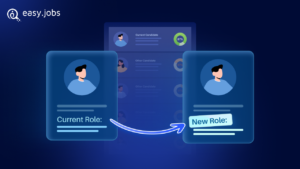
Suppose a company’s marketing team needs a Marketing Manager to lead campaign strategy and coordinate with other departments. Instead of searching externally, the company reviews its internal talent pool and identifies a Senior Marketing Executive who has consistently delivered strong campaign results and demonstrated leadership potential.
The employee applies for the position through the company’s internal job portal. After an interview with the hiring manager and HR team, the candidate is selected for the role. The company then plans a transition period where the employee gradually hands over responsibilities from their previous role while receiving training for managerial duties.
Because the employee already understands the company’s products, target audience, and marketing processes, they can adapt quickly to the new position. This reduces onboarding time and allows the team to maintain productivity.
This example illustrates how internal recruiting helps organizations fill leadership roles faster, retain talented employees and strengthen long-term career development within the company.
FAQ’s About Internal Recruiting
Below are some common questions about internal recruiting, including how it works, its benefits and how organizations manage internal hiring effectively.
What is internal recruiting?
Internal recruiting is the process of filling open positions by selecting candidates who already work within the organization. Companies promote, transfer, or reassign existing employees instead of hiring external applicants.
What are the common types of internal recruiting?
The most common internal recruiting methods include:
- Promotions to higher roles
- Internal transfers between departments
- Internal job postings through career portals
- Employee referrals within the organization
These methods help companies use their existing talent more effectively.
What are the benefits of internal recruiting?
Internal recruiting offers several advantages, including:
- Faster hiring process
- Lower recruitment costs
- Strong cultural fit
- Higher employee retention
- Improved employee motivation and career growth
Because employees already understand the organization, onboarding and training time are usually shorter.
What is the difference between internal and external recruiting?
Internal recruiting focuses on hiring existing employees, while external recruiting involves sourcing candidates from outside the organization.
Internal recruiting is usually faster and cheaper, while external recruiting provides access to a larger talent pool and new perspectives.
Most organizations use a combination of both approaches.
How do companies manage internal recruiting?
Companies manage internal recruiting through structured hiring processes and HR tools such as:
- Applicant Tracking Systems (ATS)
- Internal job boards
- Talent management platforms
- HR analytics tools
These systems help organizations post jobs internally, track employee applications, and evaluate candidates efficiently.
Unlock Faster Hiring & Stronger Teams
Internal recruiting is a strategic approach that allows organizations to fill open positions by promoting or transferring existing employees. Instead of relying entirely on external hiring, companies can leverage their current workforce to identify qualified candidates who already understand the organization’s culture, processes and goals.
When implemented effectively, internal recruiting can significantly reduce hiring time and recruitment costs while improving employee engagement and retention. Employees are more motivated when they see clear opportunities for career growth within the organization.
However, relying solely on internal recruiting may limit access to new skills and perspectives. For this reason, many organizations combine internal recruiting with external hiring to maintain a balanced and dynamic workforce.
By building transparent internal hiring processes, encouraging internal mobility and using modern recruitment tools, companies can create a strong internal talent pipeline and develop future leaders from within their existing teams. If you found this blog helpful, subscribe to our blog to receive more expert insights on recruitment. Join our Facebook community to connect with recruiters, HR professionals and talent leaders who share practical tips, experiences and discussions on building better hiring processes.