Here is an uncomfortable truth most hiring teams never acknowledge. Your interview process is costing you candidates you never even knew you lost. A poor interview experience does not just mean one disappointed applicant walking away. It means a Glassdoor review that discourages the next 50.
It means a Reddit thread where candidates warn each other away from your company by name. It means your employer brand quietly bleeds out while your competitors, who have simply figured out how to be respectful and organized, scoop up the talent you needed.
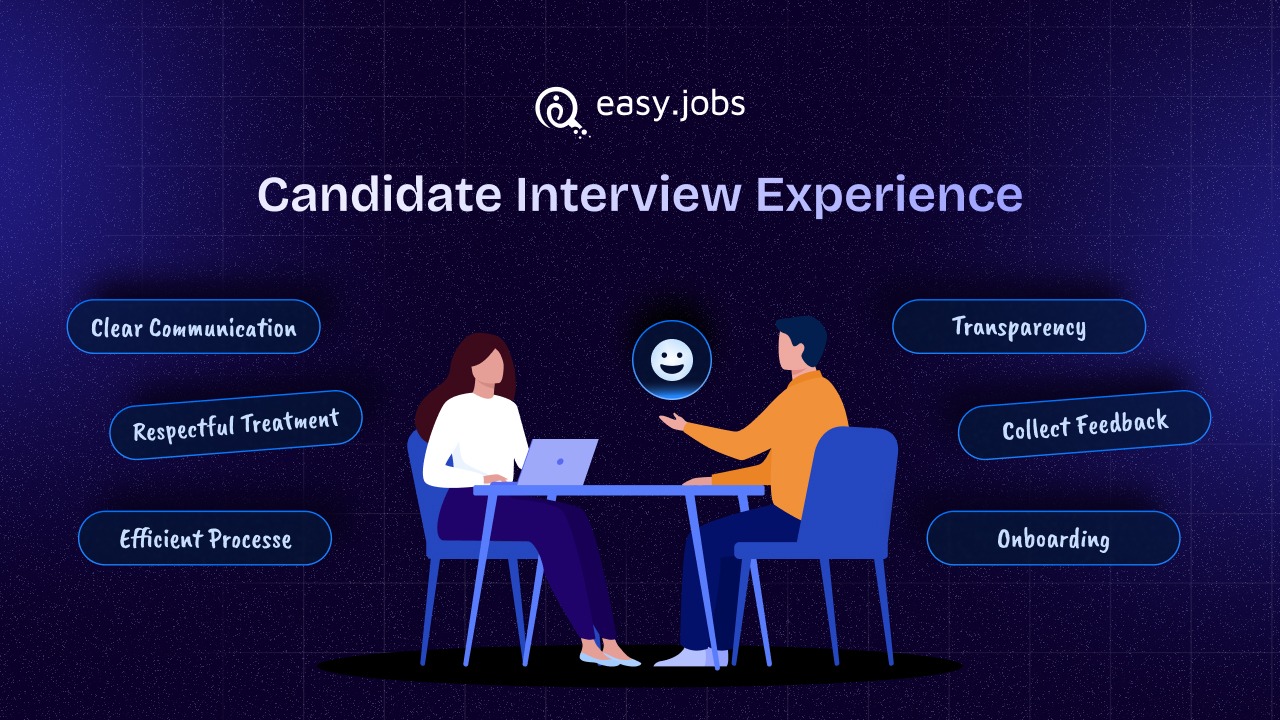
The candidate interview experience is far bigger than the 45-minute Zoom call you have scheduled. It encompasses every single touchpoint in your communication loop: the confirmation email after an application, the invite for the first round, the silences between stages, the feedback after a rejection (or the lack of it). All of it shapes whether a candidate walks away feeling valued or feeling like a number.
The good news is that this is entirely fixable. In this guide, you will learn exactly how to improve candidate experience using four proven frameworks, a plug-and-play communication timeline, real-world examples and free templates your team can use starting today.
TL;DR: The Golden Rule – Candidate Interview Experience
If you only remember one thing from this article, let it be this: treat every candidate like a high-value customer.
Here are the four pillars that will transform your interview process:
- No-surprise interview prep: Give candidates everything they need to perform at their best before they walk in.
- Structured, standardized questions: Remove bias and make evaluations consistent and defensible.
- Trained hiring managers: Recruiters cannot carry this alone; your hiring managers need coaching too.
- A strict 48-hour feedback loop: Rapid, respectful communication is your most powerful employer brand tool.
And the golden rule that ties all four together: never leave a candidate guessing what happens next. A structured rejection delivered with care is always better than silence. Always.
The “Reddit Reality”: What Candidates Actually Want
Before you optimize your interview process, it helps to understand what candidates are actually saying when they think no one from HR is listening.
Spend 20 minutes on r/cscareerquestions, r/recruiting, or any job-hunting community on Reddit or Medium and a clear picture emerges. It is not that candidates resent hard interviews. Most high performers actively want to be challenged. What they cannot stand and what they talk about openly and at length is disorganization, disrespect and silence.
Respect Over Rigor
Candidates consistently report that how they are treated during the process matters more than the difficulty of the interview itself. An eight-round process that communicates clearly at every stage will generate better sentiment than a two-round process that goes dark for three weeks. Disorganization signals dysfunction. It tells candidates that if the company cannot manage a hiring process, it probably cannot manage much else either.
The Death of “Trick” Questions
The era of brain teasers and “how many golf balls fit in a school bus” questions is effectively over and for good reason. Research consistently shows that abstract puzzle questions do not predict job performance. What does predict performance is structured behavioral interviewing: asking every candidate the same questions, tied directly to the competencies required for the role. This approach is also far more legally defensible, which matters more than most recruiters realize until they need it to.
The Ghosting Epidemic
According to a widely cited Greenhouse survey, roughly 70% of candidates report being ghosted after at least one interview and this number climbs sharply after final-round interviews. The financial cost is not abstract. When a senior candidate who made it to your final round becomes a vocal detractor on LinkedIn or Glassdoor, the ripple effect on future applicant volume and quality can take months or years to undo. Ghosting is not just unkind, it is an expensive business problem.
4 Core Candidate Experience for Interview Best Practices
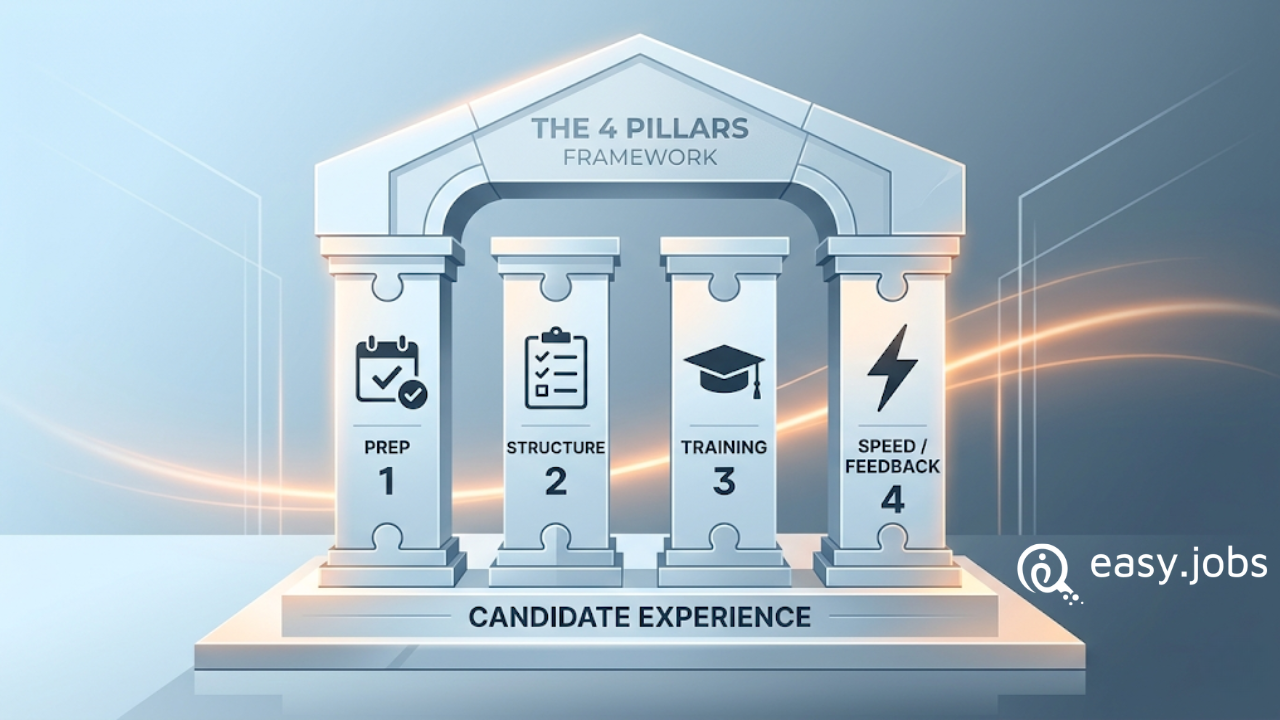
These are the four practices that separate companies candidates brag about interviewing with from companies candidates warn each other about.
1. The “No Surprises” Prep Protocol
One of the simplest, highest-leverage things you can do costs almost nothing. Tell candidates exactly what to expect before they show up.
This means sending a prep email that includes:
- A clear agenda for the interview (format, duration, topics)
- The names, titles and LinkedIn profiles of the interviewers they will meet
- Any logistical notes, including dress code, parking, tech requirements for video calls or what platform will be used
- A brief “what success looks like” note so they understand the evaluation lens
Why does this work so well? Because anxiety is the enemy of authentic performance. A candidate who is frantically googling your interviewers five minutes before the call is not in the headspace to show you their best thinking. When you remove the unknowns, you get a better signal. Which is ultimately what you need to make a good hiring decision.
This also sends a powerful cultural signal before anyone sets foot in the door: “We are organized, we respect your time and we want you to succeed in this process.”
2. Structured vs. Unstructured Interviews
If two different interviewers ask two different candidates two entirely different sets of questions, you are not running an interview process, you are running a personality contest.
Structured interviewing means defining the competencies required for the role upfront, writing a standardized set of behavioral questions tied to those competencies and asking every candidate the same questions in the same order. Evaluation is done against a consistent rubric, not a gut feeling.
The benefits are significant. Structured interviews are roughly twice as predictive of job performance as unstructured ones. They dramatically reduce the impact of unconscious bias. Interviewers who rely on “culture fit” instincts tend to hire people who look and sound like themselves. And they give you a legally sound paper trail if a rejected candidate ever questions the decision.
The transition from unstructured to structured interviewing can feel rigid at first. Brief your hiring managers: the questions are the structure; the conversation within each answer can still feel natural and human.
3. Training the Hiring Managers
Recruiters are often held responsible for candidate experience outcomes they do not fully control. The hiring manager in the room for a 60-minute panel interview will leave a far more lasting impression than anything in the recruiter’s prep email.
This means investing in hiring manager training as a core part of your recruiting function. Key areas to cover:
Active listening: Candidates notice immediately when an interviewer is half-reading their resume while they are talking. Train hiring managers to put the resume down and engage fully.
Selling the role and culture: An interview is a two-way evaluation. The best candidates are interviewing you as much as you are interviewing them. Hiring managers should be prepared to speak compellingly about team culture, growth opportunities and what makes the role worth taking.
Avoiding interruptions and leading questions: These disrupt a candidate’s train of thought and introduce bias into the response. A candidate who gets interrupted mid-answer will give you less useful information and leave feeling disrespected.
Closing with space for questions: Reserve at least 10 minutes at the end of every interview for the candidate to ask their questions. Rushing this moment is a common mistake that leaves candidates feeling like an afterthought.
4. The 48-Hour Feedback Rule
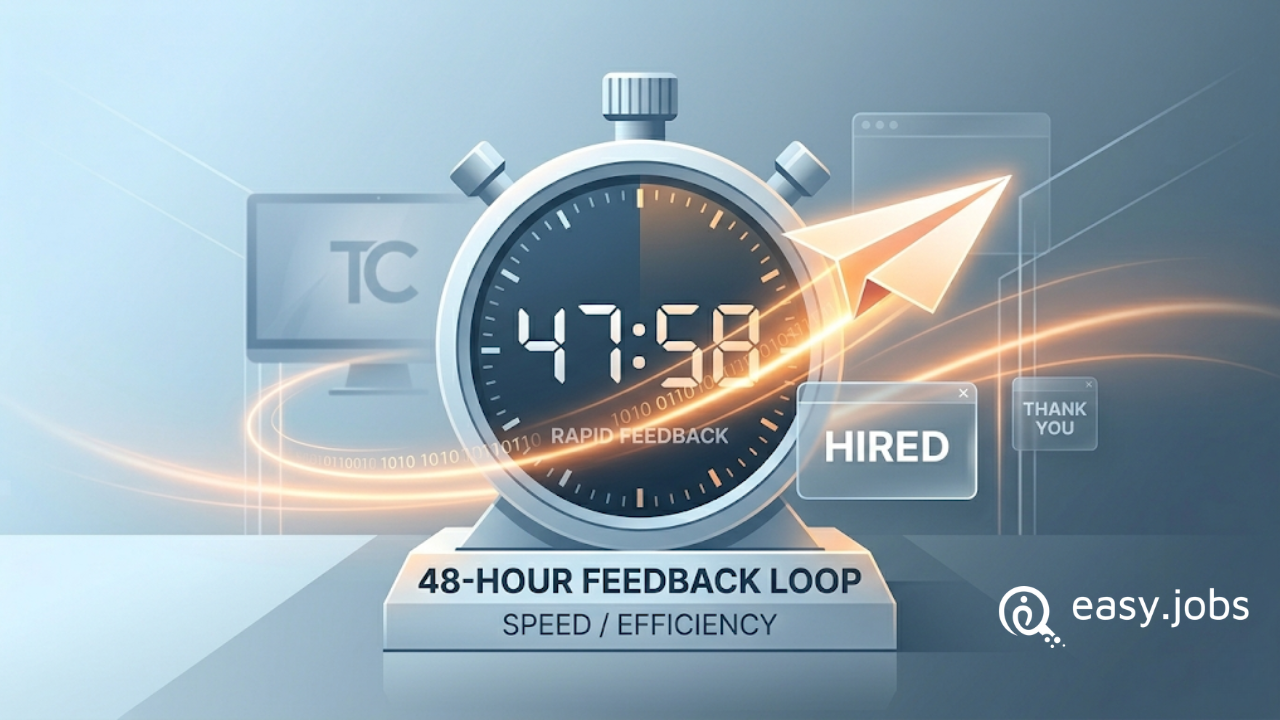
If you implement only one practice from this entire article, make it this one.
Every candidate who has completed a final-round interview should receive a decision, offer or rejection within 48 hours. Not “as soon as we can.” Not “when the hiring manager gets back to us.” Within 48 hours.
Here is why this matters so much. Top candidates are not waiting passively for your answer. They have other processes running. Every hour of silence after a final round increases the probability that they accept another offer and increases the bitterness they feel toward your company if they do not hear from you. The 48-hour rule is not just considerate, it is a competitive advantage.
For rejections, this principle extends further. Early-stage candidates can receive a standard, polite rejection email (see the template section below). But candidates who made it to the final round deserve a personal call or a thoughtful, specific email that acknowledges their time and gives them something actionable.
“You were a strong candidate but we went a different direction” is not feedback, it is a platitude. Specific, constructive feedback at this stage turns a rejection into a brand-building moment.
The Ideal Candidate Communication Timeline
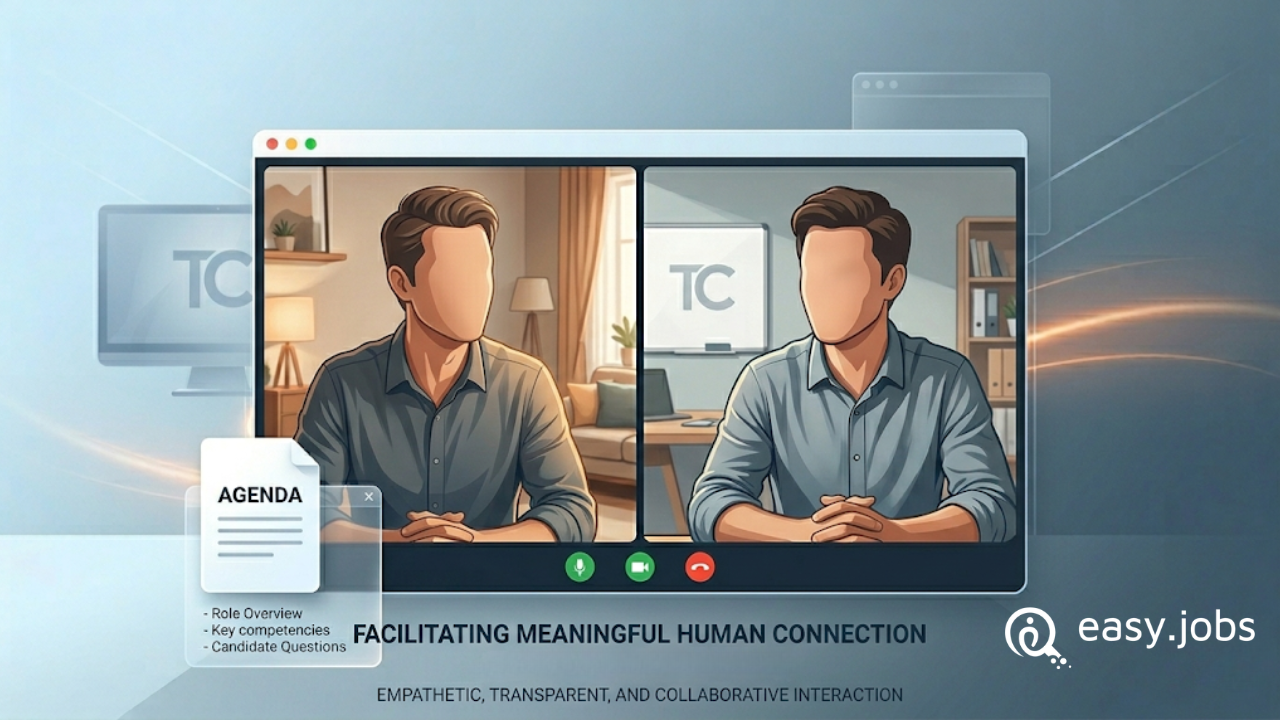
Use this as a plug-and-play SLA (Service Level Agreement) for your recruiting team. Every open role should follow this rhythm.
Stage 1: Application Received — Day 0 (Immediate)
What to send: An automated but warm confirmation email.
Do not just confirm receipt. Use this touchpoint to set expectations: tell the candidate when they will hear back (“You will receive an update within 5 business days, either way”) and briefly outline the stages of your process. This one phrase “either way” signals that you will not ghost them, and it sets you apart from the overwhelming majority of employers who do not make this commitment.
Subject line example: Your application to [Company] — what happens next
Stage 2: Interview Invitation — Day 3–5
What to send: A detailed interview invitation.
This is where the “No Surprises” protocol kicks in. Include the format, duration, names and LinkedIn profiles of interviewers, and a brief “what to expect” section. If there is a technical component or any preparation the candidate should do, say so clearly.
Make scheduling frictionless. Use a self-scheduling tool if possible so candidates can pick a time without three rounds of email back-and-forth.
Stage 3: Interview Day — Day X
What to do: Start on time. End with candidate interview questions. Follow up the same day.
Starting late signals disorganization and disrespect. Ending without time for the candidate’s questions signals that this is a one-way evaluation. Neither is acceptable if you want to win top talent.
Send a brief, human “thank you for your time today” email by end of day. It takes 90 seconds and leaves a lasting impression.
Stage 4: Final Decision — Within 48 Hours of Final Round
What to do: Deliver the offer or a personalized rejection.
For offers: move quickly and call before sending paperwork. A verbal offer from a hiring leader or recruiter carries warmth that a DocuSign link does not.
For rejections: late-stage candidates deserve a phone call or a thoughtful email. Be specific about what you valued in them, and where genuine. Be specific about why you went a different direction. Keep it constructive, never personal.
Real-World Examples of a Positive Interview Experience
Example 1: The Tech Role (Software Engineer)
Company A is hiring a senior engineer. Their process includes a 45-minute behavioral interview followed by a paired programming session with a lead engineer from the team.
The paired session is framed not as a test but as a collaborative problem-solving exercise. The lead engineer explains upfront: “We are going to work through this together, I am as interested in how you think and communicate as in the output.” The candidate can ask questions, think aloud and push back. It feels less like an interrogation and more like a preview of the actual job.
Contrast this with Company B’s approach: a 3-hour whiteboard test conducted under time pressure by an interviewer who says nothing except “we’ll let you know.” The technical bar may be identical. The experience is entirely different and so are the Glassdoor reviews that follow.
Example 2: The Non-Tech Role (Sales or Marketing)
Company A is hiring a content strategist. Rather than asking the candidate to perform an impromptu exercise during the interview, they send a brief take-home brief in advance. The exercise is scoped to take no more than 90 minutes, is directly relevant to the actual work of the role and is evaluated against a clear rubric.
The candidate arrives at the interview having had time to think, prepare and put their best work forward. The interviewer can focus the conversation on the candidate’s thinking process rather than their ability to perform under artificial pressure.
As a growing best practice: for take-home projects that require significant effort, three or more hours. Consider compensating candidates for their time. This signals respect, reduces drop-off among high-demand candidates and sends a clear message about your company’s values.
Free Templates to Upgrade Your Interview Process
Template 1: The Candidate Prep Email
Use this 24–48 hours before any scheduled interview.
Subject: Your interview at [Company Name] & everything you need to know
Hi [Candidate Name],
We’re looking forward to speaking with you on [Day/Time]. Here’s everything you need to know to prepare.
Format: [e.g., 45-minute behavioral interview via Zoom / in-person panel / technical screen]
Who you’ll meet:
- [Interviewer 1 Name], [Title] — [LinkedIn URL]
- [Interviewer 2 Name], [Title] — [LinkedIn URL]
What to expect: This conversation will focus on [e.g., your experience leading cross-functional projects and how you approach ambiguous problems]. There are no trick questions, we want to understand how you think and what you’ve built.
Logistics: [Platform/meeting link / office address / parking info / dress code note]
We’ll leave the last 10 minutes for your questions, please bring whatever is on your mind.
See you [Day]. Let us know if anything comes up before then.
[Recruiter Name] [Title] | [Company]
Template 2: The Empathetic Rejection Email
Use this for final-round candidates. Personalize the bracketed sections this is not a form letter.
Subject: Update on your application [Company Name]
Hi [Candidate Name],
Thank you for the time and energy you invested in the interview process with us over the past [timeframe]. It was genuinely a pleasure getting to know you.
This is a difficult message to send. After careful deliberation, we’ve decided to move forward with another candidate whose background more closely matches where we are right now with [specific area e.g., enterprise sales / Python infrastructure / brand strategy].
This was not a reflection of your abilities. [Add one specific, genuine observation: e.g., “Your approach to the take-home was sharp and the questions you brought throughout the process were exactly the kind we want on our team.”] We simply had a specific gap to fill and the match wasn’t quite there at this moment.
We’ll keep your profile on file and I’d encourage you to watch our openings. I would genuinely welcome the chance to reconnect when the right role comes up.
Thank you again for your time and for your interest in [Company].
[Recruiter Name]
FAQ’s About Candidate Interview Experience
How many interview rounds is best practice?
Three to four rounds is the modern gold standard for most roles. Research consistently shows that candidate drop-off rates spike sharply past the fourth round and top candidates. Who typically have multiple active processes.
They will simply accept competing offers if your process runs longer than necessary. Each additional round should only exist if it generates information you cannot get any other way.
Should we provide feedback to every rejected candidate?
The answer depends on how far the candidate progressed. For resume screens and early-stage rejections, a polite, professional rejection email is entirely appropriate. For candidates who completed a final-round interview, personalized, constructive feedback.
A feedback delivered by phone or via a thoughtful email is not just courteous, it is what separates great employer brands from good ones.
How do you measure candidate interview experience?
The most effective metric is cNPS, or Candidate Net Promoter Score. After each interview stage, send a brief automated survey with two questions: “On a scale of 0–10, how would you rate your experience interviewing with us?” and “Would you recommend applying here to a friend or colleague?”
This gives you an ongoing, quantified signal on where your process is creating friction and makes it possible to track improvement over time.
Are take-home assignments a good idea?
Yes, with the right guardrails. Take-home assignments work well when they are directly tied to the responsibilities of the role, scoped to take two hours or less and evaluated against a consistent rubric rather than personal taste.
For longer projects, compensating candidates for their time is rapidly becoming best practice and helps filter for candidates who are genuinely interested in the role rather than just willing to do unpaid work on speculation.
Your Interview Process Is Your Brand
Every interaction a candidate has with your recruiting process is a data point. They are gathering evidence about what your company values, how it treats people and whether they would want to work there. The candidates who accept offers become employees who carry those impressions with them. The candidates who do not become reviewers, referrers and sometimes customers.
A great interview process is not complicated. It requires clarity, consistency, speed and genuine respect for the time and effort candidates invest. Treat them like highly valued customers, and you will find that the best candidates start finding you.
Your action this week: Audit one stage of your current process. Does every candidate receive timely, clear communication at that stage? Is there a structured rubric driving the evaluation or is it informal? Is the hiring manager briefed on what a strong response looks like?
Start there. One stage, made meaningfully better, is a foundation you can build on. And if you found these insights helpful, Subscribe to our blog to get expert hiring strategies delivered straight to your inbox. Plus, join our Facebook Community to share your experiences, ask questions, and stay ahead of the latest recruitment trends.