Outsourcing Proses Rekrutmen (RPO) adalah proses bisnis strategis di mana perusahaan mentransfer seluruh atau sebagian dari proses rekrutmennya ke pihak ketiga. fungsi perekrutan kepada penyedia layanan eksternal. Dengan berintegrasi dengan tim SDM internal dan teknologi perusahaan, penyedia RPO mengelola siklus perekrutan dari awal hingga akhir, mulai dari pencarian dan penyaringan hingga orientasi karyawan baru.
Model ini dirancang untuk meningkatkan kualitas perekrutan, mengurangi waktu pengisian posisi, dan menyediakan skalabilitas yang diperlukan untuk pertumbuhan bisnis modern.
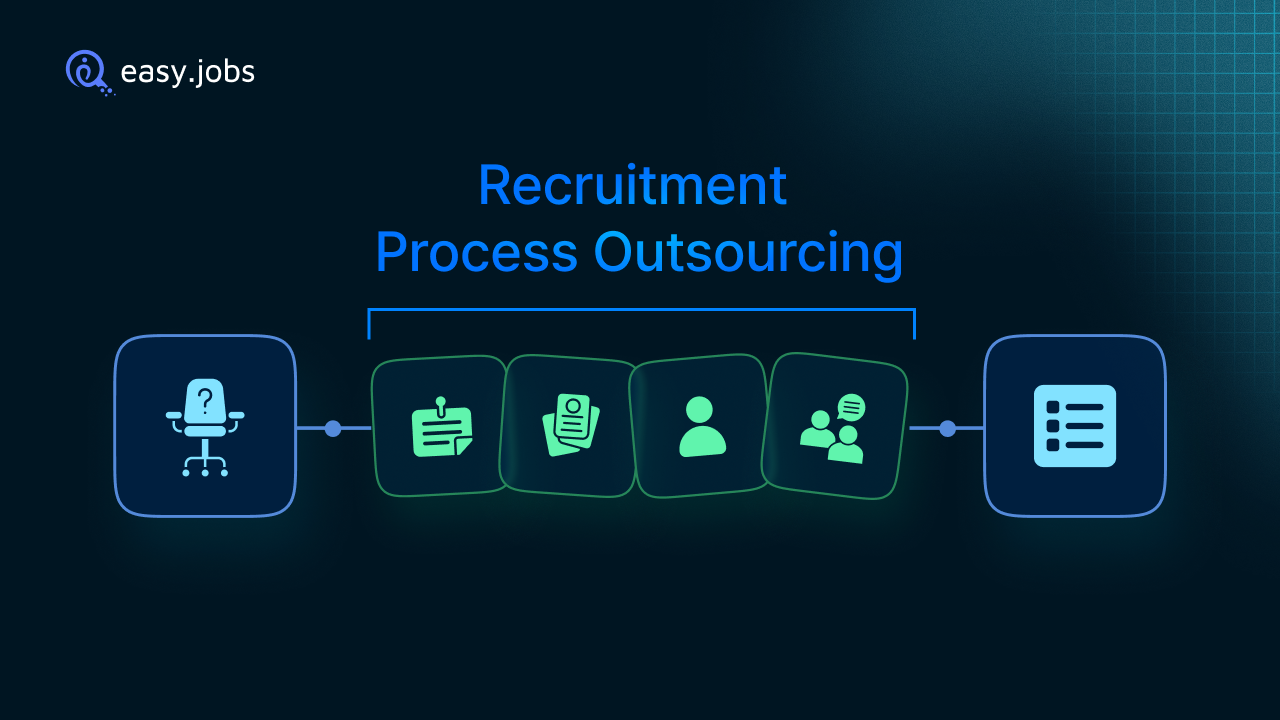
Outsourcing Proses Rekrutmen (RPO) — Ringkasan Singkat
- Apa itu: Suatu bentuk alih daya proses bisnis (BPO) di mana penyedia bertindak sebagai perpanjangan dari departemen SDM Anda.
- Untuk siapa ini: Perusahaan yang berkembang pesat, perusahaan besar dengan kebutuhan volume tinggi, atau UKM yang kekurangan infrastruktur perekrutan internal.
- Manfaat Utama: Peningkatan kualitas kandidat, pengurangan biaya perekrutan, dan akses ke teknologi perekrutan canggih.
- Model Penetapan Harga: Struktur umum meliputi biaya manajemen bulanan, biaya per perekrutan, atau model hibrida.
- Kapan Digunakan: Ketika tim internal kewalahan, kualitas perekrutan menurun, atau ekspansi global diperlukan.
Apa Itu Alih Daya Proses Rekrutmen?
Untuk menavigasi kompleksitas akuisisi talenta modern, sangat penting untuk terlebih dahulu memahami dengan jelas bagaimana RPO secara fundamental membentuk kembali lanskap perekrutan. Jika Anda ingin memahami dengan jelas apa itu outsourcing proses rekrutmen, bacalah uraian berikut:
Definisi Alih Daya Proses Rekrutmen
Outsourcing Proses Rekrutmen (RPO) adalah solusi tenaga kerja di mana suatu organisasi mentransfer kepemilikan seluruh atau sebagian proses rekrutmennya kepada vendor pihak ketiga. Tidak seperti perekrutan tradisional, penyedia RPO bertanggung jawab atas strategi, teknologi, dan hasil dari seluruh fungsi perekrutan.
Bagaimana Proses Rekrutmen yang Dialihdayakan Bekerja
Proses RPO dimulai dengan integrasi mendalam ke dalam budaya dan tujuan bisnis klien. Penyedia tidak hanya sekadar “kirim resume“; mereka mengelola proses tersebut menggunakan merek perusahaan dan seringkali Sistem Pelacakan Pelamar (ATS) mereka sendiri.”.
- Penemuan & Penyelarasan: Penyedia layanan menganalisis alur kerja perekrutan yang ada dan mengidentifikasi kesenjangan.
- Penerapan: Para perekrut dari perusahaan RPO terintegrasi ke dalam ekosistem klien, seringkali bekerja di lokasi atau sebagai perpanjangan jarak jauh yang terintegrasi.
- Eksekusi: Penyedia layanan mengelola pencarian kandidat, penyaringan, wawancara, dan manajemen penawaran.
- Optimasi: Pelaporan dan analisis data berkelanjutan digunakan untuk menyempurnakan proses dan meningkatkan citra perusahaan sebagai tempat kerja yang baik.
Outsourcing Proses Rekrutmen vs. Perekrutan Tradisional
Sementara perekrutan tradisional bergantung pada staf SDM internal atau agen perekrutan dengan komisi tinggi, RPO berfokus pada peningkatan proses jangka panjang.
| Fitur | Perekrutan Internal | Agen Perekrutan Tenaga Kerja | Penyedia RPO |
| Fokus | Tugas-tugas umum SDM | Mengisi peran-peran spesifik | Proses ujung ke ujung |
| Merek dagang | Langsung | Dipimpin oleh agensi | Dipimpin oleh klien (White label) |
| Biaya | Gaji Tetap | Tinggi (Per penempatan) | Dapat diskalakan (Biaya manajemen) |
| Skalabilitas | Rendah | Sedang | Tinggi |
Dengan membandingkan model-model ini, menjadi jelas bahwa RPO dibangun untuk skalabilitas berkelanjutan, bukan penempatan transaksional dan sekali waktu seperti yang terlihat dalam perekrutan tradisional.
Layanan Alih Daya Proses Rekrutmen
Lebih dari sekadar akuisisi talenta sederhana, penyedia RPO modern menawarkan ekosistem layanan canggih yang dirancang untuk mengubah cara sebuah organisasi mengidentifikasi, menarik, dan mempertahankan para profesional terbaik.
Layanan Alih Daya Proses Rekrutmen Inti
Penyedia RPO menawarkan serangkaian layanan yang dirancang untuk memodernisasi dan menyederhanakan siklus akuisisi talenta. Layanan ini biasanya diberikan sebagai perpanjangan "white-label" dari merek Anda:
- Pencarian dan Seleksi Bakat: Menggunakan alat berbasis AI dan pencarian web mendalam untuk mengidentifikasi kandidat aktif dan pasif.
- Merek Perusahaan: Meningkatkan reputasi pasar Anda melalui pesan yang tepat sasaran, optimasi halaman karier, dan kehadiran di media sosial.
- Manajemen Pengalaman Kandidat: Memastikan setiap pelamar—baik yang diterima maupun tidak—memiliki interaksi yang profesional, tepat waktu, dan positif dengan perusahaan Anda.
- Koordinasi Wawancara: Mengelola beban logistik penjadwalan, siklus umpan balik, dan penyelarasan panel.
- Manajemen Penawaran: Menangani negosiasi, pemeriksaan latar belakang, dan transisi administratif dari “kandidat” menjadi “karyawan baru.“
- Analisis dan Pelaporan Rekrutmen: Menyediakan dasbor waktu nyata tentang metrik utama seperti waktu pengisian posisi, kualitas perekrutan, dan biaya per sewa.
Layanan RPO Ujung-ke-Ujung vs. Layanan RPO Parsial
Organisasi harus memilih antara perombakan total atau dukungan yang ditargetkan, tergantung pada kapasitas internal dan kendala perekrutan spesifik mereka:
Dari Ujung ke Ujung (Siklus Penuh):
Penyedia layanan mengelola seluruh proses mulai dari perencanaan tenaga kerja hingga tindak lanjut pasca-perekrutan.
Kasus Penggunaan: Sebuah perusahaan besar meluncurkan divisi global baru yang membutuhkan sistem perekrutan terstandarisasi dan berkapasitas besar dari awal.
Layanan Parsial (Modular):
Anda melakukan outsourcing untuk "modul" spesifik dari proses tersebut, sementara modul lainnya tetap dikerjakan di internal perusahaan.
Kasus Penggunaan: Tim SDM yang sudah mapan menangani wawancara dan penawaran secara internal tetapi kekurangan teknologi atau waktu untuk melakukan pencarian kandidat secara mendalam untuk peran-peran teknis.
Baik Anda memerlukan transformasi departemen secara menyeluruh atau dukungan khusus untuk lonjakan perekrutan di bidang tertentu, modularitas layanan ini memastikan bahwa kemitraan RPO dapat dikalibrasi secara tepat sesuai dengan tujuan organisasi Anda.
Model-model Alih Daya Proses Rekrutmen
Memilih model RPO yang tepat adalah keputusan strategis yang harus menyeimbangkan volume perekrutan saat ini dengan kematangan organisasi jangka panjang dan batasan anggaran.
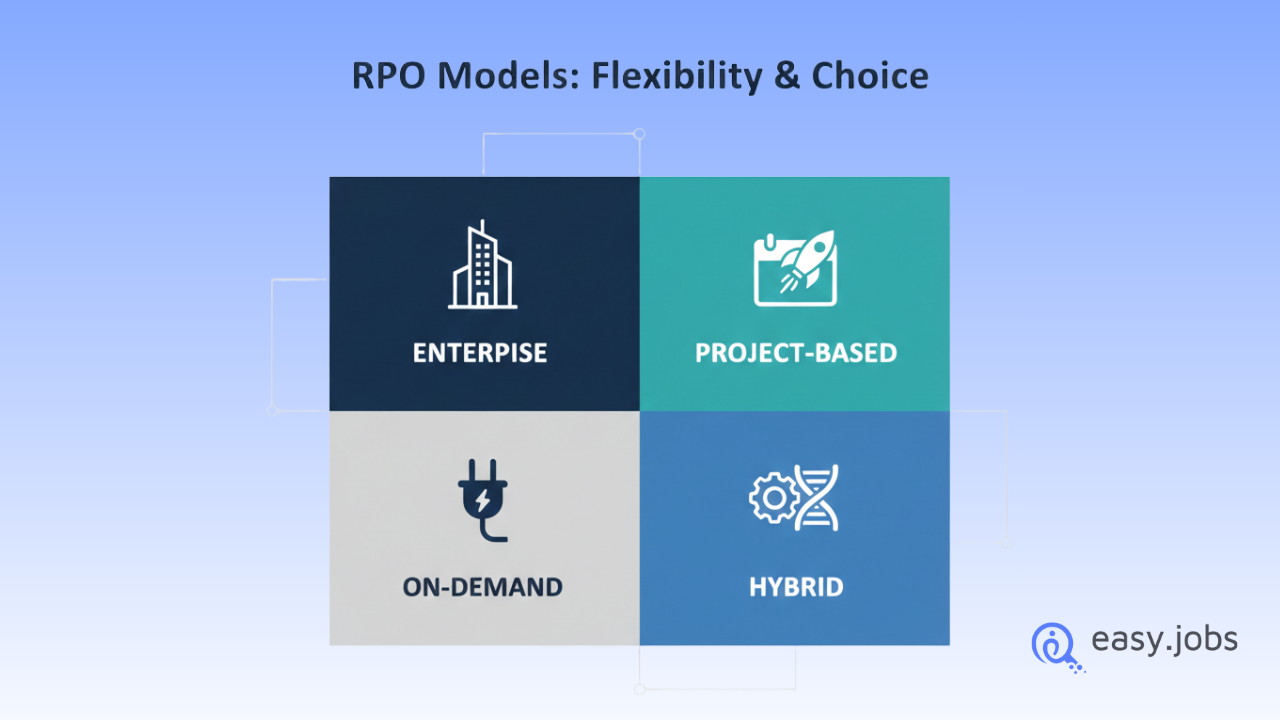
Jenis-Jenis Model Umum Pengalihdayaan Proses Rekrutmen
Untuk memaksimalkan ROI, Anda harus menyelaraskan model RPO dengan lintasan bisnis Anda saat ini.
RPO Perusahaan
Ini adalah kemitraan jangka panjang, bertahun-tahun, di mana penyedia layanan mengelola perekrutan untuk seluruh organisasi atau departemen tertentu.
Kapan digunakan: Pilihan terbaik untuk organisasi besar yang mencari infrastruktur rekrutmen permanen dan terukur serta optimalisasi proses secara menyeluruh.
RPO Berbasis Proyek
Suatu penugasan jangka pendek yang dirancang untuk mencapai tujuan perekrutan tertentu dalam jangka waktu yang ditentukan (misalnya, 3–9 bulan).
Kapan digunakan: Ideal untuk peluncuran produk, ekspansi ke pasar geografis baru, atau peningkatan perekrutan musiman.
RPO Sesuai Permintaan / Modular
Juga dikenal sebagai “Perekrut Sesuai Permintaan,” Model ini memungkinkan Anda untuk “menyambungkan”"Merekrut tenaga ahli untuk tim Anda yang sudah ada selama lonjakan volume yang tak terduga.".
Kapan digunakan: Sangat cocok untuk perusahaan menengah yang membutuhkan kapasitas segera tanpa komitmen kontrak jangka panjang.
Model RPO Hibrida
Pendekatan gabungan di mana tim internal Anda menangani peran tingkat tinggi atau eksekutif, sementara penyedia RPO mengelola perekrutan dalam jumlah besar atau administratif.
Kapan digunakan: Gunakan ini ketika Anda ingin mempertahankan kendali internal atas peran-peran yang "penting bagi budaya perusahaan" tetapi perlu mengurangi tugas-tugas yang berulang dan bervolume tinggi.
Dengan mengidentifikasi kerangka kerja mana yang sesuai dengan fase pertumbuhan Anda saat ini, Anda dapat memastikan bahwa mesin perekrutan Anda tetap gesit dan hemat biaya.
Perspektif Industri tentang Alih Daya Proses Rekrutmen
Memahami tren makro dan data pasar di balik adopsi RPO memungkinkan para pemimpin bisnis untuk melampaui perekrutan taktis dan memandang akuisisi talenta sebagai pendorong utama keunggulan kompetitif.
Apa Kata Para Pakar Industri Tentang RPO
Para pemimpin industri semakin mengkategorikan RPO bukan hanya sebagai kontrak outsourcing sederhana, tetapi sebagai sebuah mesin tenaga kerja strategis.
“RPO semakin dipandang sebagai solusi tenaga kerja strategis, bukan sekadar taktik penghematan biaya. Hal ini memungkinkan para pemimpin SDM untuk beralih dari perekrutan reaktif ke perencanaan talenta proaktif, memastikan bisnis siap menghadapi siklus pertumbuhan di masa depan.”
Konsensus para ahli menunjukkan bahwa mitra RPO modern bertindak sebagai "konsultan talenta," menyediakan data dan strategi branding perusahaan yang seringkali tidak mampu dikembangkan oleh tim internal karena keterbatasan kapasitas.
Statistik dan Tren Pasar Alih Daya Proses Rekrutmen
Untuk memahami skala adopsi RPO, pertimbangkan tolok ukur industri terkini berikut ini:
- Pertumbuhan Pasar yang Pesat: Pasar RPO global diproyeksikan mencapai sekitar $22,9 miliar menjadi $26,4 miliar pada tahun 2030, tumbuh dengan CAGR sekitar 14–16% karena perusahaan mencari model perekrutan yang lebih gesit.
- Peningkatan Efisiensi: Organisasi yang menerapkan solusi RPO secara rutin melihat Pengurangan biaya per perekrutan dari 30% menjadi 50% dan a Peningkatan waktu pengisian dari 25% menjadi 40%. metrik.
- Skalabilitas: Sebuah studi RPOA baru-baru ini menemukan bahwa sementara 80% tim HR internal membutuhkan waktu lebih dari sebulan untuk meningkatkan kapasitas rekrutmen mereka, mitra RPO dapat meningkatkan kapasitas mereka hampir secara signifikan. segera untuk memenuhi permintaan yang tiba-tiba.
- Pengaruh Kerja Jarak Jauh: Diperkirakan akan ada 32,6 juta pekerja jarak jauh pada tahun 2025., mendorong perusahaan untuk menggunakan penyedia RPO karena keahlian mereka dalam mencari dan merekrut talenta tanpa batas.
Statistik ini menyoroti pergeseran mendasar: RPO (Resource Process Outsourcing) menjadi pilihan utama bagi organisasi yang memprioritaskan pengambilan keputusan berbasis data dan fleksibilitas operasional dalam ekonomi global yang bergejolak.
Manfaat Alih Daya Proses Rekrutmen
Dengan mengurangi beban administratif dan operasional dari akuisisi talenta, organisasi dapat mengubah fungsi rekrutmen mereka menjadi mesin berkinerja tinggi yang mendorong pertumbuhan berkelanjutan.
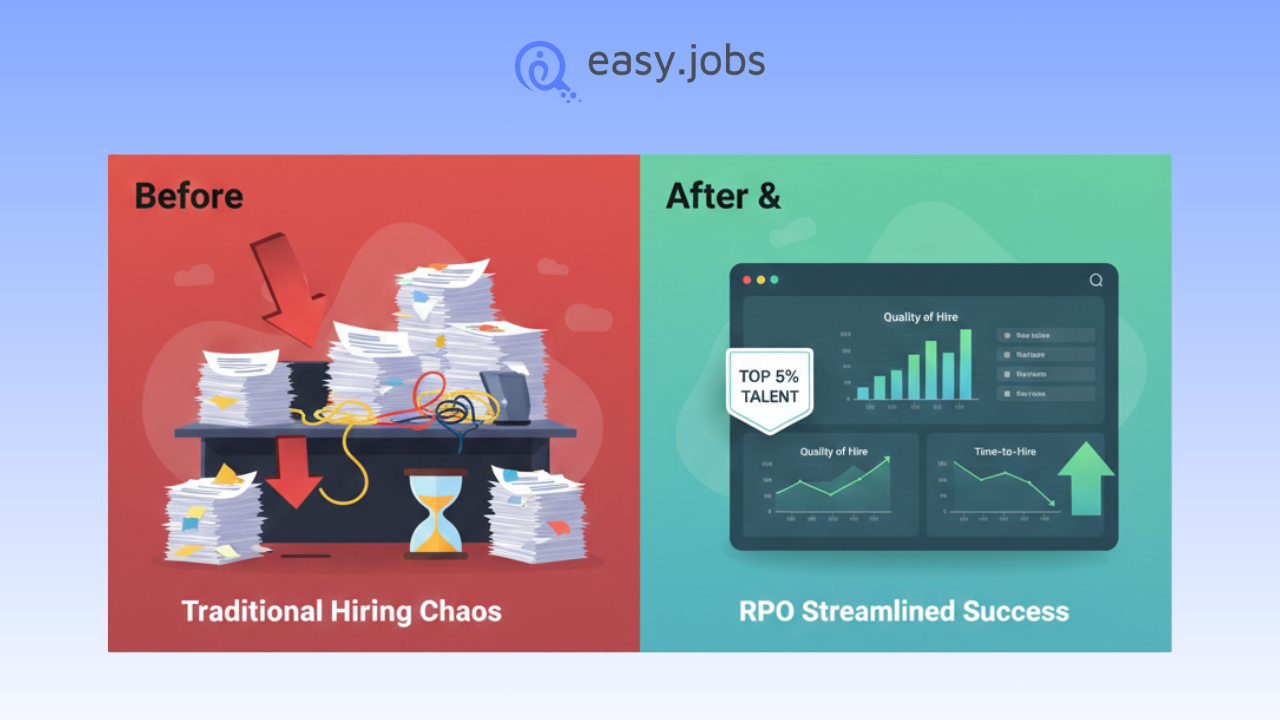
Manfaat Utama dari Alih Daya Proses Rekrutmen
- Skalabilitas: Kemampuan untuk meningkatkan kapasitas produksi selama lonjakan perekrutan dan mengurangi kapasitas produksi selama periode sepi akan melindungi laba bersih Anda dari biaya tetap.
- Siklus Perekrutan yang Lebih Cepat: Para ahli pencarian kandidat yang berdedikasi dan jalur pengembangan talenta yang telah dibangun sebelumnya memastikan bahwa peran-peran penting tidak akan kosong, sehingga mengurangi produktivitas perusahaan.
- Biaya Rekrutmen Lebih Rendah: Dengan menghilangkan penggunaan papan lowongan kerja yang mahal dan biaya tinggi dari perekrut profesional, RPO (Recruitment Process Outsourcing) mengkonsolidasikan pengeluaran ke dalam anggaran yang dapat diprediksi dan dikelola.
- Akses ke Keahlian Rekrutmen: Manfaatkan alat pencarian berbasis AI terbaru dan kerangka kerja penilaian psikologis yang akan terlalu mahal untuk dilisensikan oleh perusahaan individual.
Manfaat Mengalihdayakan Proses Rekrutmen dan Seleksi
- Pengurangan Beban Kerja SDM: Membebaskan tim SDM internal Anda untuk fokus pada retensi karyawan, budaya perusahaan, dan strategi tingkat tinggi, alih-alih melakukan penyaringan administratif.
- SEO Rekrutmen: Tim eksternal seringkali memberikan visibilitas yang tepat terhadap surat edaran Anda, yang mungkin kurang dimiliki oleh tim Anda saat ini atau mungkin memerlukan perekrutan karyawan baru untuk itu.
- Peningkatan Kualitas Kandidat: Protokol penilaian yang ketat dan terstandarisasi memastikan hanya 5% talenta terbaik yang mencapai tahap wawancara final.
- Perekrutan yang Konsisten dan Sesuai Aturan: Perusahaan RPO profesional memastikan setiap perekrutan memenuhi hukum ketenagakerjaan setempat dan target D&I (Keberagaman & Inklusi) internal.
- Data dan Wawasan yang Lebih Baik: Beralihlah dari perekrutan berdasarkan "firasat" ke pengambilan keputusan berbasis data dengan pelaporan terperinci di setiap tahap proses rekrutmen Anda.
Secara kolektif, keunggulan-keunggulan ini memungkinkan pendekatan perekrutan yang mengutamakan keterampilan, memastikan bahwa organisasi Anda tidak hanya mengisi posisi kosong tetapi juga membangun tenaga kerja yang tangguh dan siap menghadapi masa depan.
Harga dan Biaya Alih Daya Proses Rekrutmen
Mengembangkan strategi talenta yang berkelanjutan membutuhkan pergeseran dari memandang rekrutmen sebagai biaya operasional menjadi mengelolanya sebagai investasi yang terukur dan berorientasi pada kinerja.
Model Penetapan Harga Alih Daya Proses Rekrutmen
Penetapan harga RPO jauh lebih fleksibel daripada model persentase tetap yang digunakan oleh agen perekrutan. Tergantung pada volume perekrutan dan tujuan Anda, Anda kemungkinan akan menemukan salah satu dari empat struktur berikut:
Biaya Manajemen Bulanan (Retainer): Biaya tetap dan berulang yang dibayarkan kepada penyedia RPO untuk mengelola fungsi atau departemen tertentu.
Cocok untuk: Perusahaan besar dengan kebutuhan perekrutan yang stabil dan dapat diprediksi.
Biaya Per Sewa (CPH): Biaya tetap yang dibayarkan hanya untuk setiap perekrutan yang berhasil.
Cocok untuk: Perekrutan berbasis proyek atau bisnis dengan kebutuhan musiman yang berfluktuasi di mana Anda hanya ingin membayar berdasarkan hasil.
Biaya Manajemen + Bonus Kinerja: Biaya bulanan dasar mencakup infrastruktur, dengan "biaya keberhasilan" yang dipicu ketika target perekrutan atau KPI tertentu (seperti retensi 30 hari) tercapai.
Harga Hybrid / Modular: Anda membayar biaya dasar yang lebih rendah untuk teknologi dan strategi, ditambah biaya per-perekrutan yang lebih kecil. Ini menyeimbangkan risiko penyedia dan biaya klien.
Faktor-faktor Biaya dalam Alih Daya Proses Rekrutmen
Beberapa variabel menentukan berapa harga akhir yang akan Anda dapatkan. Rata-rata, RPO bisa jadi... 30–50% lebih hemat biaya dibandingkan dengan mempertahankan tim internal penuh, tetapi biayanya bervariasi tergantung pada:
Volume Rekrutmen: Posisi dengan volume tinggi (misalnya, ritel atau pusat panggilan) biasanya memiliki biaya per perekrutan yang lebih rendah daripada posisi eksekutif atau posisi teknis khusus.
Kompleksitas Peran: Mencari Senior DevOps Engineer di pasar yang kompetitif membutuhkan tenaga kerja yang lebih terspesialisasi dibandingkan peran administratif tingkat pemula.
Cakupan Geografis: Pengadaan barang dan jasa (RPO) global yang melibatkan berbagai hukum ketenagakerjaan dan bahasa memiliki biaya administrasi yang lebih tinggi.
Persyaratan Teknologi: Biaya akan berubah tergantung pada apakah Anda menggunakan ATS Anda sendiri (seperti pekerjaan mudah) atau memanfaatkan tumpukan teknologi milik penyedia layanan tersebut.
Penafian: Penetapan harga RPO sangat subjektif. Proyek percontohan untuk 10 karyawan baru akan memiliki struktur biaya yang sangat berbeda dibandingkan dengan transformasi skala perusahaan untuk lebih dari 1.000 karyawan baru setiap tahunnya.
Dengan menyelaraskan model penetapan harga ini dengan kecepatan perekrutan spesifik Anda, Anda dapat mencapai tingkat prediktabilitas keuangan yang jarang diberikan oleh model agensi tradisional atau model internal.
Tantangan dalam Alih Daya Proses Rekrutmen
Meskipun RPO menyediakan mesin yang ampuh untuk pertumbuhan, keberhasilannya bergantung pada pendekatan proaktif terhadap integrasi, transparansi, dan keselarasan budaya antara penyedia dan organisasi induk.
Tantangan Umum dalam Alih Daya Proses Rekrutmen
Meskipun RPO menawarkan manfaat yang sangat besar, ini bukanlah solusi "atur sekali dan lupakan". Organisasi sering menghadapi hambatan awal berikut:
- Kehilangan Kendali: Para pemimpin HR mungkin khawatir kehilangan "hak veto" atau visibilitas terhadap proses rekrutmen sehari-hari.
- Penyelarasan Merek Perusahaan: Jika tim RPO (Recruitment Process Outsourcing) tidak sepenuhnya mencerminkan budaya perusahaan Anda, pengalaman kandidat mungkin terasa "generik" atau terputus.
- Integrasi Data dan Sistem: Menyelaraskan alat dari penyedia eksternal dengan HRIS atau ATS internal Anda dapat menyebabkan silo data jika tidak direncanakan dengan benar.
- Kesenjangan Komunikasi: Ketidakselarasan antara manajer perekrutan dan perekrut pihak luar dapat menyebabkan siklus umpan balik yang lambat dan kehilangan talenta.
Bagaimana Perusahaan Dapat Mengatasi Tantangan RPO (Recruitment Process Outsourcing)
Kemitraan yang sukses mengurangi risiko-risiko ini melalui struktur yang terstruktur. Model Tata Kelola:
- Definisikan SLA dan KPI: Tetapkan Perjanjian Tingkat Layanan (Service Level Agreement/SLA) yang jelas (misalnya, “Semua resume ditinjau dalam waktu 48 jam”) dan Indikator Kinerja Utama (Key Performance Indicator/KPI) (misalnya, “Kepuasan manajer perekrutan 90%”).
- Jadwal Pelaporan Rutin: Lewati laporan bulanan. Terapkan "pertemuan taktik" mingguan untuk mengatasi hambatan mendesak dan tinjauan strategis bulanan.
- Proses Orientasi yang Kuat: Perlakukan tim RPO Anda seperti karyawan baru. Berikan mereka sesi penjelasan mendalam tentang misi, nilai-nilai, dan bahkan "bahasa internal" perusahaan Anda agar mereka dapat mewakili merek Anda secara autentik.
- Teknologi Bersama: Gunakan platform terpadu untuk melacak kandidat guna memastikan transparansi total.
Dengan mengatasi tantangan-tantangan ini melalui kerangka kerja tata kelola kolaboratif, organisasi dapat memastikan bahwa mitra RPO mereka bertindak sebagai perpanjangan yang mulus dan berkinerja tinggi dari budaya internal mereka sendiri.
Perusahaan Outsourcing Proses Rekrutmen Terbaik
Sebagai Pasar RPO diproyeksikan akan melampaui 1.442,6 miliar pada tahun 2030., Tantangan bagi para pemimpin SDM telah bergeser dari mencari penyedia layanan menjadi mengidentifikasi mitra spesifik yang memiliki tumpukan teknologi dan jangkauan geografis yang selaras dengan target pertumbuhan mereka di tahun mendatang.
Cara Mengevaluasi Perusahaan Outsourcing Proses Rekrutmen Terbaik
Memilih mitra RPO adalah keputusan yang berisiko tinggi. Untuk memastikan kesuksesan jangka panjang, evaluasi penyedia potensial berdasarkan empat pilar berikut:
- Fokus Industri: Apakah penyedia jasa tersebut memiliki rekam jejak yang terbukti di sektor spesifik Anda (misalnya, Teknologi, Kesehatan, Manufaktur)? Perekrut spesialis memahami bahasa "niche" dan harapan kandidat di bidang Anda.
- Kompatibilitas Teknologi & ATS: Pastikan penyedia layanan dapat bekerja dalam ekosistem Anda yang sudah ada (seperti pekerjaan mudah atau Greenhouse) atau menawarkan platform berbasis AI eksklusif yang terintegrasi secara mulus dengan HRIS Anda.
- Jangkauan Geografis: Jika Anda merekrut secara global, mitra Anda harus memiliki keahlian "di lapangan" mengenai hukum ketenagakerjaan lokal, kepatuhan, dan nuansa budaya di wilayah-wilayah tertentu tersebut.
- Kepatuhan dan Keamanan Data: Tahun ini, privasi data sangat penting. Pastikan penyedia layanan mematuhi GDPR/CCPA dan memiliki protokol yang kuat untuk menangani informasi kandidat yang sensitif.
Contoh Penyedia RPO Terkemuka
Pasar RPO sangat beragam, mulai dari raksasa global hingga butik khusus. Berikut adalah tinjauan netral terhadap beberapa nama yang paling dikenal di industri ini:
| Penyedia | Terbaik untuk… | Fitur Utama |
| Cielo | Perusahaan Global | Pengalaman kandidat yang personal dan berskala global di lebih dari 100 negara. |
| Korn Ferry | Kepemimpinan & Strategi | Menggabungkan RPO (Recruitment Process Outsourcing) dengan pencarian eksekutif dan konsultasi organisasi. |
| Pramuka Rakyat | RPO yang Didukung Teknologi | Dikenal karena Affinix platform yang menggunakan AI untuk menyederhanakan proses pengadaan. |
| Orion Talent | Bakat Khusus | Perusahaan terkemuka dalam perekrutan militer/veteran dan peran manufaktur teknis. |
| Randstad Sourceright | Volume Tinggi & DEI | Jangkauan global yang luas dengan fokus kuat pada metrik keragaman dan inklusi. |
| Tujuh langkah | Fleksibilitas Pasar Menengah | Model yang sangat mudah disesuaikan untuk perusahaan yang membutuhkan dukungan "modular". |
Baik Anda memprioritaskan jangkauan luas perusahaan global atau pendekatan gesit dan berorientasi teknologi dari spesialis pasar menengah, pilihan mitra Anda pada akhirnya akan menentukan kecepatan dan kualitas jalur perekrutan talenta Anda.
Kapan Sebaiknya Sebuah Perusahaan Menggunakan Alih Daya Proses Rekrutmen?
Menentukan momen yang tepat untuk beralih ke model RPO membutuhkan audit jujur terhadap kecepatan perekrutan Anda saat ini dan apakah infrastruktur internal Anda dapat mengimbangi tujuan bisnis terbaru Anda.
Tanda-tanda RPO Adalah Pilihan yang Tepat
Anda perlu mempertimbangkan untuk beralih dari perekrutan tradisional ketika Anda mengenali "titik-titik permasalahan" ini dalam organisasi Anda:
- Peningkatan Skala yang Cepat: Bisnis Anda perlu menggandakan jumlah karyawan dalam 6 bulan, dan tim internal Anda sudah memiliki kapasitas 100%.
- Perekrutan dalam Jumlah Besar atau Spesialisasi: Anda terus-menerus merekrut untuk posisi yang sama atau, sebaliknya, tidak dapat menemukan satu pun kandidat untuk posisi teknis yang sangat spesifik.
- Kualitas Kandidat yang Tidak Konsisten: Anda menerima ratusan resume, tetapi rasio "wawancara-ke-penawaran" Anda sangat rendah.
- Kurangnya Data: Anda tidak dapat menjawab pertanyaan mendasar tentang biaya perekrutan atau dari mana kandidat terbaik Anda berasal.
RPO vs. Agen Perekrutan vs. Rekrutmen Internal
Pilihan terbaik seringkali bergantung pada tujuan jangka panjang Anda.
- Internal: Paling cocok untuk membangun budaya perusahaan dan perekrutan yang stabil dan dalam jumlah kecil.
- Agen Penyedia Tenaga Kerja: Paling cocok untuk posisi eksekutif yang bersifat sekali saja, "sulit diisi", atau tenaga kerja sementara.
- RPO: Paling cocok untuk perusahaan yang ingin kuasai prosesnya, mengurangi biaya jangka panjang, dan membangun mesin talenta yang permanen.
Meskipun tim internal tetap menjadi standar emas untuk kedalaman budaya dan agensi berguna untuk pengisian posisi "darurat", RPO telah muncul sebagai model yang paling tangguh bagi perusahaan yang ingin membangun mesin perekrutan permanen yang didukung teknologi tanpa biaya tetap dari departemen internal yang besar.
Rekomendasi Praktis Sebelum Memilih Penyedia RPO
Keberhasilan dalam layanan RPO bukan hanya tentang memilih vendor yang tepat; tetapi juga tentang mempersiapkan organisasi internal Anda untuk berkolaborasi secara efektif dengan mitra talenta eksternal.
Rekomendasi Utama untuk Pemimpin SDM dan Bisnis
Untuk memastikan implementasi RPO Anda tidak gagal, ikuti langkah-langkah strategis berikut:
- Tetapkan Target dan Volume Perekrutan dengan Jelas: Jangan hanya mengatakan “kita perlu merekrut lebih banyak.” Tetapkan target spesifik (misalnya, “50 insinyur di Q3”).
- Pilih Model RPO yang Tepat: Jangan membeli solusi Enterprise jika model berbasis Proyek sudah cukup untuk ekspansi tertentu.
- Tuntut Transparansi dalam Pelaporan: Pastikan Anda memiliki akses langsung ke dasbor rekrutmen. Anda seharusnya tidak perlu menunggu hingga rapat bulanan untuk melihat kemajuan Anda.
- Selaraskan Citra Perusahaan sebagai Pemberi Kerja: Mitra RPO Anda adalah "wajah" perusahaan Anda. Pastikan mereka menggunakan suara merek Anda di setiap email dan pesan LinkedIn.
- Mulailah dengan Program Percontohan: Jika Anda ragu, jalankan uji coba selama 90 hari di departemen atau proyek tertentu untuk menguji "kesesuaian budaya" kemitraan tersebut.“
Dengan mengikuti langkah-langkah mendasar ini, tim kepemimpinan dapat mengurangi risiko outsourcing dan membangun mesin perekrutan yang selaras secara budaya sekaligus efisien secara operasional.
Prospek Masa Depan Alih Daya Proses Rekrutmen
Era RPO selanjutnya akan ditandai dengan integrasi tanpa batas antara teknologi otonom dan strategi manusia, di mana “Manusia dalam Lingkaran”Model (HITL) memastikan bahwa AI memperkuat, bukan menggantikan, elemen penting dari penilaian manusia.

Tren-Tren Baru dalam RPO
Seiring berjalannya tahun mendatang, RPO (Research Process Outsourcing) bergeser dari model berbasis layanan ke model yang lebih terintegrasi. model berbasis kecerdasan. Pendekatan “Human-in-the-Loop” (HITL) kini menjadi standar industri, di mana perekrut menggunakan AI untuk memperkuat dampak strategis mereka daripada menggantikan penilaian mereka.
- AI Agen dan Otomasi: Penyedia RPO (Recruitment Process Outsourcing) menggunakan agen AI otonom yang tidak hanya menyaring resume tetapi juga mengelola alur kerja yang kompleks—seperti mengoordinasikan jadwal wawancara multi-panel dan melakukan penilaian percakapan awal—tanpa campur tangan manusia.
- Analisis Prediktif Perekrutan: Dengan memanfaatkan data historis dan intelijen pasar, mitra RPO kini dapat melakukan perkiraan. risiko kehilangan Dan kesenjangan keterampilan di masa depan sebelum berdampak pada bisnis, dengan mengubah proses rekrutmen dari reaktif menjadi proaktif.
- Dukungan Tenaga Kerja Global dan Jarak Jauh: Dengan kerja jarak jauh yang menjadi bagian permanen, penyedia RPO bertindak sebagai "Pusat Bakat" global, membantu perusahaan menavigasi kompleksitas kepatuhan, penggajian, dan budaya dalam perekrutan tanpa batas.
- Perekrutan Berdasarkan Keterampilan: Menjauh dari resume tradisional, masa depan RPO berfokus pada pemetaan kemampuan. Alat AI menilai kandidat berdasarkan keterampilan yang telah diverifikasi dan potensi belajar mereka, yang secara signifikan mengurangi bias dan meningkatkan retensi jangka panjang.
Seiring dengan konvergensi tren-tren ini, RPO berkembang menjadi solusi "Total Talent" yang tidak hanya mengelola perekrutan permanen, tetapi juga seluruh tenaga kerja gabungan yang terdiri dari manusia dan agen AI.
Pertanyaan yang Sering Diajukan Tentang Alih Daya Proses Rekrutmen
Untuk membantu para pemimpin SDM dalam mengambil keputusan yang cepat dan tepat, kami telah mengumpulkan pertanyaan-pertanyaan paling penting mengenai implementasi dan dampak RPO di pasar talenta.
Apa itu Outsourcing Proses Rekrutmen dalam Istilah Sederhana?
Outsourcing Proses Rekrutmen (RPO) adalah kemitraan di mana sebuah bisnis menyewa perusahaan eksternal untuk menangani seluruh atau sebagian aktivitas perekrutannya. Pada dasarnya, penyedia RPO bertindak sebagai "“intern”Tim rekrutmen, yang mengelola segala hal mulai dari mencari kandidat hingga melakukan orientasi karyawan, seringkali menggunakan merek perusahaan sendiri.
Layanan apa saja yang termasuk dalam Outsourcing Proses Rekrutmen?
Layanan RPO standar meliputi pencarian bakat, penyaringan kandidat, branding perusahaan, penjadwalan wawancara, dan manajemen penawaran. Penyedia layanan tingkat lanjut juga menawarkan analitik rekrutmen, integrasi teknologi, dan perencanaan tenaga kerja strategis untuk membantu perusahaan mengoptimalkan efisiensi perekrutan jangka panjang dan kualitas bakat mereka.
Berapa Biaya Outsourcing Proses Rekrutmen?
Harga RPO bervariasi berdasarkan volume dan kompleksitas. Model umum meliputi biaya manajemen bulanan, biaya per perekrutan, atau model hibrida berbasis kinerja. Rata-rata, RPO dapat mengurangi biaya perekrutan sebesar 30–50% dibandingkan dengan agen perekrutan tradisional atau mempertahankan tim internal yang besar.
Apa saja manfaat utama dari outsourcing proses rekrutmen?
Manfaat utamanya meliputi peningkatan skalabilitas, waktu perekrutan yang lebih cepat, dan peningkatan kualitas kandidat. RPO juga memberi perusahaan akses ke teknologi perekrutan canggih dan wawasan berbasis data yang membantu mengurangi biaya per perekrutan dan memastikan pengalaman kandidat yang lebih konsisten dan profesional.
Apa saja tantangan dalam outsourcing proses rekrutmen?
Tantangan umum meliputi potensi hilangnya kendali atas proses perekrutan dan kebutuhan akan keselarasan merek yang erat antara perusahaan dan penyedia layanan. Komunikasi yang efektif dan Perjanjian Tingkat Layanan (SLA) yang jelas sangat penting untuk memastikan tim RPO secara akurat mewakili budaya perusahaan.
Apakah Outsourcing Proses Rekrutmen Cocok untuk Bisnis Kecil?
Ya, RPO sangat efektif untuk bisnis kecil dan menengah (UKM) melalui model "Berbasis Proyek" atau "Sesuai Permintaan". Hal ini memungkinkan perusahaan kecil untuk mengakses keahlian dan teknologi rekrutmen tingkat perusahaan tanpa biaya tambahan departemen SDM internal penuh waktu.
Apa perbedaan RPO dengan agen perekrutan?
Agen perekrutan bersifat transaksional, fokus pada pengisian peran tertentu dengan biaya sekali bayar. Sebaliknya, penyedia RPO (Recruitment Process Outsourcing) adalah mitra strategis yang mengelola seluruh proses, beroperasi di bawah merek Anda, dan fokus pada tujuan jangka panjang seperti mengurangi tingkat pergantian karyawan dan meningkatkan efisiensi perekrutan.
Perluas Skala Tenaga Kerja Anda dengan Presisi Perekrutan Berbasis Data
Outsourcing Proses Rekrutmen telah berkembang menjadi pengungkit strategis yang vital bagi bisnis modern. Dengan menggabungkan wawasan ahli manusia dengan AI dan analitik data mutakhir, RPO memungkinkan organisasi untuk meningkatkan akuisisi talenta mereka dengan tingkat kecepatan dan presisi yang sebelumnya tidak mungkin dilakukan.
Baik Anda perusahaan besar yang mencari transformasi perekrutan total atau bisnis yang sedang berkembang yang membutuhkan dukungan tambahan untuk proyek tertentu, mitra RPO yang tepat dapat mengubah proses perekrutan Anda dari pusat biaya menjadi keunggulan kompetitif.
Jika Anda merasa panduan tentang outsourcing proses rekrutmen ini bermanfaat, berlangganan blog kami Dapatkan wawasan terbaru tentang perekrutan berbasis AI dan strategi talenta. Bergabunglah dengan kami. Komunitas Facebook untuk bertukar pikiran dengan sesama pemimpin SDM dan tetap mengikuti perkembangan dunia teknologi rekrutmen.