
Hiring the right talent is one of the biggest challenges companies face today. A recruitment manager plays a crucial role in solving this by designing hiring strategies, leading recruiters and ensuring the right candidates join the organization.
Understanding this role helps businesses hire smarter and professionals build a successful HR career. Let us discover the responsibilities, essential skills, salary insights and career path of a recruitment-manager.

TL;DR: Recruitment Manager Explained
- A recruitment manager leads an organization’s hiring strategy and manages recruitment teams.
- Their responsibilities include planning hiring campaigns, overseeing candidate pipelines and collaborating with hiring managers.
- A typical recruitment manager job description involves supervising recruiters, tracking hiring metrics and improving recruitment processes.
- Kunci recruitment manager skills include talent sourcing, ATS management, recruitment analytics, leadership and communication.
- Recruitment managers help companies hire top talent faster and build efficient hiring systems.
What Is a Recruitment Manager?
A recruitment manager is an HR professional responsible for planning, leading and optimizing an organization’s proses perekrutan. Instead of focusing only on sourcing candidates, recruitment-managers oversee the entire recruitment strategy. From workforce planning and employer branding to managing recruiters and ensuring the right talent joins the company.
Their role connects hiring needs with business goals. By analyzing hiring data, coordinating with department leaders and improving pengalaman kandidat, recruitment-managers help companies attract and hire qualified professionals faster and more efficiently.
In many organizations, recruitment-managers also manage recruitment tools, streamline hiring workflows and ensure every stage of the recruitment pipeline operates smoothly.
Recruitment Manager Definition
A recruitment manager is a senior hiring professional who designs recruitment strategies, manages hiring teams and oversees the full recruitment lifecycle to ensure organizations attract and hire the best candidates efficiently.
Why Companies Need Recruitment Managers
Modern hiring involves multiple stages such as sourcing, screening, interviewing and onboarding. Recruitment-managers help organizations manage these processes strategically. They improve hiring efficiency, maintain consistent hiring standards and ensure that recruitment aligns with company growth plans.
Their leadership allows HR teams to handle large calon saluran pipa while maintaining a positive candidate experience.
Recruitment Manager vs Recruiter
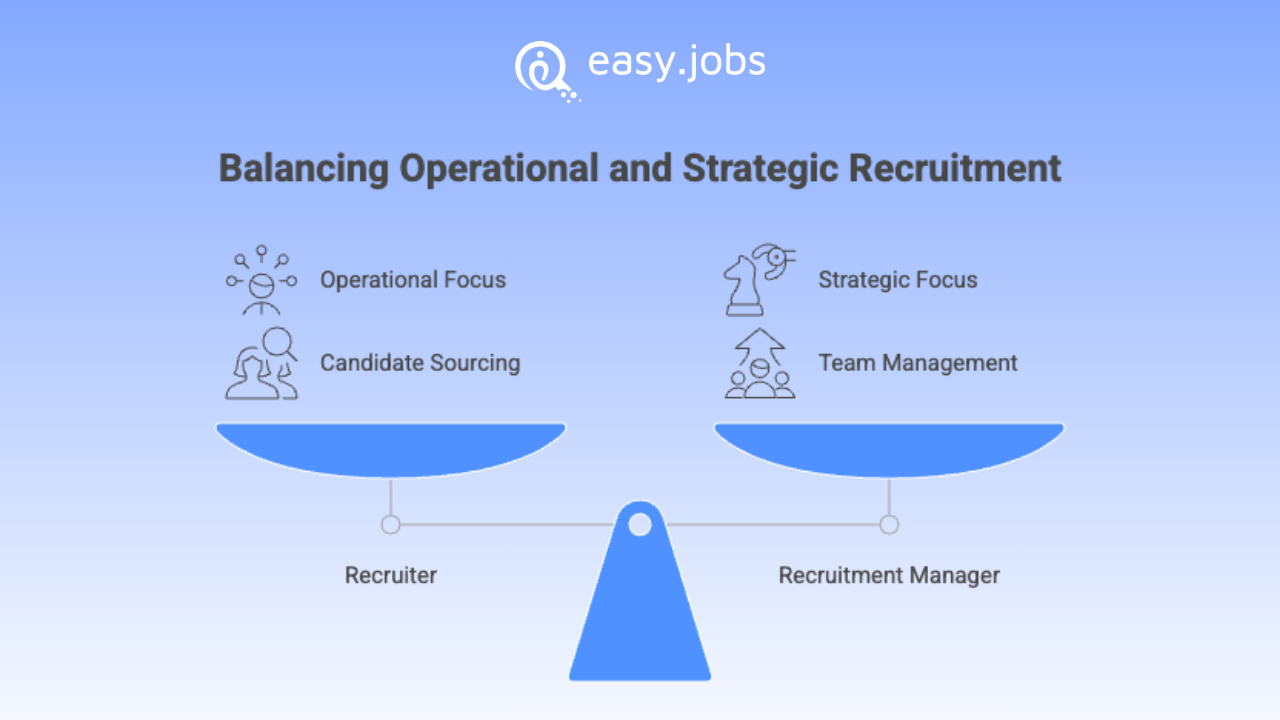
Although these roles are closely related, their responsibilities differ in scope and leadership.
| Peran | Fokus |
| Perekrut | Sources candidates, conducts screenings and coordinates interviews |
| Recruitment Manager | Leads recruitment strategy, manages recruiters and optimizes hiring processes |
While recruiters handle the operational side of hiring, recruitment-managers focus on strategy, team leadership and recruitment performance.
What Does a Recruitment Manager Do?
A recruitment manager oversees the entire hiring process and ensures that recruitment activities align with the company’s workforce goals. Their role goes beyond sourcing candidates. They design hiring strategies, manage recruitment teams, monitor hiring performance and continuously improve the recruitment pipeline to attract top talent efficiently.
By coordinating closely with hiring managers and leadership, recruitment-managers ensure that every stage of the hiring process. From candidate sourcing to final selection, runs smoothly and delivers high-quality hires.
Key Responsibilities of a Recruitment Manager
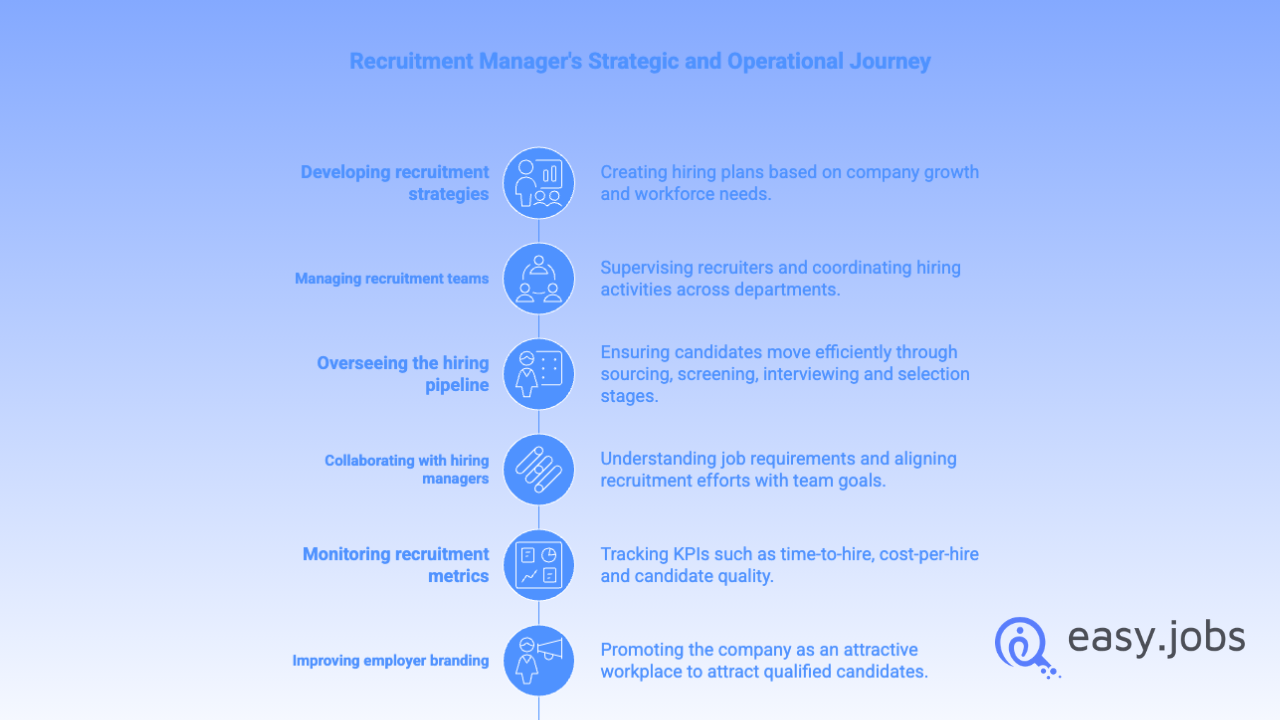
Recruitment managers handle both strategic planning and operational oversight in the hiring process. Some of their core responsibilities include:
- Developing recruitment strategies: Creating hiring plans based on company growth and workforce needs.
- Managing recruitment teams: Supervising recruiters and coordinating hiring activities across departments.
- Overseeing the hiring pipeline: Ensuring candidates move efficiently through sourcing, screening, interviewing and selection stages.
- Collaborating with hiring managers: Understanding job requirements and aligning recruitment efforts with team goals.
- Monitoring recruitment metrics: Tracking KPIs such as time-to-hire, cost-per-hire and candidate quality.
- Improving employer branding: Promoting the company as an attractive workplace to attract qualified candidates.
Daily Tasks of a Recruitment Manager
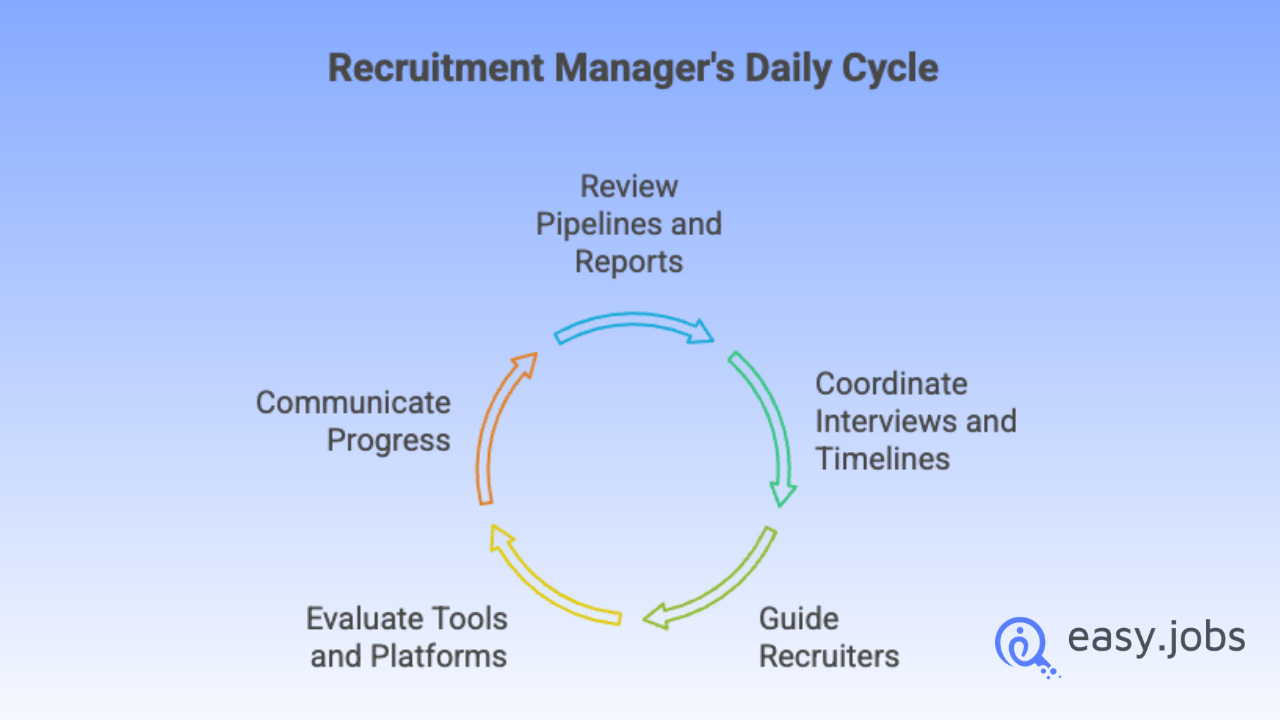
On a typical day, recruitment managers balance strategic planning with operational tasks such as:
- Reviewing candidate pipelines and recruitment reports
- Coordinating interviews and hiring timelines
- Guiding recruiters on sourcing strategies
- Evaluating recruitment tools and hiring platforms
- Communicating hiring progress with department leaders
By managing these responsibilities effectively, recruitment-managers help organizations maintain a structured, scalable and efficient recruitment process that consistently delivers qualified hires.
Recruitment Manager Job Description
A recruitment manager job description outlines the responsibilities, qualifications and expectations for professionals responsible for managing an organization’s hiring strategy. Companies use this role to ensure recruitment processes are structured, efficient and aligned with business growth.
Recruitment-managers typically lead recruitment teams, coordinate with department leaders and ensure that the organization consistently attracts and hires qualified candidates.
Recruitment Manager Job Description Template
Below is a typical structure organizations use when defining the role.
Judul Pekerjaan: Recruitment Manager
Role Summary:
The Recruitment-Manager is responsible for overseeing the end-to-end recruitment process, developing hiring strategies and managing recruitment teams to ensure the organization attracts and hires top talent efficiently.
Key Responsibilities
- Develop and implement recruitment strategies aligned with company hiring goals
- Lead and manage a team of recruiters and hiring coordinators
- Work with department managers to identify staffing needs
- Oversee candidate sourcing, screening and interview processes
- Monitor recruitment metrics such as time-to-hire and cost-per-hire
- Improve employer branding and candidate experience
- Ensure compliance with hiring policies and regulations
Preferred Qualifications
- Bachelor’s degree in Human Resources, Business Administration or related field
- Several years of recruitment or talent acquisition experience
- Leadership or team management experience
- Strong communication and decision-making skills
Recruitment Manager Requirements
To succeed in this role, professionals usually need a combination of education, experience and recruitment expertise.
Education
- Degree in Human Resources, Business Administration or related discipline
Pengalaman
- Several years of experience in recruitment or talent acquisition
- Experience managing hiring teams or recruitment projects
Certifications (Optional)
- SHRM certification
- Professional HR certifications
- Talent acquisition or recruitment management certifications
These requirements help organizations ensure that recruitment-managers can lead hiring strategies effectively while managing complex recruitment pipelines.
Essential Recruitment Manager Skills
To manage modern hiring processes effectively, a recruitment manager must combine strategic thinking, technical recruiting expertise and strong leadership abilities. These skills help recruitment-managers lead hiring teams, streamline recruitment workflows and ensure organizations attract high-quality candidates.
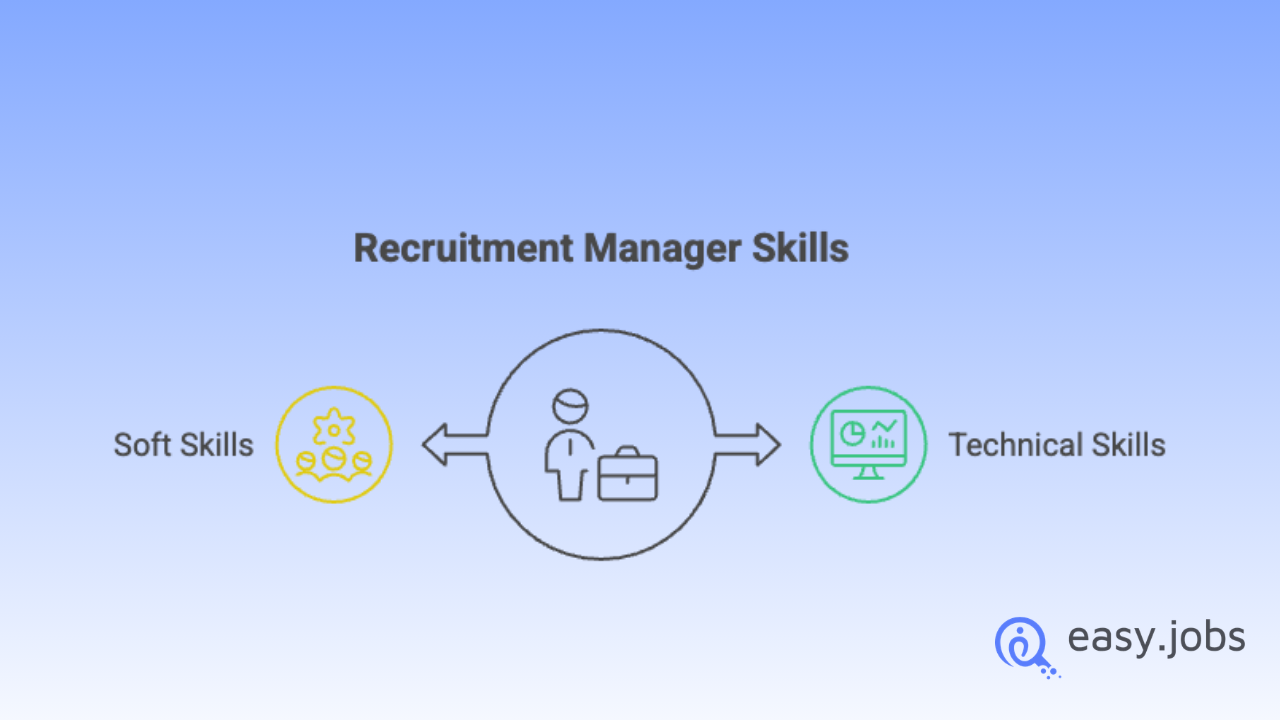
Successful recruitment-managers usually develop a balance of technical recruitment skills Dan interpersonal leadership skills to manage both the hiring process and the people involved.
Keterampilan Teknis
Technical skills allow recruitment-managers to plan hiring strategies, analyze recruitment data and manage hiring platforms. Key technical skills include:
- Applicant Tracking System (ATS) management: Menggunakan perangkat lunak perekrutan to track candidates, manage pipelines and automate hiring workflows.
- Talent sourcing strategies: Identifying qualified candidates through job boards, professional networks and talent databases.
- Recruitment analytics: Analyzing metrics such as time-to-hire, biaya per sewa and candidate conversion rates.
- Workforce planning: Aligning recruitment efforts with company growth and workforce requirements.
- Employer branding strategies: Promoting the organization to attract qualified talent.
Soft Skills
In addition to technical expertise, recruitment-managers must also develop strong leadership and communication skills.
Important soft skills include:
- Leadership: Guiding recruiters and coordinating hiring activities across teams.
- Komunikasi: Clearly communicating with candidates, recruiters and hiring managers.
- Decision-making: Evaluating candidates and making strategic hiring decisions.
- Perundingan: Managing offer discussions and salary negotiations.
- Relationship building: Maintaining positive connections with candidates and internal stakeholders.
Together, these skills enable recruitment-managers to manage recruitment teams effectively while maintaining a smooth and efficient hiring process.
Recruitment Manager Salary
Itu recruitment manager salary varies depending on experience, location, company size and industry demand. Because recruitment-managers oversee hiring strategies and manage recruitment teams, their compensation is typically higher than that of recruiters or recruitment coordinators.
According to salary data from Pintu kaca, MemangDan Payscale, recruitment-managers earn competitive salaries across major job markets.
Average Recruitment Manager Salary
Typical salary ranges include:
- United States: $85,000 – $120,000 per year
- United Kingdom: £45,000 – £70,000 per year
- Canada: CAD 80,000 – CAD 110,000 per year
- Australia: AUD 95,000 – AUD 130,000 per year
These ranges may vary depending on company size, hiring volume and recruitment leadership responsibilities.
Salary by Experience Level
Recruitment-manager salaries increase as professionals gain leadership experience.
| Experience Level | Average Salary Range |
| Entry-Level Recruitment Manager | $65,000 – $85,000 |
| Mid-Level Recruitment Manager | $85,000 – $110,000 |
| Senior Recruitment Manager | $110,000 – $140,000+ |
Factors That Influence Recruitment Manager Salary
Several factors determine salary levels:
- Industry demand for talent
- Company size and hiring scale
- Geographic location and labor market conditions
- Leadership responsibilities and team size
Labor market reports from the U.S. Bureau of Labor Statistics also show that compensation in recruitment and HR leadership roles grows with organizational hiring complexity and workforce size.
Recruitment Manager Career Path
A recruitment-manager career path typically begins with entry-level recruiting roles and gradually progresses toward leadership positions in talent acquisition and human resources. As professionals gain experience in sourcing, interviewing and hiring strategy, they move into roles where they manage recruitment teams and oversee organizational hiring goals.
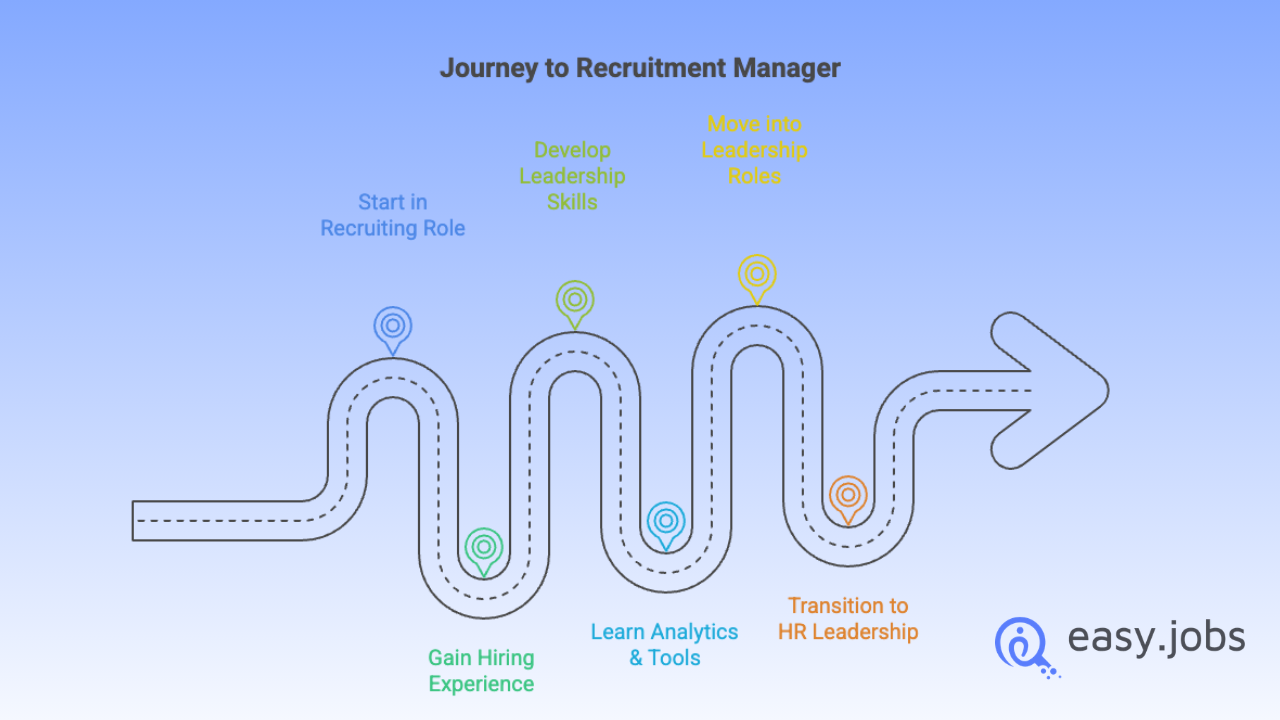
Because recruitment-managers play a strategic role in workforce planning, this position often serves as a stepping stone to senior HR leadership roles.
How to Become a Recruitment Manager
Most professionals reach the recruitment-manager role by developing experience in recruiting and talent acquisition over several years. Typical steps include:
Langkah 1: Start in a recruiting role
Many recruitment-managers begin as recruiters, HR coordinators or talent acquisition specialists.
Langkah 2: Gain hands-on hiring experience
Managing candidate sourcing, screening and interviews builds practical recruitment expertise.
Langkah 3: Develop leadership skills
Leading hiring projects or mentoring junior recruiters helps prepare professionals for management roles.
Step 4: Learn recruitment analytics and tools
Understanding recruitment metrics and using applicant tracking systems improves hiring performance.
Step 5: Move into recruitment leadership roles
With experience and leadership capability, professionals can advance to recruitment-manager positions.
Typical Career Progression
The recruitment career ladder usually follows a structured progression:
Recruitment Coordinator
→ Recruiter / Talent Acquisition Specialist
→ Senior Recruiter
→ Recruitment Manager
→ Head of Talent Acquisition
→ HR Director or Chief Human Resources Officer
As organizations grow and hiring becomes more complex, recruitment-managers often transition into broader talent strategy and HR leadership roles.
Tools Recruitment Managers Use
Modern hiring processes involve multiple stages such as sourcing candidates, managing applications, coordinating interviews and tracking recruitment performance. To manage these activities efficiently, recruitment-managers rely on specialized recruitment tools and platforms that help automate workflows and organize hiring pipelines.
These tools allow recruitment-managers to handle large candidate volumes, collaborate with hiring teams and make data-driven hiring decisions.
Sistem Pelacakan Pelamar (ATS)
Sebuah Sistem Pelacakan Pelamar (ATS) is one of the most important tools used by recruitment-managers. It helps organizations manage the entire hiring process from job posting to candidate selection. Common ATS capabilities include:
- Posting jobs to multiple job boards
- Collecting and organizing candidate applications
- Tracking candidates through hiring stages
- Automating communication with applicants
- Maintaining a structured recruitment pipeline
By centralizing candidate data and hiring workflows, ATS platforms help recruitment-managers improve hiring efficiency and reduce manual administrative work.
Recruitment Automation Tools
Recruitment automation tools help streamline repetitive hiring tasks and improve overall recruitment productivity. These tools often support:
- Resume screening and candidate filtering
- Penjadwalan wawancara otomatis
- Candidate communication workflows
- Talent sourcing from multiple platforms
Automation allows recruitment-managers and recruiters to focus more on evaluating candidates and building relationships rather than managing administrative tasks.
Recruitment Analytics Tools
Recruitment-managers also use analytics tools to measure hiring performance and improve recruitment strategies. Common recruitment metrics include:
- Time-to-hire
- Cost-per-hire
- Candidate conversion rates
- Source-of-hire effectiveness
By analyzing these metrics, recruitment-managers can identify hiring bottlenecks and optimize the recruitment process for better results.
How easy.jobs Helps Recruitment Managers
Hiring platforms like pekerjaan mudah support recruitment-managers by simplifying candidate management and organizing recruitment workflows in one place. With a recruitment platform, managers can:
- Manage candidate pipelines efficiently
- Collaborate with hiring teams during interviews
- track recruitment progress and hiring metrics
- automate communication with candidates
Using the right recruitment tools helps recruitment-managers build a faster, more organized and scalable hiring process.
Challenges Recruitment Managers Face
Even with structured hiring processes and recruitment tools, recruitment managers face several challenges when attracting and hiring the right talent. Rapid changes in the job market, evolving candidate expectations and increasing competition for skilled professionals make recruitment more complex than ever.
Understanding these challenges helps organizations improve their hiring strategies and build more efficient recruitment processes.
Talent Shortages
One of the most common challenges is the limited availability of qualified candidates. In competitive industries, skilled professionals often receive multiple job offers, making it harder for companies to attract and secure top talent.
Recruitment managers must develop stronger sourcing strategies and employer branding efforts to compete for the best candidates.
Long Hiring Cycles
A slow hiring process can cause organizations to lose strong candidates to faster competitors. When interview scheduling, approvals or candidate evaluations take too long, candidates may accept other job offers.
Recruitment managers work to streamline recruitment workflows and improve coordination between recruiters and hiring managers to reduce time-to-hire.
Employer Branding Competition
Candidates today evaluate companies carefully before applying or accepting offers. Organizations with weak employer branding may struggle to attract high-quality applicants.
Recruitment managers often collaborate with marketing and HR teams to strengthen employer branding through career pages, job descriptions and candidate communication.
Managing Recruitment Data
Modern recruitment generates large volumes of data, including candidate applications, interview feedback and hiring metrics. Managing and analyzing this data effectively can be challenging without proper systems.
Recruitment managers rely on recruitment platforms and analytics tools to track hiring performance and make data-driven decisions.
Recruitment Manager Interview Questions
Recruitment manager interviews often focus on a candidate’s ability to develop hiring strategies, manage recruitment teams and improve hiring performance. Employers want to understand how candidates handle recruitment challenges, measure hiring success and collaborate with leadership to meet workforce goals.
Preparing for common recruitment manager interview questions helps candidates demonstrate their expertise in talent acquisition and recruitment leadership.
Common Recruitment Manager Interview Questions
Employers frequently ask questions that evaluate recruitment strategy, leadership skills and hiring decision-making. Some typical questions include:
- How do you develop an effective recruitment strategy for a growing company?
- What recruitment metrics do you track to evaluate hiring performance?
- How do you ensure a positive candidate experience throughout the hiring process?
- Describe a time you improved a recruitment process or reduced time-to-hire.
- How do you manage and motivate a team of recruiters?
- What sourcing strategies do you use to find high-quality candidates?
These questions help employers assess whether a candidate can lead recruitment initiatives and manage hiring operations effectively.
Questions Candidates Should Ask
Candidates applying for a recruitment manager role should also ask thoughtful questions to understand the organization’s hiring strategy and expectations. Examples include:
- What are the company’s biggest hiring challenges right now?
- How is recruitment success measured in this organization?
- What recruitment tools and ATS platforms does the company use?
- How large is the recruitment team and hiring volume per year?
Asking these questions helps candidates understand the company’s hiring structure and determine whether the role aligns with their professional goals.
FAQs About Recruitment Manager
Below are some frequently asked questions that help clarify the role, responsibilities and career path of a recruitment manager.
What qualifications are needed to become a recruitment manager?
Most recruitment managers have a bachelor’s degree in Human Resources, Business Administration or a related field. In addition, several years of experience in recruitment, talent acquisition or HR operations is usually required. Leadership experience and familiarity with recruitment tools such as applicant tracking systems can also strengthen a candidate’s qualifications.
Is a recruitment manager a senior HR role?
Yes. A recruitment manager is generally considered a mid-to-senior level HR role. They oversee recruitment strategies, manage recruiters and coordinate with department leaders to ensure hiring goals are achieved. In larger organizations, recruitment managers often report to the Head of Talent Acquisition or HR Director.
What is the difference between a recruiter and a recruitment manager?
The main difference lies in scope and responsibility. Recruiters primarily focus on sourcing candidates, screening applications and coordinating interviews. Recruitment managers, on the other hand, lead recruitment strategy, supervise recruiters and manage the overall hiring process.
How much experience is required to become a recruitment manager?
Most professionals become recruitment managers after 5–8 years of experience in recruitment or talent acquisition roles. Experience in managing hiring campaigns, leading recruiters and improving recruitment performance can help professionals move into this position more quickly.
What tools do recruitment managers use?
Recruitment managers commonly use tools such as applicant tracking systems (ATS), recruitment analytics platforms and hiring automation tools. These platforms help manage candidate pipelines, track hiring performance and streamline recruitment workflows.
Build a Strong Hiring Team a Recruitment Manager
A recruitment manager plays a vital role in helping organizations attract, evaluate and hire the right talent. By developing hiring strategies, managing recruitment teams and optimizing the recruitment process, they ensure companies can build strong and capable workforces.
From defining job requirements and improving candidate experience to analyzing recruitment metrics, recruitment managers influence every stage of the hiring pipeline. As businesses continue to compete for skilled professionals, the importance of strategic recruitment leadership will only continue to grow.
Organizations that adopt structured hiring processes and modern recruitment tools can significantly improve hiring efficiency and candidate quality. With the right strategy, technology and leadership, recruitment managers can build recruitment systems that support long-term business growth.If you found this blog helpful, berlangganan blog kami to get the latest HR and recruitment insights delivered straight to your inbox. You can also join our Komunitas Facebook to connect with HR professionals, share ideas and stay updated on modern hiring strategies.