
Manajer perekrutan memainkan peran penting dalam hasil perekrutan, Namun, banyak organisasi berinvestasi besar-besaran dalam pemberdayaan perekrut, sementara manajer perekrutan dibiarkan kurang siap. Akibatnya adalah wawancara yang tidak konsisten, keputusan perekrutan yang lebih lambat, pengalaman kandidat yang buruk, dan peningkatan risiko perekrutan.
Pelatihan bagi manajer perekrutan bukan lagi pilihan. Ini adalah kemampuan inti yang secara langsung memengaruhi kualitas, kecepatan, keadilan dalam proses perekrutan, dan kinerja bisnis.

Panduan ini menjelaskan cara melatih manajer perekrutan secara efektif, apa saja yang termasuk dalam program pelatihan yang berdampak, dan bagaimana organisasi dapat membangun keunggulan perekrutan jangka panjang daripada hanya mengandalkan pelatihan ad hoc.
Siapa Manajer Perekrutan?
Untuk memahami siapa manajer perekrutan di organisasi Anda, Anda harus melihat struktur pelaporan. Manajer perekrutan adalah orang yang meminta anggota tim baru dan kepada siapa karyawan baru tersebut akan melapor.
Mereka bertanggung jawab atas posisi yang lowong, anggaran, dan keputusan perekrutan akhir. Manajer perekrutan ada di setiap tingkatan organisasi. Jabatan umum meliputi:
- Pemimpin Tim
- Kepala Departemen atau Direktur
- Manajer Proyek
- Pendiri atau CEO (di perusahaan rintisan)
Penting untuk membedakan manajer perekrutan dari perekrut. Perekrut bertindak sebagai mitra strategis, mencari kandidat dan mengelola prosesnya. Manajer perekrutan adalah ahli di bidangnya yang mengevaluasi kesesuaian teknis dan menentukan apakah kandidat mampu melakukan pekerjaan tersebut.
Apa Artinya Melatih Manajer Perekrutan?
Melatih manajer perekrutan berarti membekali mereka dengan keterampilan khusus yang dibutuhkan untuk mengidentifikasi, mengevaluasi, dan memilih talenta terbaik.
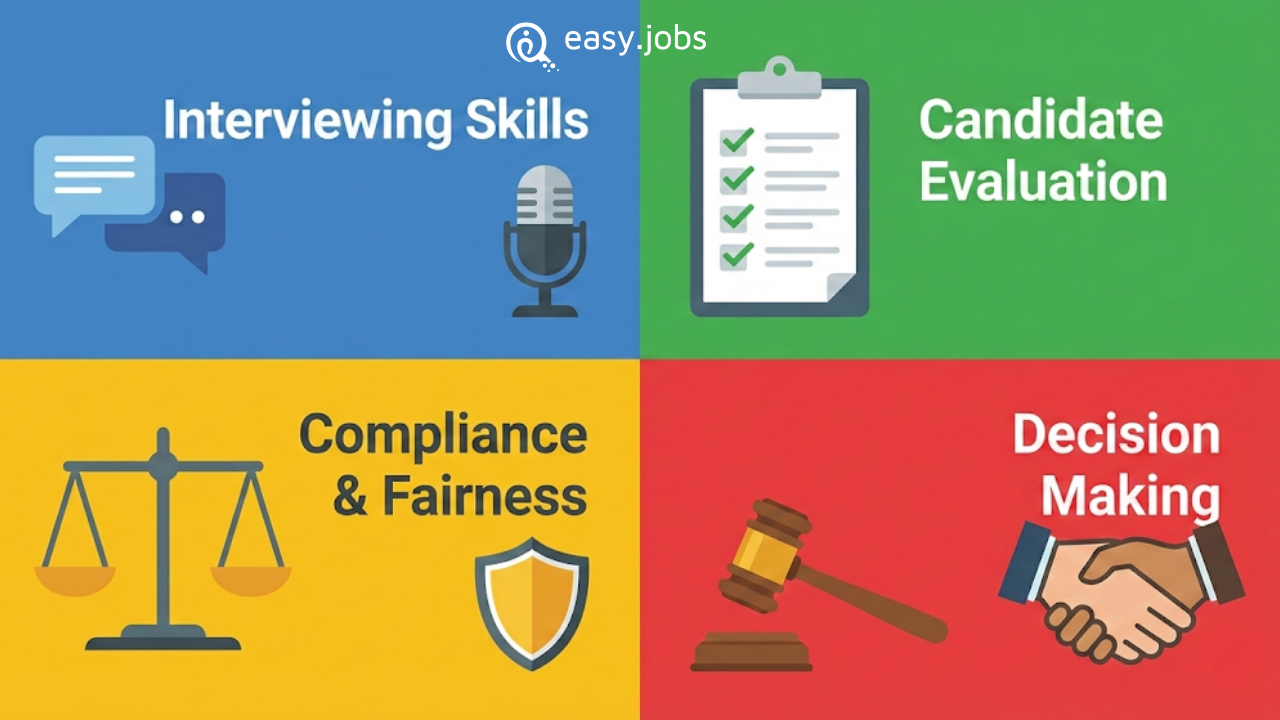
Hal ini berbeda dari pelatihan kepemimpinan umum atau pengembangan manajemen. Sementara pelatihan kepemimpinan berfokus pada pengelolaan karyawan yang ada, pelatihan manajer perekrutan berfokus pada mekanisme spesifik perekrutan.
Pelatihan yang efektif Lebih dari sekadar menunjukkan kepada manajer cara masuk ke Sistem Pelacakan Pelamar (Applicant Tracking System/ATS). Fokusnya adalah pada area inti berikut:
Pelatihan Wawancara untuk Manajer Perekrutan: Mengajukan Pertanyaan yang Mengungkap Kompetensi Sejati
Pelatihan wawancara untuk manajer perekrutan memastikan mereka dapat melakukan wawancara terstruktur dan berbasis bukti, alih-alih mengandalkan intuisi atau kesan "kesesuaian budaya". Pelatihan jenis ini mencakup:
- Cara menggunakan pertanyaan wawancara perilaku dan situasional.
- Cara menyelidiki indikator kinerja masa lalu
- Cara menghindari pertanyaan yang mengarahkan atau bias
- Bagaimana menjaga konsistensi di antara beberapa pewawancara?
Ketika para manajer menerima pelatihan wawancara yang tepat, penilaian kandidat menjadi terukur, dapat diulang, dan dapat dipertanggungjawabkan secara hukum.
Pelatihan Bias Bawah Sadar untuk Manajer Perekrutan: Membangun Keputusan Perekrutan yang Adil dan Inklusif
Pelatihan bias bawah sadar untuk manajer perekrutan berfokus pada pengenalan dan mitigasi pola pengambilan keputusan tersembunyi yang memengaruhi evaluasi kandidat. Area utama meliputi:
- Mengidentifikasi bias afinitas, efek halo, dan bias konfirmasi
- Memahami bagaimana bias memengaruhi penyaringan resume dan wawancara.
- Menerapkan kerangka evaluasi standar untuk menghilangkan subjektivitas.
- Meningkatkan hasil keberagaman dan inklusi melalui praktik perekrutan yang adil.
Tanpa pelatihan tentang bias bawah sadar, bahkan manajer berpengalaman pun secara tidak sengaja lebih menyukai kandidat yang terlihat, berpikir, atau berkomunikasi seperti diri mereka sendiri.
Pelatihan Evaluasi Kandidat: Menggunakan Kartu Skor dan Kriteria Perekrutan Objektif
Fase ini mengajarkan para manajer cara mengevaluasi kandidat menggunakan kartu skor terstruktur, bukan berdasarkan ingatan atau intuisi. Pelatihan evaluasi meliputi:
- Mendefinisikan matriks kompetensi spesifik peran
- Memberikan skor kepada kandidat berdasarkan tolok ukur yang relevan dengan pekerjaan.
- Menggunakan data dari wawancara, penilaian, dan contoh hasil kerja.
- Berkolaborasi dengan HR menggunakan metrik perekrutan yang konsisten.
Evaluasi objektif secara dramatis meningkatkan akurasi perekrutan dan mengurangi kesalahan perekrutan yang mahal.
Pengambilan Keputusan Perekrutan Berbasis Bukti: Dari Umpan Balik hingga Seleksi Akhir
Pelatihan pengambilan keputusan menyelaraskan para manajer tentang cara mensintesis data wawancara, umpan balik rekan kerja, dan hasil penilaian ke dalam pilihan perekrutan akhir. Para manajer belajar untuk:
- Bandingkan kandidat menggunakan dasbor perekrutan yang terstandarisasi
- Menyeimbangkan persyaratan keterampilan, potensi pertumbuhan, dan kesesuaian dengan tim.
- Hindari bias terkini dan jalan pintas pengambilan keputusan berdasarkan emosi.
- Dokumentasikan keputusan perekrutan untuk kepatuhan dan kesiapan audit.
Hal ini mengubah proses perekrutan dari diskusi subjektif menjadi proses yang transparan dan berbasis kinerja.
Apa Saja yang Dicakup dalam Pelatihan Manajer Perekrutan?
Program pelatihan yang efektif harus melampaui teori. Program tersebut harus mencakup keterampilan praktis yang dibutuhkan seorang manajer untuk menjalankan perannya dengan percaya diri dalam proses perekrutan.
Keterampilan Wawancara
Ini adalah bagian pelatihan yang paling terlihat. Manajer harus belajar melakukan wawancara terstruktur, di mana setiap kandidat ditanya pertanyaan inti yang sama dalam urutan yang sama. Pelatihan harus mencakup:
- Bagaimana mempersiapkan diri untuk wawancara sebelum kandidat datang.
- Cara mengajukan pertanyaan perilaku dan situasional (misalnya, “Ceritakan tentang suatu waktu ketika…”).
- Bagaimana menggali lebih dalam tanpa bersikap agresif.
- Teknik mendengarkan aktif untuk menangkap tanda-tanda peringatan atau kekuatan tersembunyi.
Evaluasi Kandidat
Pelatihan evaluasi mengajarkan para manajer cara menilai jawaban secara objektif. Hal ini mencegah pengambilan keputusan yang didasarkan pada "kesukaan" terhadap seseorang atau kesamaan hobi. Topik-topik utama meliputi:
- Menggunakan kartu penilaian wawancara untuk menilai kompetensi tertentu.
- Membedakan antara “kesesuaian budaya” (seringkali bias) dan “nilai tambah budaya”.
- Mencatat secara akurat selama wawancara untuk mendukung penilaian mereka.
Kepatuhan dan Perekrutan yang Adil
Para manajer sering kali tanpa sadar mengajukan pertanyaan ilegal atau tidak pantas. Modul ini: kepatuhan SDM Melindungi perusahaan dan memastikan keadilan. Ini mencakup:
- Batasan hukum (apa yang tidak boleh Anda tanyakan terkait usia, keluarga, agama, dll.).
- Pelatihan bias bawah sadar untuk mengenali efek halo atau bias afinitas.
- Pentingnya konsistensi untuk menghindari klaim diskriminasi.
Pengambilan Keputusan
Langkah terakhir adalah mengubah data wawancara menjadi keputusan perekrutan. Pelatihan harus memastikan para manajer dapat:
- Rangkum umpan balik dari beberapa pewawancara.
- Berpartisipasi secara efektif dalam sesi debriefing atau pertemuan "peningkatan standar".
- Buatlah keputusan perekrutan yang dapat dipertanggungjawabkan berdasarkan data, bukan hanya insting.
Pelatihan Perekrut vs Pelatihan Manajer Perekrutan
Organisasi sering kali menyamakan pelatihan perekrut dengan pelatihan manajer perekrutan, padahal keduanya memiliki tujuan yang berbeda. Perekrut adalah ahli proses; manajer perekrutan adalah ahli konten.
Mencampuradukkan peran-peran ini akan menimbulkan gesekan. Jika seorang manajer mengharapkan seorang perekrut untuk menilai kode teknis, atau jika seorang perekrut mengharapkan seorang manajer untuk mencari kandidat, maka prosesnya akan gagal.
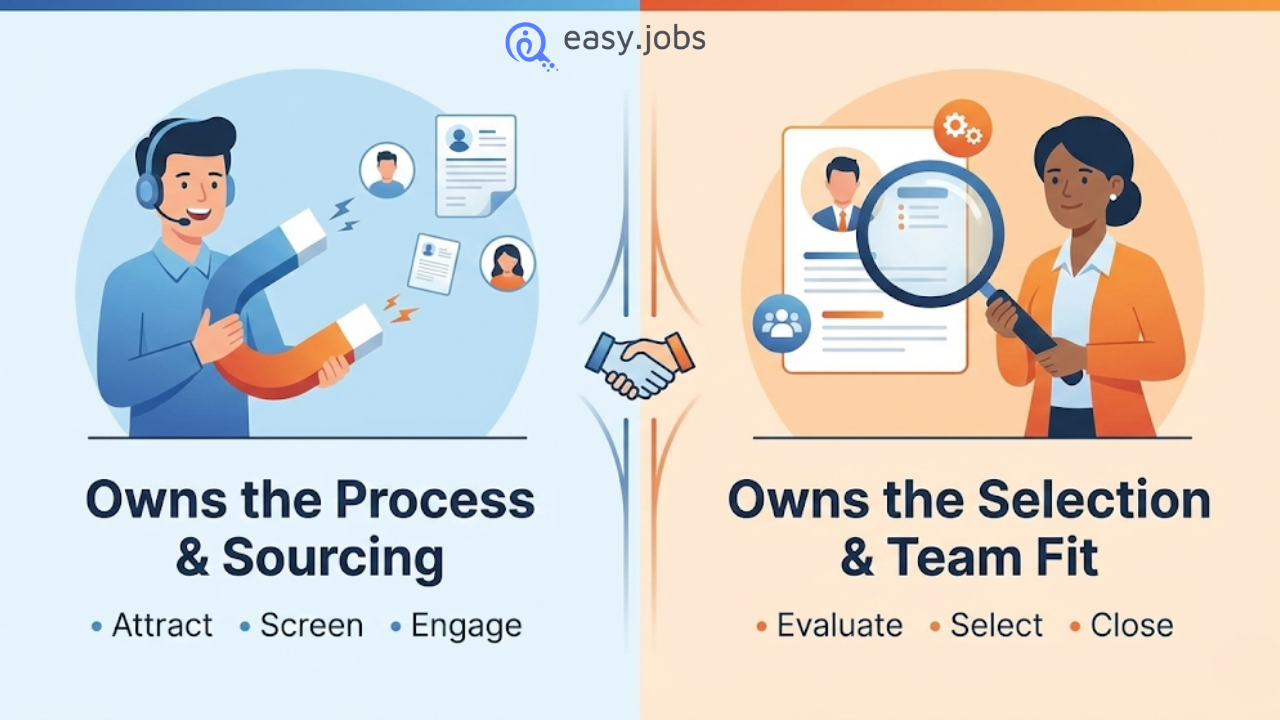
Tabel berikut menguraikan perbedaan utama dalam fokus pelatihan:
| Fitur | Fokus Pelatihan Perekrut | Fokus Pelatihan Manajer Perekrutan |
| Tujuan Utama | Pencarian, penyaringan, dan manajemen proses. | Mengevaluasi kesesuaian teknis dan potensi tim. |
| Kumpulan Keterampilan | Pencarian Boolean, keterlibatan kandidat, dan negosiasi. | Wawancara terstruktur, penilaian kompetensi. |
| Kepemilikan Proses | Bagian atas corong (Menarik perhatian & Menyaring). | Bagian bawah corong (Pilih & Tutup). |
| Kedalaman Pelatihan | Analisis mendalam terhadap alat-alat (ATS, LinkedIn) dan upaya menjangkau pelanggan. | Analisis mendalam tentang teknik bertanya dan bias. |
| Hasil | Menyampaikan daftar kandidat yang memenuhi syarat. | Memilih kandidat terbaik untuk peran tersebut. |
Ketika manajer perekrutan tidak dilatih secara khusus untuk peran mereka, mereka sering mencoba bertindak seperti perekrut—berfokus pada resume daripada penilaian—atau mereka sama sekali tidak terlibat, mengharapkan perekrut untuk memutuskan bagi mereka.
Siapa yang Bertanggung Jawab untuk Melatih Manajer Perekrutan?
Menentukan kepemilikan adalah langkah pertama untuk membangun program yang berkelanjutan. Tanpa pemilik yang jelas, pelatihan menjadi sporadis atau terabaikan.
Ketika Sumber Daya Manusia (SDM) Dan Pembelajaran & Pengembangan (L&D) Tim menyediakan infrastruktur—seperti Sistem Manajemen Pembelajaran (LMS) atau penjadwalan— Akuisisi Talenta (TA) Tim harus memiliki hak atas konten tersebut.
Perekrut dan pemimpin TA berinteraksi dengan manajer perekrutan setiap hari. Mereka melihat kesenjangan spesifik dalam keterampilan wawancara dan merasakan kerugian akibat kehilangan kandidat. Oleh karena itu, pemimpin TA berada pada posisi terbaik untuk merancang kurikulum dan memfasilitasi sesi pelatihan.
Kepemimpinan senior juga memainkan peran penting. Mereka harus mewajibkan pelatihan tersebut. Jika seorang VP atau Pendiri tidak memprioritaskan keunggulan dalam wawancara, para manajer akan menganggap pelatihan tersebut sebagai pilihan.
Mengapa Pelatihan Manajer Perekrutan Sangat Penting bagi Bisnis?
Pelatihan bagi manajer perekrutan seringkali dianggap sebagai hal yang "baik untuk dimiliki" atau prioritas sekunder setelah pelatihan perekrut. Ini adalah sebuah kesalahan. Kemampuan manajer perekrutan dalam menilai bakat berkorelasi langsung dengan kinerja organisasi.
Dampak pada Kualitas dan Kecepatan Perekrutan
“Waktu membunuh semua kesepakatan” dalam perekrutan. Manajer perekrutan yang tidak terlatih sering kesulitan mengartikulasikan apa yang mereka cari, yang menyebabkan umpan balik yang samar seperti “Saya belum yakin.” Keraguan ini menghambat proses.
Manajer yang terlatih beroperasi secara berbeda. Mereka tahu persis kompetensi apa yang perlu diuji. Akibatnya, mereka melakukan wawancara yang lebih tajam, memberikan umpan balik segera, dan membuat keputusan yang lebih cepat dan penuh keyakinan. Hal ini mengurangi waktu perekrutan dan mengamankan talenta terbaik sebelum pesaing dapat bereaksi.
Meningkatkan Pengalaman Kandidat
Manajer perekrutan adalah wajah perusahaan selama wawancara. Seorang kandidat mungkin menyukai merek dan perekrutnya, tetapi manajer perekrutan yang tidak terorganisir atau kasar akan menyebabkan mereka menarik diri.
Para kandidat menilai budaya perusahaan melalui interaksi mereka dengan calon bos mereka di masa depan. Pelatihan memastikan para manajer hadir dengan persiapan yang matang, mengajukan pertanyaan yang relevan, dan memperlakukan kandidat dengan hormat. Proses wawancara yang profesional meningkatkan citra perusahaan sebagai tempat kerja yang baik, bahkan untuk kandidat yang tidak diterima bekerja.
Mengurangi Risiko dan Memastikan Kepatuhan
Wawancara yang tidak konsisten merupakan tanggung jawab hukum. Ketika manajer "berimprovisasi," mereka lebih cenderung mengajukan pertanyaan yang tidak pantas mengenai usia, status keluarga, atau latar belakang.
Pelatihan terstruktur memberikan jaring pengaman. Pelatihan ini mengajarkan para manajer cara untuk tetap berpegang pada kriteria yang relevan dengan pekerjaan dan mendokumentasikan keputusan mereka dengan benar. Hal ini membuat keputusan perekrutan dapat dipertanggungjawabkan dan secara signifikan mengurangi risiko klaim bias atau diskriminasi.
Kompetensi Inti yang Harus Dikuasai Setiap Manajer Perekrutan
Sebelum merancang program, Anda harus mendefinisikan seperti apa "yang baik" itu. Manajer perekrutan yang efektif bukan hanya seorang pewawancara; mereka adalah seorang evaluator. Untuk berhasil, mereka harus menunjukkan kompetensi berikut:
Definisi Peran: Kemampuan untuk menulis deskripsi pekerjaan yang jelas dan mendefinisikan "misi" dari peran tersebut sebelum membuka lowongan.
Wawancara Terstruktur: Kedisiplinan untuk mengajukan pertanyaan yang konsisten dan telah ditentukan sebelumnya kepada setiap kandidat untuk memastikan perbandingan yang adil.
Kesadaran akan Bias: Kesadaran diri untuk mengenali bias pribadi (seperti bias afinitas atau bias konfirmasi) dan memperbaikinya secara langsung.
Evaluasi Kandidat: Kemampuan untuk menilai jawaban kandidat berdasarkan rubrik penilaian, bukan hanya mengandalkan kesan umum.
Menjual Peran Tersebut: Kemampuan untuk mengartikulasikan visi perusahaan dan budaya tim untuk membuat talenta terbaik tertarik pada peluang tersebut.
Pengambilan Keputusan: Kepercayaan diri untuk memberikan rekomendasi pasti "Rekrut" atau "Tidak Rekrut" yang didukung oleh bukti.
Cara Melatih Manajer Perekrutan: Kerangka Kerja Langkah demi Langkah
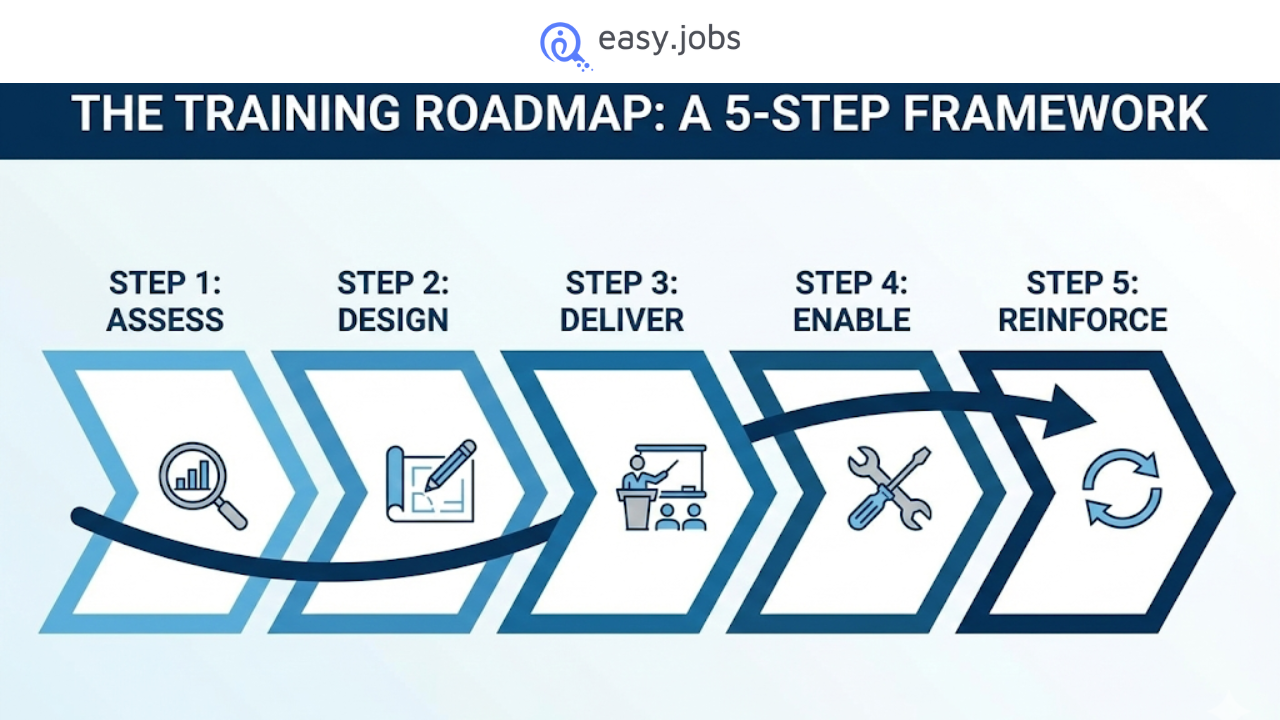
Membangun program pelatihan bukanlah kegiatan sekali jalan. Ini adalah sebuah sistem. Ikuti kerangka kerja lima langkah ini untuk membangun mesin pelatihan yang dapat diskalakan.
Langkah 1: Menilai Kemampuan Perekrutan Saat Ini
Jangan mulai dengan membuat slide. Mulailah dengan mendiagnosis masalahnya. Lihat data perekrutan Anda saat ini. Apakah departemen tertentu mengalami tingkat pergantian karyawan yang tinggi? Apakah manajer tertentu terus-menerus menolak kandidat pada tahap akhir?
Kumpulkan umpan balik kualitatif dari perekrut Anda. Mereka tahu persis manajer mana yang kesulitan memberikan umpan balik atau terus-menerus menjadwal ulang wawancara. Penilaian ini memberi tahu Anda ke mana harus memfokuskan energi Anda.
Langkah 2: Merancang Pelatihan yang Spesifik untuk Peran Tertentu
Satu ukuran tidak cocok untuk semua. Manajer yang baru pertama kali menjabat membutuhkan pelatihan yang berbeda dibandingkan dengan seorang VP yang memiliki pengalaman 20 tahun.
Untuk Manajer Baru: Fokuslah pada dasar-dasar proses, kepatuhan hukum, dan cara melakukan wawancara perilaku dasar.
Untuk Pemimpin Berpengalaman: Fokus pada teknik "Bar Raiser", strategi penjualan tingkat lanjut, dan cara menilai pewawancara lain.
Langkah 3: Memberikan Pelatihan Praktis Berbasis Skenario
Hindari ceramah yang panjang. Manajer perekrutan belajar dengan melakukan. Sesi pelatihan yang paling efektif meliputi: wawancara simulasi.
Pasangkan para manajer dan minta mereka berlatih mengajukan pertanyaan lanjutan. Putar rekaman wawancara yang "buruk" dan minta peserta untuk mengidentifikasi apa yang salah. Gunakan skenario dunia nyata—seperti kandidat yang terlalu banyak bicara atau yang memberikan jawaban yang samar—untuk mengajari para manajer cara mengendalikan percakapan.
Langkah 4: Aktifkan dengan Alat dan Panduan
Pelatihan akan cepat terlupakan tanpa alat pendukung. Sediakan "lembar contekan" yang dapat digunakan manajer selama wawancara sebenarnya. Alat-alat penting meliputi:
Panduan Wawancara: Naskah yang berisi pengantar, pertanyaan spesifik, dan penutup.
Bank Soal: Kumpulan pertanyaan yang telah disetujui untuk berbagai kompetensi (misalnya, “Pertanyaan untuk menilai kemampuan beradaptasi”).
Kartu Skor: Lembar penilaian sederhana untuk mendokumentasikan umpan balik segera setelah panggilan.
Langkah 5: Perkuat Melalui Bimbingan dan Umpan Balik
Pelatihan tidak berakhir ketika lokakarya selesai. Tim Akuisisi Talenta harus bertindak sebagai pelatih berkelanjutan.
Setelah seorang manajer melakukan wawancara, perekrut harus melakukan sesi tanya jawab dengan mereka. Jika seorang manajer memberikan umpan balik yang samar seperti "tidak cocok," tantang mereka untuk menjelaskan alasannya. Pembinaan "tepat waktu" ini memperkuat prinsip-prinsip pelatihan dalam situasi dunia nyata.
Praktik Terbaik untuk Pelatihan Manajer Perekrutan
Untuk memastikan pelatihan Anda efektif dan menghasilkan perubahan perilaku nyata, ikuti praktik terbaik berikut:
Jadikan wajib: Jika pelatihan bersifat opsional, para manajer yang paling membutuhkannya akan melewatkannya. Wajibkan "Sertifikasi Wawancara" sebelum seorang manajer dapat membuka permintaan baru.
Gunakan “Pembayangan”: Mintalah para manajer baru untuk mengikuti wawancara yang dilakukan oleh para "Bar Raiser" berpengalaman untuk melihat teknik-teknik yang baik diterapkan.
Singkat saja: Para manajer sibuk. Bagilah pelatihan menjadi modul pembelajaran mikro (15-20 menit) daripada lokakarya seharian penuh.
Fokus pada “Mengapa”: Jangan hanya mengajarkan prosesnya. Jelaskan bagaimana wawancara yang lebih baik dapat menghemat waktu dan membangun tim yang lebih kuat.
Perbarui Secara Berkala: Kemampuan wawancara adalah keterampilan yang mudah hilang. Adakan kursus penyegaran atau sesi kalibrasi tahunan untuk menjaga keterampilan tetap tajam.
Manfaatkan Data: Tunjukkan kepada para manajer tingkat konversi mereka sendiri. Jika mereka mewawancarai 20 orang untuk merekrut 1 orang, mereka memiliki masalah penyaringan yang dapat diperbaiki melalui pelatihan.
Apa Saja yang Termasuk dalam Program Pelatihan Manajer Perekrutan yang Efektif?
Komprehensif program pelatihan manajer perekrutan Menggabungkan pendidikan, alat, dan akuntabilitas. Seharusnya mencakup:
Prinsip Inti: Sebuah “Manifesto Perekrutan” yang jelas yang menguraikan filosofi perusahaan tentang talenta (misalnya, “Kami merekrut berdasarkan potensi, bukan hanya pengalaman”).
Metode Pengiriman: Perpaduan antara pembelajaran daring (e-learning) untuk dasar-dasar kepatuhan dan lokakarya langsung untuk simulasi peran dan tanya jawab.
Alat-alat Praktis: Templat yang mudah diakses untuk deskripsi pekerjaan, skrip wawancara, dan templat email untuk komunikasi dengan kandidat.
Siklus Umpan Balik: Sebuah mekanisme terstruktur bagi perekrut untuk menilai kualitas umpan balik dari manajer perekrutan.
Akuntabilitas: Kebijakan yang jelas yang mencabut hak perekrutan jika seorang manajer berulang kali melanggar standar kepatuhan atau kualitas.
Kesalahan Umum yang Harus Dihindari Saat Melatih Manajer Perekrutan
Bahkan program yang bermaksud baik pun akan gagal jika terjebak dalam perangkap umum berikut:
Pendekatan “Sekali Saja”: Memperlakukan pelatihan sebagai satu acara orientasi tunggal. Perekrutan membutuhkan praktik berkelanjutan.
Terlalu Banyak Teori, Kurang Praktik: Menghabiskan berjam-jam mempelajari teori SDM alih-alih mempraktikkan cara menangani kandidat yang sulit atau mengajukan pertanyaan yang mendalam.
Tidak termasuk para Pemimpin Senior: Dengan asumsi bahwa para Direktur dan Wakil Presiden secara alami adalah pewawancara yang baik. Seringkali, mereka memiliki kebiasaan buruk yang paling mengakar dan membutuhkan koreksi paling banyak.
Kurangnya Pengukuran: Gagal melacak apakah pelatihan tersebut benar-benar meningkatkan metrik seperti waktu perekrutan atau kualitas perekrutan. Tanpa data, Anda tidak dapat membuktikan ROI kepada pimpinan.
Mengukur Efektivitas Pelatihan Manajer Perekrutan
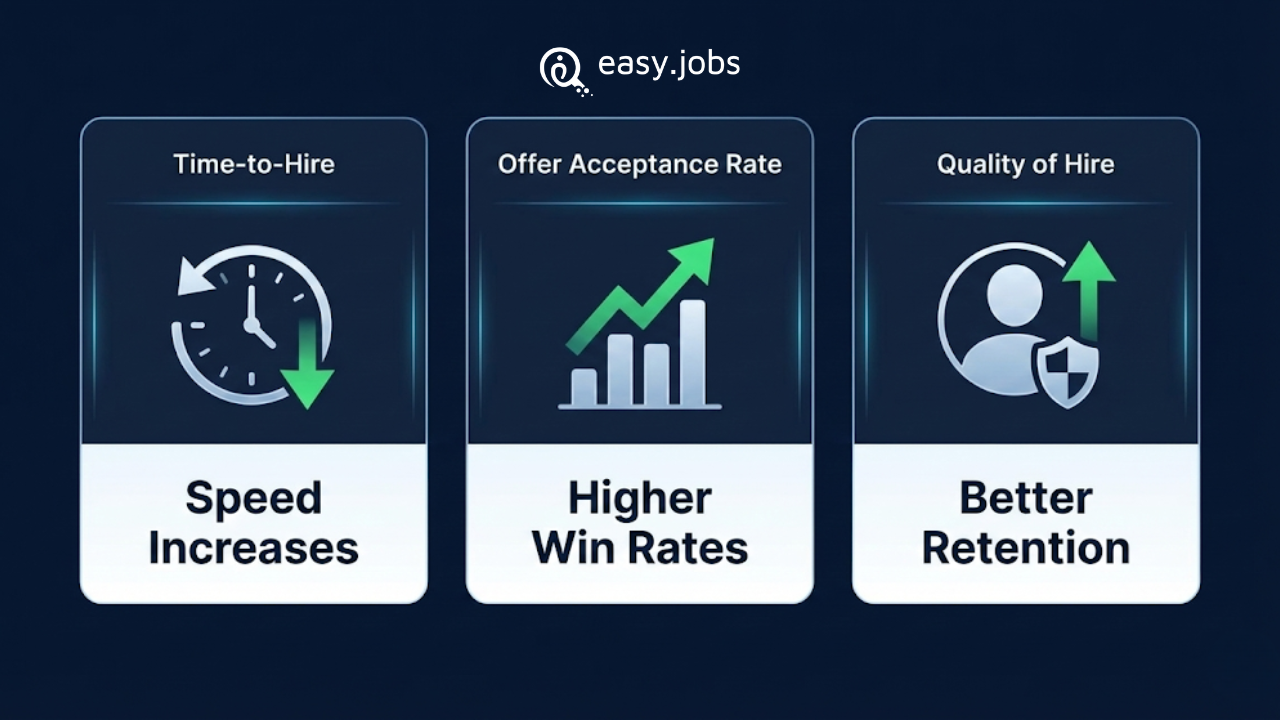
Anda tidak dapat mengelola apa yang tidak Anda ukur. Untuk membenarkan investasi dalam pelatihan, Anda harus melacak hasil spesifik yang menunjukkan perubahan perilaku dan dampak bisnis.
Metrik Utama yang Perlu Dilacak
Rasio Wawancara-ke-Penawaran: Ini adalah metrik efisiensi utama. Jika seorang manajer perlu mewawancarai 15 orang untuk menemukan satu orang yang mereka sukai, mereka kesulitan menilai resume atau mendefinisikan peran tersebut. Pelatihan seharusnya dapat menurunkan angka ini (misalnya, menjadi 4:1 atau 3:1).
Waktu Perekrutan: Manajer yang terlatih memberikan umpan balik lebih cepat. Lacak jumlah hari antara tanggal "Lowongan Dibuka" dan "Penawaran Diterima" untuk melihat apakah pelatihan mempercepat proses tersebut.
Kualitas Rekrutmen (Retensi Karyawan Baru): Pantau berapa banyak karyawan baru yang berhasil melewati masa percobaan. Tingkat pergantian karyawan yang tinggi dalam 6 bulan pertama sering kali menunjukkan ketidaksesuaian ekspektasi selama proses wawancara.
Sinyal Umpan Balik Kualitatif
Skor Promotor Bersih Kandidat (cNPS): Lakukan survei terhadap kandidat setelah wawancara. Tanyakan secara spesifik tentang interaksi mereka dengan manajer perekrutan. “Apakah manajer tampak siap?” “Apakah mereka menjelaskan peran tersebut dengan jelas?”
Umpan Balik Perekrut: Lakukan survei terhadap tim perekrutan talenta Anda. Mereka akan langsung tahu jika seorang manajer telah meningkatkan komunikasi, ketepatan waktu, dan kualitas umpan baliknya.
Bagaimana Teknologi Dapat Mendukung Pelatihan Manajer Perekrutan
Alat perekrutan modern dapat memperkuat pelatihan dengan "mendorong" manajer untuk mengikuti praktik terbaik secara langsung.
Alat Bantu Intelijen Wawancara: Platform yang merekam dan mentranskripsikan wawancara memungkinkan manajer untuk meninjau kinerja mereka sendiri. Mereka dapat mendengarkan seberapa banyak mereka berbicara dibandingkan dengan kandidat dan mengidentifikasi momen-momen di mana mereka melewatkan pertanyaan lanjutan yang penting.
Kartu Skor Terstruktur dalam ATS: Konfigurasikan Sistem Pelacakan Pelamar (ATS) Anda untuk mewajibkan manajer mengisi kartu skor tertentu sebelum mereka dapat memindahkan kandidat ke tahap berikutnya. Ini menegakkan disiplin dokumentasi.
Perpustakaan Pembelajaran Sesuai Permintaan: Buat wiki atau portal internal dengan video pendek (misalnya, "Cara menanyakan ekspektasi gaji") yang dapat ditonton oleh manajer 10 menit sebelum wawancara.
Pertanyaan yang Sering Diajukan Tentang Pelatihan Manajer Perekrutan
Pertanyaan yang sering diajukan ini membahas kekhawatiran paling umum yang dimiliki para pemimpin saat membangun pendekatan terstruktur untuk pelatihan manajer perekrutan. Gunakan pertanyaan-pertanyaan ini sebagai panduan praktis untuk menetapkan ekspektasi, menjaga konsistensi, dan meningkatkan kualitas keseluruhan keputusan perekrutan di seluruh organisasi Anda.
Berapa lama seharusnya pelatihan manajer perekrutan berlangsung?
Tidak perlu berlangsung seharian penuh. Lokakarya selama 90 menit yang mencakup dasar-dasar (proses, hukum, wawancara) seringkali sudah cukup untuk konten inti, diikuti dengan pelatihan berkelanjutan.
Haruskah kita memberikan sertifikasi kepada manajer perekrutan kita?
Ya. Menerapkan "Lisensi Wawancara" sederhana menciptakan standar kualitas. Manajer mendapatkan lisensi mereka setelah menyelesaikan pelatihan dan mengikuti satu wawancara.
Seberapa sering pelatihan perlu diperbarui?
Idealnya, adakan sesi "penyegaran" atau kalibrasi setahun sekali. Selain itu, setiap manajer yang belum mewawancarai seseorang dalam 6 bulan terakhir sebaiknya mengikuti pelatihan penyegaran singkat.
Apakah ini berlaku untuk perusahaan kecil?
Tentu saja. Di perusahaan kecil, satu perekrutan yang buruk dapat merusak budaya perusahaan. Pendiri atau CEO harus secara pribadi melatih lapisan manajer pertama untuk memastikan "standar perekrutan" tetap tinggi seiring pertumbuhan perusahaan.
Membangun Keunggulan Perekrutan Jangka Panjang
Melatih manajer perekrutan bukanlah sekadar formalitas; ini adalah keunggulan kompetitif. Ketika Anda berinvestasi dalam pelatihan, Anda mengubah manajer perekrutan Anda dari peserta pasif menjadi pencari bakat aktif. Mereka membuat keputusan yang lebih baik, mempercepat proses perekrutan kandidat, dan membangun tim yang berkinerja lebih tinggi.
Tujuannya bukan hanya untuk mengisi posisi kosong hari ini. Tujuannya adalah untuk membangun budaya perekrutan di mana setiap manajer tahu persis bagaimana mengidentifikasi dan mengamankan talenta yang akan mendorong bisnis maju.
Jika panduan ini memberi Anda kejelasan tentang pelatihan tim Anda, jangan lewatkan artikel kami selanjutnya. Berlangganan ke blog kami Dapatkan kerangka kerja dan templat terbaru yang dikirimkan ke kotak masuk Anda. Ingin mendiskusikan strategi ini dengan rekan-rekan Anda? Bergabunglah dengan Komunitas Facebook kami, tempat ribuan profesional SDM dan manajer perekrutan terhubung untuk berbagi praktik terbaik dan menyelesaikan tantangan perekrutan bersama.