In the high-stakes world of talent acquisition, a single hiring decision can cost a company upwards of 30% of the employee’s first-year earnings. Despite the financial risks, many hiring decisions are made in the first 90 seconds of an interview.
We like to believe our processes are objective, but the reality is that recruiters and hiring managers often rely more on intuition than evidence. This “gut feeling” is frequently a byproduct of two powerful cognitive shortcuts: Efek halo and Horn Effect.
These biases act as invisible filters, distorting how we perceive a candidate’s skills, experience and cultural fit. When left unchecked, they lead to “false positives” charismatic underperformers who look great on paper and “false negatives” top-tier talent rejected over minor, irrelevant flaws.
By understanding how these biases operate, recruitment leaders can move away from reactive, “vibe-based” hiring toward a structured, evidence-driven model that identifies the best person for the job, every time.
What Is the Halo Effect in Hiring?
Itu Efek halo is a cognitive bias where our overall impression of a person is influenced by one single positive trait or achievement. In a recruitment context, this occurs when an interviewer notices a “shining” attribute in a candidate and allows that light to blind them to the candidate’s actual deficiencies.
Because the human brain seeks cognitive ease, we tend to assume that if someone is good at X, they must also be good at Y Dan Z.
Typical Triggers in Interviews
The Halo Effect is rarely about a candidate’s actual job performance; it is usually triggered by high-status symbols or social cues:
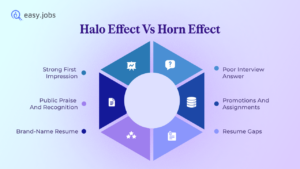
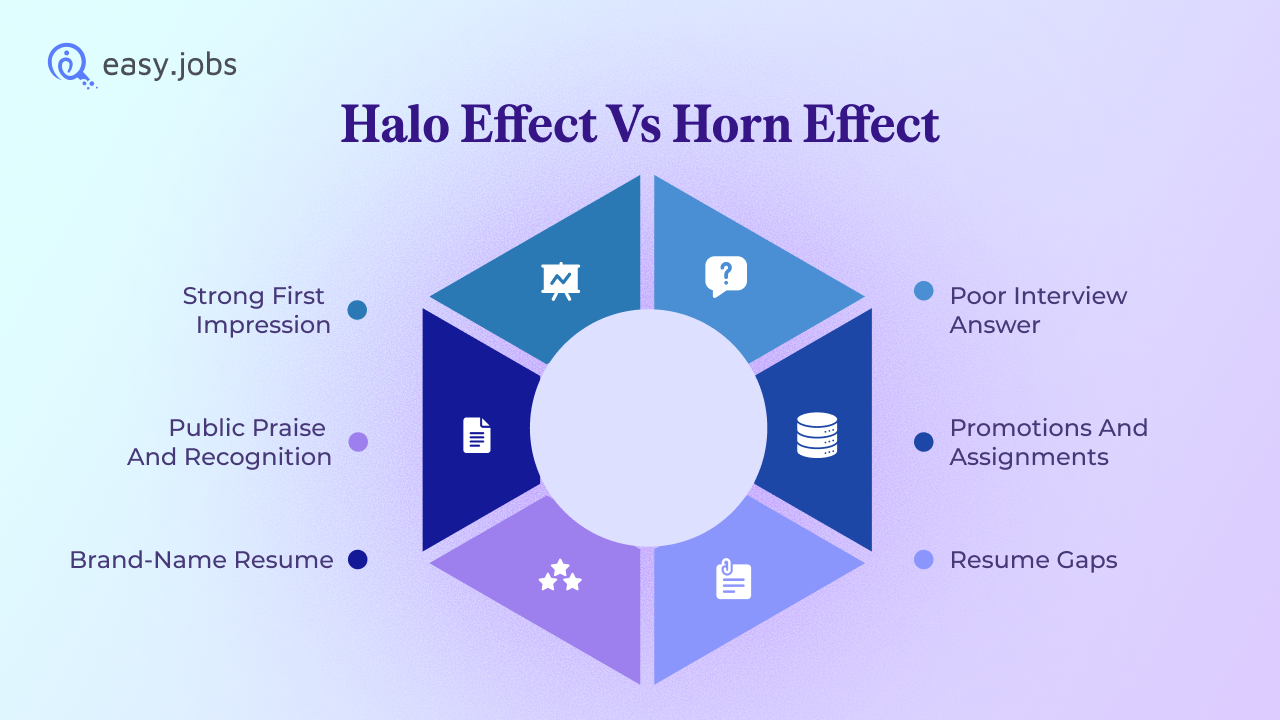
- Brand-Name Pedigree: Seeing a “Big Four” consultancy or a FAANG company on a resume often creates an immediate halo. The recruiter assumes the candidate is elite, overlooking whether their specific contributions actually align with the new role.
- The “Attractive Candidate” Bias: Studies consistently show that we subconsciously perceive attractive individuals as more competent, kind, and intelligent.
- Confident Communication: A candidate who is highly articulate and charismatic can easily mask a lack of technical depth. Their social “glow” suggests leadership potential that may not actually exist.
Moving forward, we will explore how these biases interact during the live interview and provide a clear comparison to help your hiring team distinguish between the two.
How Halo Effect And Horn Effect Bias Interview Decisions
The primary danger of these biases isn’t just a single thought; it’s the way they anchor the entire conversation. Once a Halo or Horn is established, the interview ceases to be an objective data-gathering mission and instead becomes a “confirmation bias” exercise.
1. The Anchoring Problem
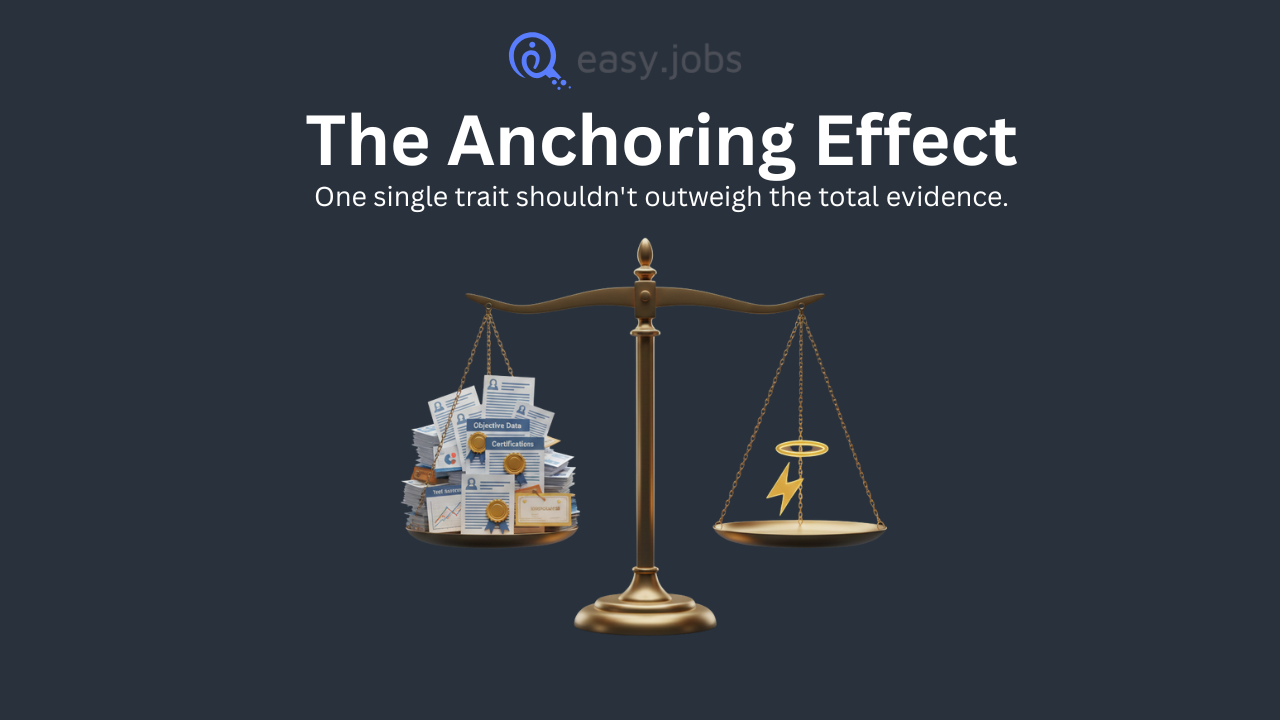
If a candidate mentions they went to an Ivy League school (Halo), the interviewer may spend the rest of the session asking “softball” questions that allow the candidate to shine. Conversely, if a candidate is five minutes late (Horn), the interviewer often switches to “gotcha” questions to justify the negative feeling they already have.
2. The Impact of Unstructured Interviews
In an informal, “chat-based” interview, there are no guardrails to stop bias. Without a set list of questions, the interviewer naturally follows the path of their bias. They might spend 30 minutes discussing shared hobbies with a “Halo” candidate, leaving no time to actually vet their technical proficiency.
3. Bias Compounding Across Panels
Bias doesn’t just stay with one person. If a recruiter tells a hiring manager, “You’re going to love this person, they’re a total rockstar,” they have pre-installed a Halo. The hiring manager is now conditioned to overlook red flags to align with the recruiter’s initial glowing review.
Halo Effect vs. Horn Effect in Hiring
To help your team identify these biases in real-time, use the following comparison table during calibration meetings.
| Fitur | Efek halo | Horn Effect |
| Nature of Bias | Positive: One “glow” covers all flaws. | Negative: One “sting” hides all virtues. |
| Typical Trigger | Prestigious past employer, physical attractiveness, charisma. | Resume gaps, nervousness, minor technical errors. |
| Interviewer Behavior | Seeking reasons to say “Yes”; ignoring red flags. | Seeking reasons to say “No”; dismissing strengths. |
| Candidate Impact | Rated as “high potential” regardless of actual data. | Disqualified early; credentials are undervalued. |
| Risk to Business | False Positive: Hiring a “culture fit” who can’t do the job. | False Negative: Rejecting top talent over trivial issues. |
Real Recruitment Examples of Halo Effect Bias
To see how this plays out in the “wild,” consider these common scenarios found in modern TA departments:
- The “Ex-Google” Fallacy: A startup hires a marketing manager because they spent four years at a tech giant. The team assumes the candidate has elite strategy skills. Three months in, they realize the candidate was only a small cog in a massive machine and doesn’t know how to build a department from scratch.
- The “Charismatic Closer”: In a sales interview, a candidate is incredibly funny, maintains great eye contact, and tells compelling stories. The panel gives them a 10/10. However, they failed to notice the candidate couldn’t explain their actual sales methodology or lead-gen process.
- The “Similarity” Bias: A hiring manager realizes a candidate went to the same university and loves the same niche sport. This “mini-me” effect creates a massive Halo, leading the manager to believe the candidate is a “perfect cultural fit,” even if their skills are only average.
Real Recruitment Examples of Horn Effect Bias
Itu Horn Effect is often more subtle and can lead to serious diversity and inclusion (DEI) issues:
- The “Nervous Expert”: A brilliant software engineer is visibly shaking during a high-pressure panel interview. The panel labels them as “not a culture fit” or “bad communicator,” failing to realize the engineer has a 10-year track record of delivering world-class code and simply suffers from interview anxiety.
- The “Non-Traditional” Path: A candidate has a two-year gap on their resume because they stayed home to care for a sick relative. A recruiter views this gap as a sign of “lack of ambition” (the Horn) and spends the interview looking for signs of laziness rather than evaluating their high-level certifications.
- The “Accent” Barrier: A candidate has the exact technical requirements needed for a data science role but speaks with a heavy accent. The hiring manager subconsciously associates the accent with “poor communication,” despite the candidate’s answers being technically perfect and logically sound.
Why These Biases Lead to Bad Recruitment Decisions: The Business Impact
When the Halo and Horn effects go unchecked, the consequences extend far beyond a single awkward interview. They degrade the quality of your entire workforce and impact your company’s financial health.
- The Cost of “False Positives”: When the Halo Effect leads you to hire a charismatic but incompetent employee, the costs are staggering. Between salary, onboarding, and the inevitable “bad hire” turnover, a mid-level mistake can cost a company over $50,000.
- The Loss of “False Negatives”: The Horn Effect causes you to reject high-performers for superficial reasons. While this doesn’t show up on a P&L statement immediately, the “opportunity cost” of losing top-tier talent to a competitor is massive.
- DEI and Fairness Risks: Bias thrives on similarity. If your hiring managers only “halo” candidates who look, speak, or think like them, your Diversity, Equity, and Inclusion (DEI) initiatives will fail. This creates a homogenous culture that lacks innovation.
- Increased Attrition: When people are hired based on a “halo” rather than a skill match, they often struggle to meet performance expectations, leading to higher turnover rates within the first six months.
How to Reduce Halo And Horn Effect Bias in Hiring
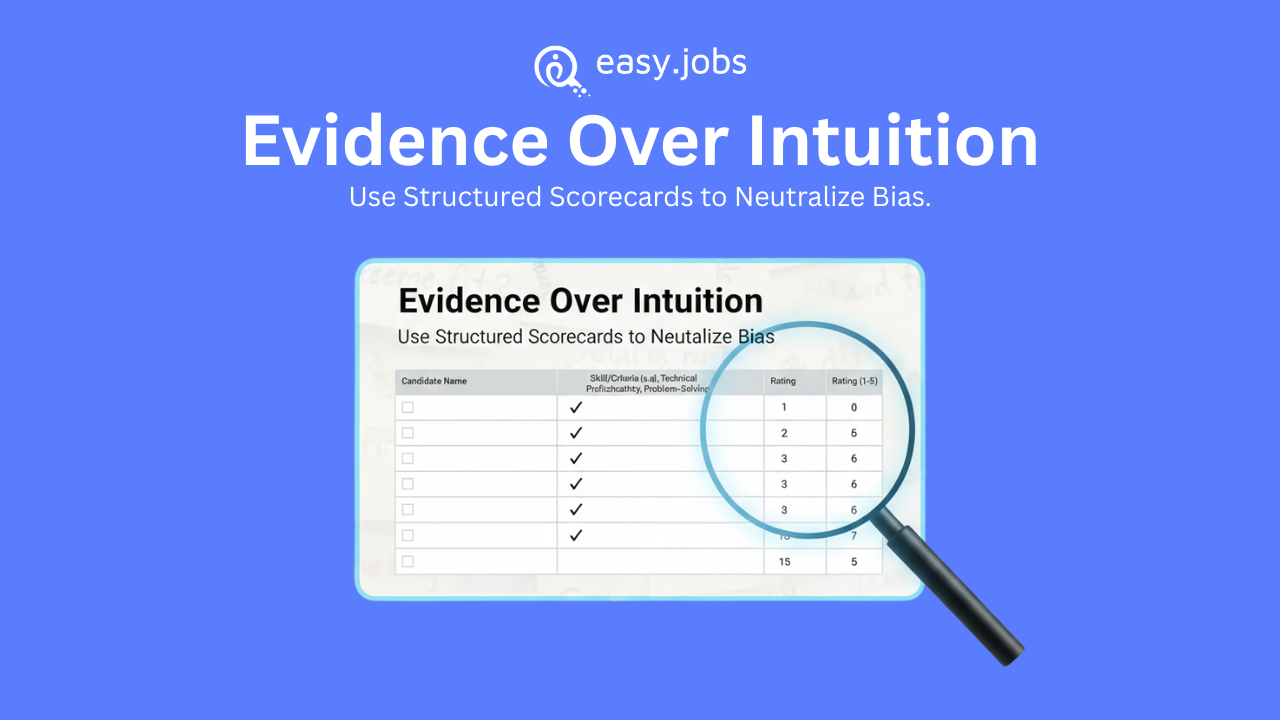
While it is impossible to eliminate human bias entirely, you can build a process that makes it difficult for bias to dictate the outcome. The goal is bias reduction, not perfection.
1. Structured Interviews And Scorecards
This is the single most effective tool against the Halo and Horn effects. Instead of a “free-flowing conversation,” every candidate for a specific role should be asked the same questions in the same order.
- The Scorecard: Grade answers on a scale (e.g., 1–5) based on pre-defined “good” vs. “bad” answer criteria. This forces the interviewer to look at specific data points rather than an overall “vibe.”
2. Define Evaluation Criteria Early
Before the first resume is even screened, the hiring team must agree on what “success” looks like. What are the three non-negotiable skills? If “Brand-name experience” isn’t a requirement for success, it shouldn’t be allowed to create a “Halo.”
3. Collect Multiple Data Points (Work Samples)
Don’t rely solely on the interview. Use:
- Work Samples/Tests: Let the code, the writing, or the spreadsheet speak for itself.
- Peer Interviews: Different perspectives help neutralize one person’s Horn Effect.
- Pre-recorded Video Screens: Allows multiple stakeholders to view the same first impression without the “anchoring” effect of a live conversation.
4. Interviewer Training And Calibration
Hiring managers should be taught to recognize their “triggers.” In post-interview debriefs, leaders should ask: “You said they weren’t a fit—can you point to a specific competency they lacked, or was it a feeling?” This forces the team to justify their decisions with evidence.
Pertanyaan yang Sering Diajukan
Is the horn effect the opposite of the halo effect in hiring?
Yes. While the halo effect occurs when one positive trait creates an overly favorable impression, the horn effect occurs when one negative trait causes an interviewer to overlook a candidate’s genuine strengths and qualifications.
How do halo and horn effects impact interview decisions?
These biases distort objective judgment by creating “anchors.” An interviewer may subconsciously spend the rest of the interview trying to confirm their initial positive or negative impression, leading to inconsistent questioning and unfair evaluations.
Can structured interviews reduce recruitment bias?
Absolutely. Structured interviews reduce bias by ensuring every candidate is evaluated against the same criteria using the same questions. This shifts the focus from “personality and vibe” to “skills and evidence,” making it harder for the halo or horn effect to take hold.
Master Your Hiring: Break the Halo And Horn Bias
Hiring is the most important thing a company does, yet it is often the most biased process in the building. The Halo and Horn effects are powerful because they are quiet—they operate in the background of our minds, convincing us that our “gut feeling” is actually professional expertise.
By implementing structured hiring, utilizing scorecards, and training your team to look for evidence over intuition, you can move toward a more equitable and effective recruitment engine. Better evaluation doesn’t just lead to fairer hiring; it leads to better hires. Stay Informed, Stay Objective.
Found value in this article? Berlangganan ke blog kami to keep mastering the art of talent acquisition. To dive deeper into these topics, bergabunglah dengan Komunitas Facebook kami and share your thoughts with our professional circle.